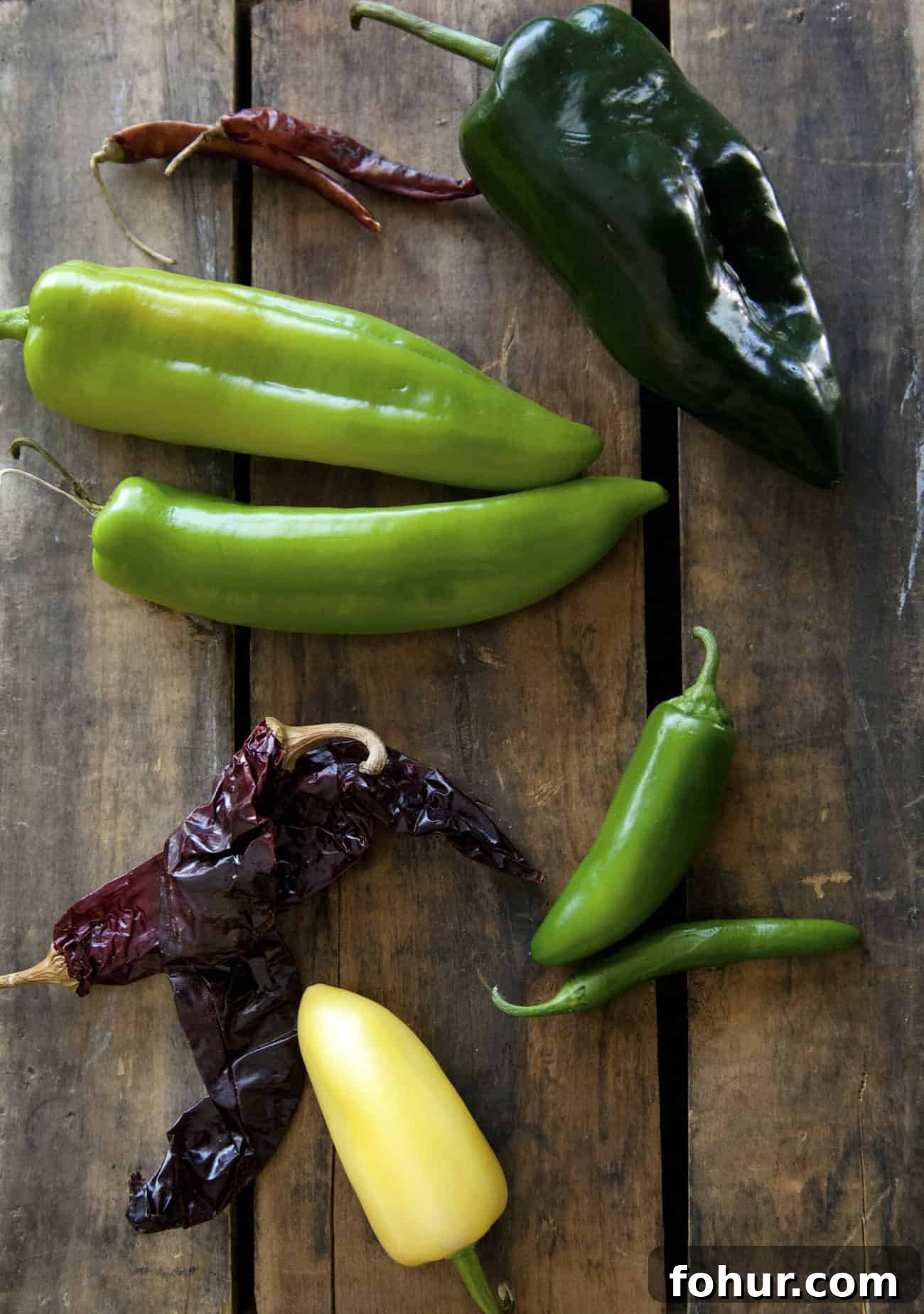
If there’s one ingredient that defines Mexican cooking, it’s the chile.
I grew up in El Paso, just minutes from Ciudad Juárez, where dried chiles were as common in my grandmother’s kitchen as onions and garlic. Burlap sacks full of dried peppers always lined the pantry, ready to be turned into chile colorado, enchilada sauce, or homemade tamales. My grandmother never used a single chile alone — she combined varieties, understanding that each added its own flavor signature.
Family trips across the border meant wandering through mercados where sacks of dried chiles released a warm, earthy aroma that still carries me back to those markets.
That was one of my earliest lessons in Mexican cooking: chiles do much more than add heat. They shape flavor.
Some chiles are fruity and sweet, others are smoky, nutty, or deeply savory. A dish often blends several chiles — one for color, another for body, and a third for just the right amount of warmth. When you learn how each chile contributes, traditional Mexican cuisine becomes approachable and exciting.
Today, as a cookbook author and recipe developer, I still use the same chiles I grew up with. Whether I’m making tamales, pozole rojo, enchilada sauce, or a fresh salsa, these peppers are staples in my kitchen.
This guide introduces the most common fresh and dried Mexican chiles, describes their flavor and heat, and suggests where each one works best. Whether you shop at a mainstream grocery store, a Latin market, or a neighborhood mercado, you’ll feel confident choosing the right chile for your next recipe.
Why Chiles Matter in Mexican Cooking
A widespread misconception is that Mexican chiles exist only to make food spicy.
They do much more than that.
In Mexican cuisine, chiles function like herbs, spices, or even wine in other kitchens. They build aroma, color, texture, and complexity. While some chiles do bring heat, many traditional recipes rely on mild peppers whose main role is to add depth and nuance.
That’s why a single dish often uses several chiles. For example, pozole rojo may combine guajillo for brightness and ancho for richness. A salsa might pair roasted serranos for freshness with a chile de árbol for kick. Together, they create layers of flavor no single pepper could deliver alone.
Once you understand what each chile tastes like and how to use it, dried and fresh chiles become versatile staples in any pantry.
Fresh or dried, mild or fiery, chiles are at the heart of Mexican cooking.
Chile vs. Chili: What’s the Difference?
Although the words are often used interchangeably in English, chile and chili have different meanings.
In Mexico and much of Latin America, chile denotes the pepper itself — fresh, dried, smoked, or pickled. The term comes from Nahuatl, the Aztec language.
Chili, by contrast, commonly refers to the hearty stew known in the United States (for example, chili con carne) or serves as an alternate English spelling. In this guide I use the traditional Spanish spelling, chile, when discussing peppers used in Mexican cooking.
Fresh vs. Dried Mexican Chiles
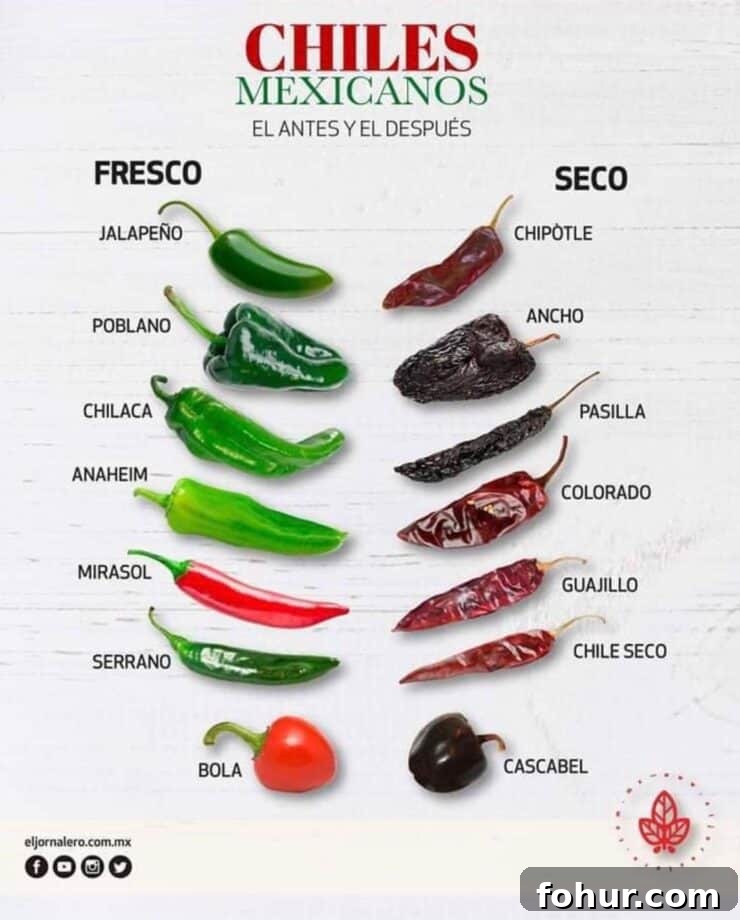
Many fresh Mexican chiles acquire new names after they are dried, which can be surprising to newcomers.
Drying changes a chile’s flavor dramatically. As moisture leaves, flavors concentrate and often shift toward sweet, earthy, smoky, or fruity notes.
Because of these differences, Mexican cooks keep both fresh and dried chiles on hand. Fresh peppers add brightness and texture to salsas and everyday dishes, while dried chiles are the backbone of traditional sauces, moles, adobos, tamales, pozole, and enchiladas.
Common fresh-to-dried transformations include:
- Poblano → Ancho
- Jalapeño → Chipotle (when smoked and dried)
- Mirasol → Guajillo
- Chilaca → Pasilla
- Anaheim → California or New Mexico chile (variety dependent)
Understanding Chile Heat (The Scoville Scale)
Heat is only one attribute of a chile; flavor is equally important in Mexican cooking.
The Scoville Scale measures a chile’s heat in Scoville Heat Units (SHU), which reflect the concentration of capsaicin, the compound responsible for spiciness. Capsaicin concentrates in the white membranes inside the pepper, so removing those membranes reduces heat more effectively than removing seeds alone.
Scoville ratings are a useful guide but not absolute — heat varies with variety, growing conditions, and ripeness. Use the SHU ranges provided here to help choose chiles for your dishes.
Fresh Mexican Chiles
Fresh chiles add bright flavor, aroma, and texture. I roast poblanos for rellenos, blend serranos into salsa verde, and dice jalapeños for pico de gallo. While heat often gets attention, I pick fresh chiles as much for their flavor and fragrance.
Below are the fresh chiles I use most, with notes on heat, flavor, ideal uses, and a few recipe suggestions.
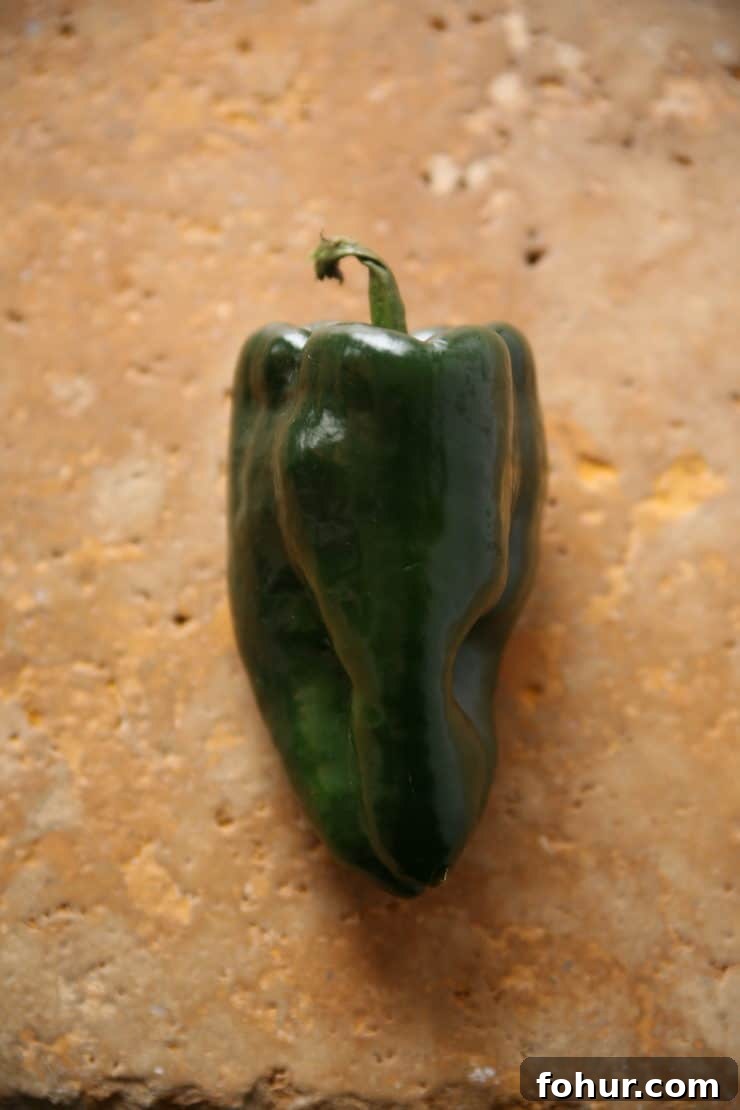
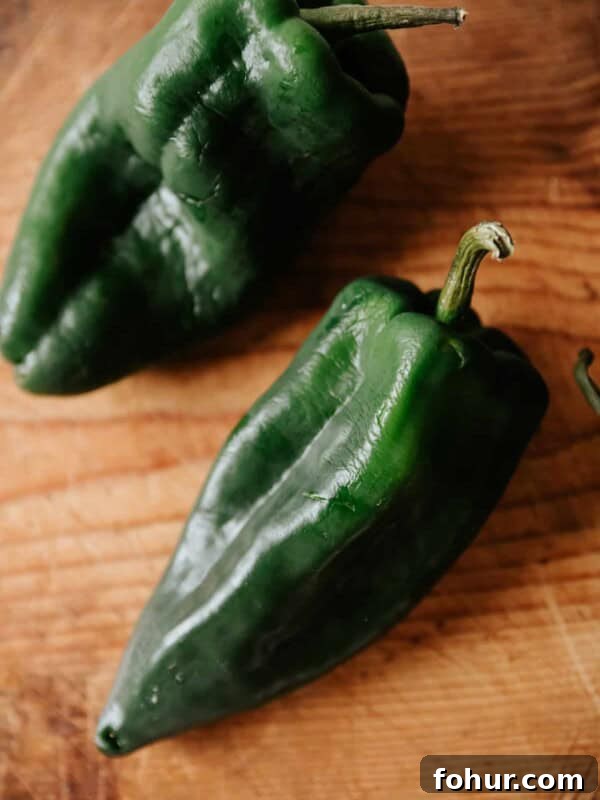
Poblano Chile
Heat: Mild (1,000–2,000 SHU)
Flavor: Earthy with gentle sweetness; roasting brings smoky richness.
Best for:
- Chiles Rellenos
- Rajas con Crema
- Chiles en Nogada
- Roasting
- Soups and stews
Dried form: Ancho — prized for sweet, fruity complexity in sauces and moles.
Recipe ideas: Chiles en Nogada; Calabacitas con Rajas; Chile Rellenos.
How I use it: Poblanos are one of my go-to fresh chiles. I roast them for rellenos or slice them into rajas for tacos, quesadillas, and stews.
Note: In some U.S. grocery stores fresh poblanos are mislabeled as pasilla peppers. A true pasilla is the dried chilaca, while the dried poblano is an ancho — they are different varieties with distinct flavors.
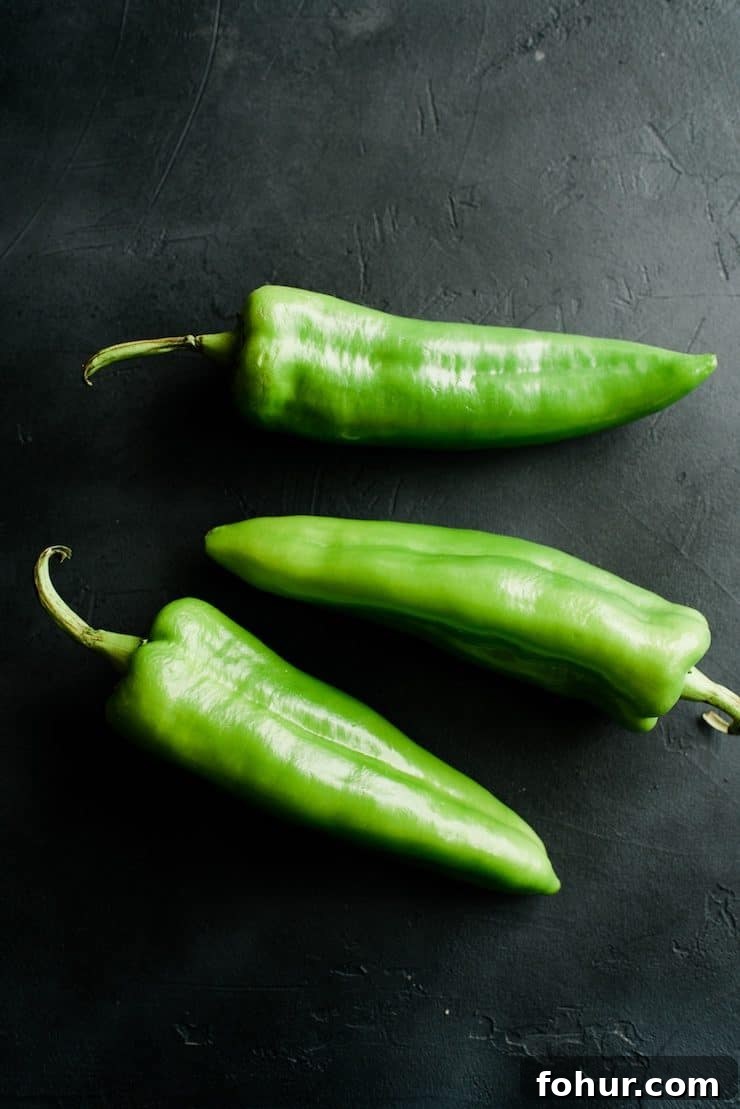
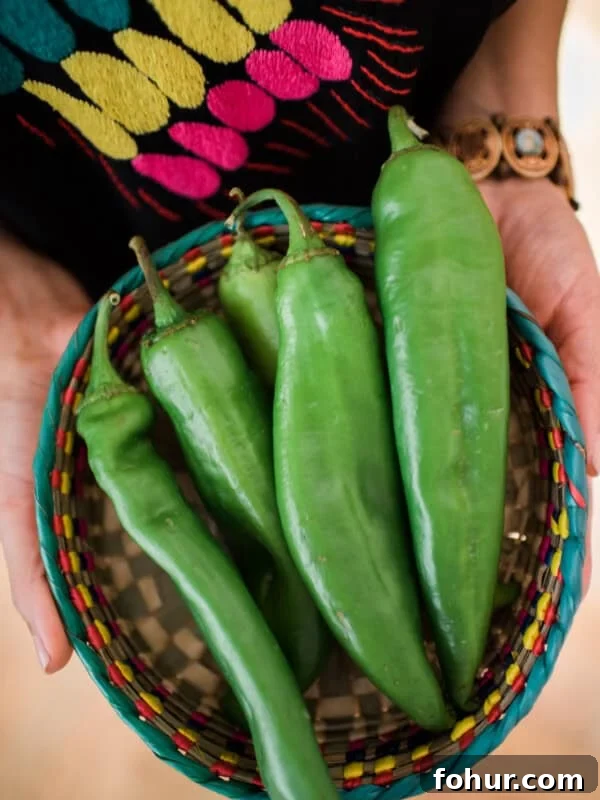
Anaheim Chile
Heat: Mild (500–2,500 SHU)
Flavor: Mild, slightly sweet, grassy and earthy; roasting deepens the flavor.
Best for:
- Chiles Rellenos
- Roasting
- Green chile sauces
- Soups and stews
Dried form: California chile or New Mexico chile, depending on variety.
Recipe ideas: Chiles Rellenos; Queso Fundido with roasted chiles.
How I use it: I roast Anaheim chiles in late summer and freeze them so I have roasted chiles year-round.
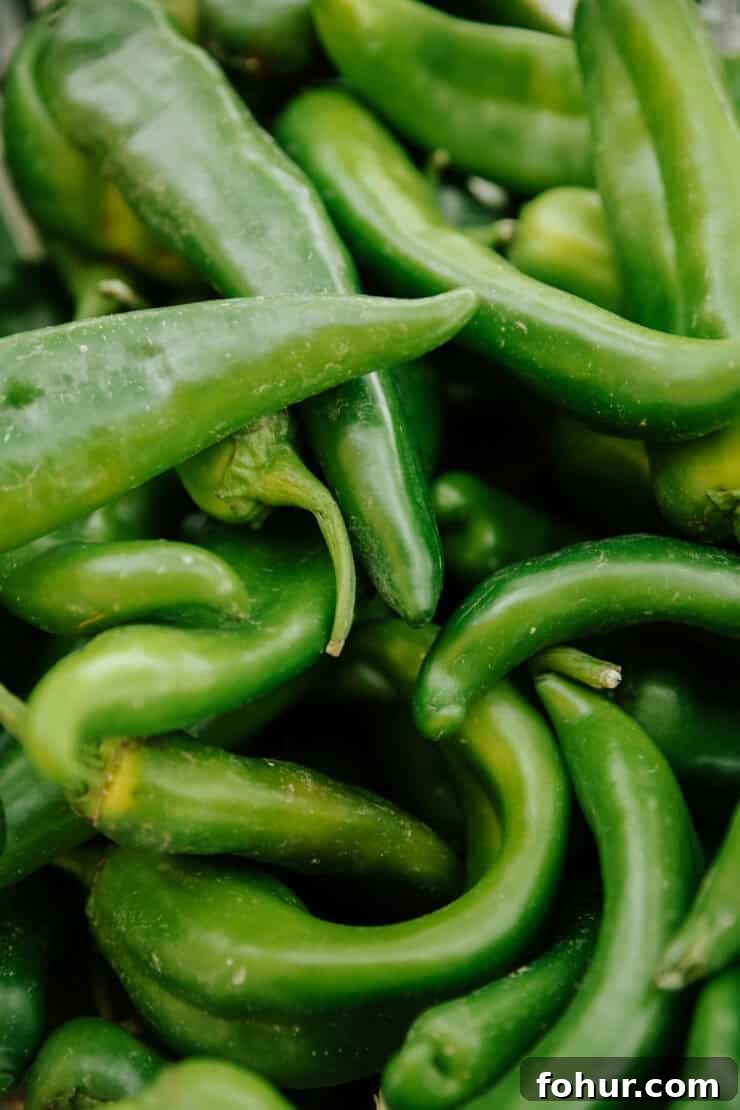
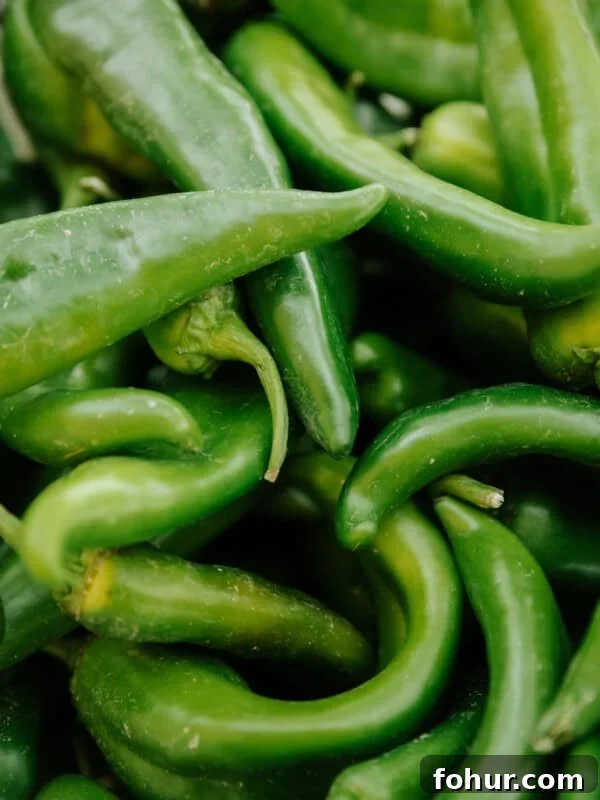
Hatch Chile
Heat: Mild to Hot (about 1,000–8,000 SHU, cultivar dependent)
Flavor: Earthy and slightly sweet; more robust than a standard Anaheim and excellent when roasted.
Best for:
- Chile verde
- Green enchiladas
- Cheeseburgers and sandwiches
- Salsas
- Roasting
Hatch chiles are tied to New Mexico’s Hatch Valley. They come in several cultivars, so you’ll often see them labeled mild, medium, or hot during roasting season.
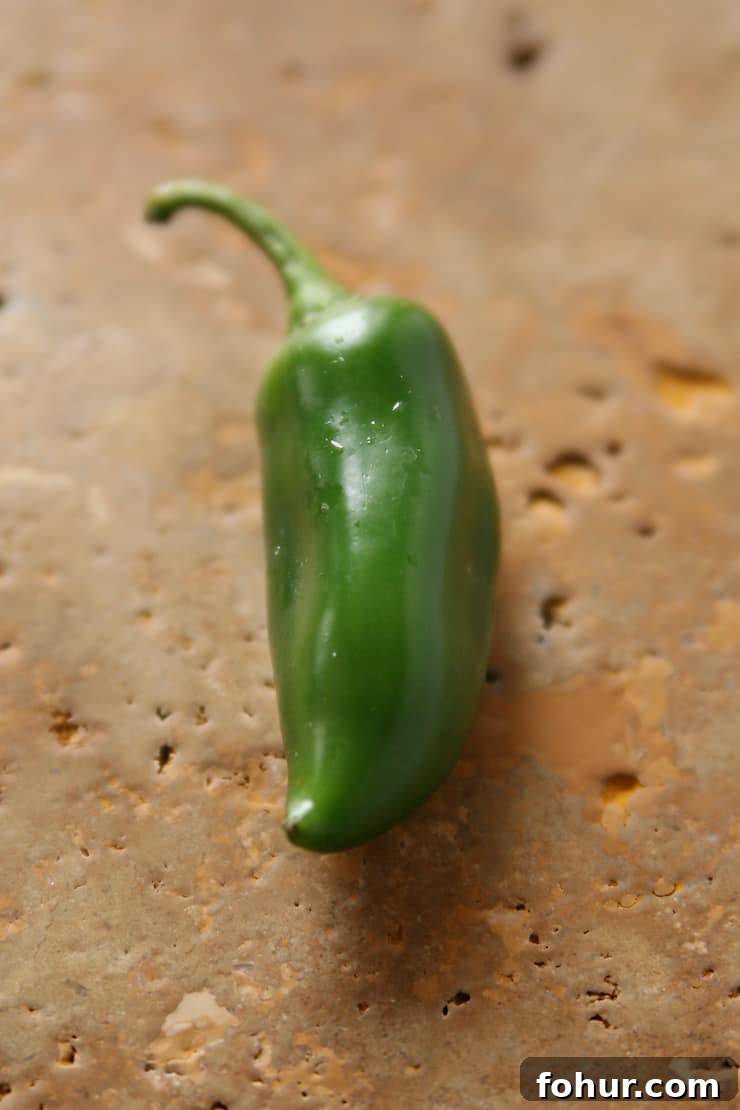
Jalapeño Chile
Heat: Medium (2,500–8,000 SHU)
Flavor: Bright, grassy, and slightly peppery; as they ripen to red they turn mildly sweeter.
Best for:
- Fresh salsas and pico de gallo
- Guacamole
- Escabeche (pickled jalapeños)
- Nachos and tacos
Dried form: Chipotle (when smoked and dried)
Recipe ideas: Escabeche pickled jalapeños; Jalapeño Margaritas; bacon-wrapped jalapeño poppers.
Did you know? Red jalapeños are allowed to fully ripen before they’re smoked and dried into chipotles. Smoking transforms their fresh flavor into something smoky and slightly sweet.
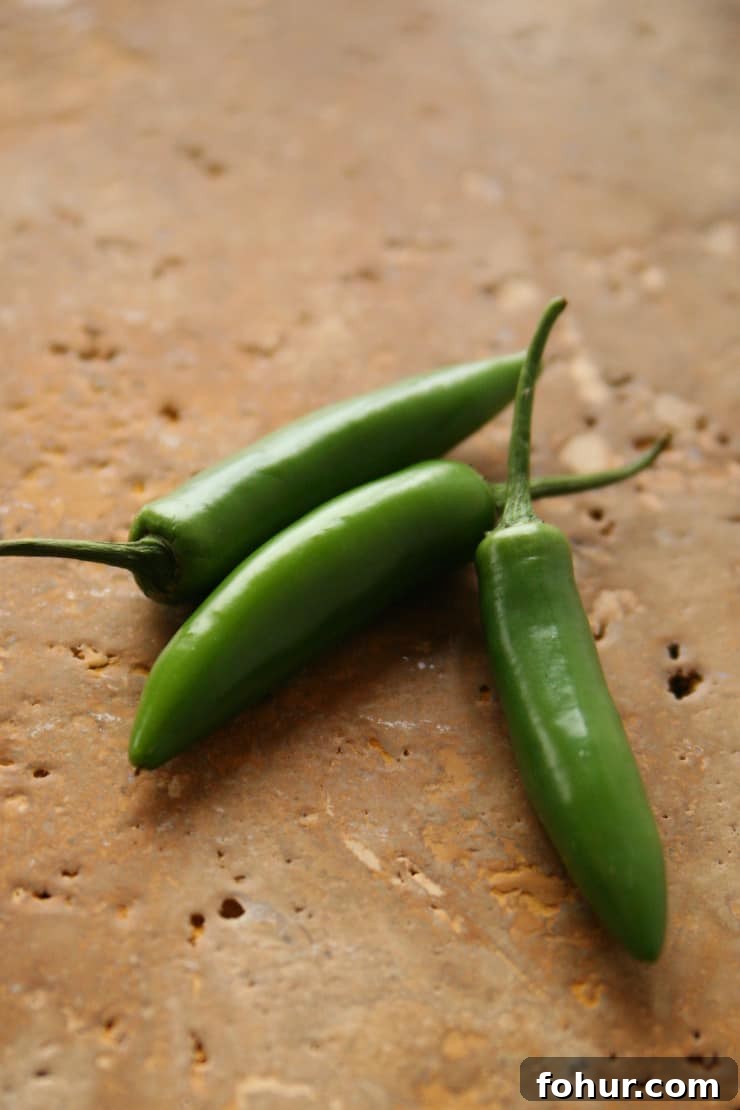
Serrano Chile
Heat: Hot (10,000–23,000 SHU)
Flavor: Bright, crisp, and fresh with a clean heat that builds.
Best for:
- Fresh salsas
- Pico de gallo
- Guacamole
- Hot sauces and garnishes
Dried form: Occasionally dried as chile seco, but usually used fresh.
Recipe ideas: Avocado-Tomatillo Salsa; Huevos a la Mexicana; Salsa Verde.
How I use it: When I want more heat than a jalapeño, serranos are my first choice. Their fresh flavor is perfect for uncooked salsas.
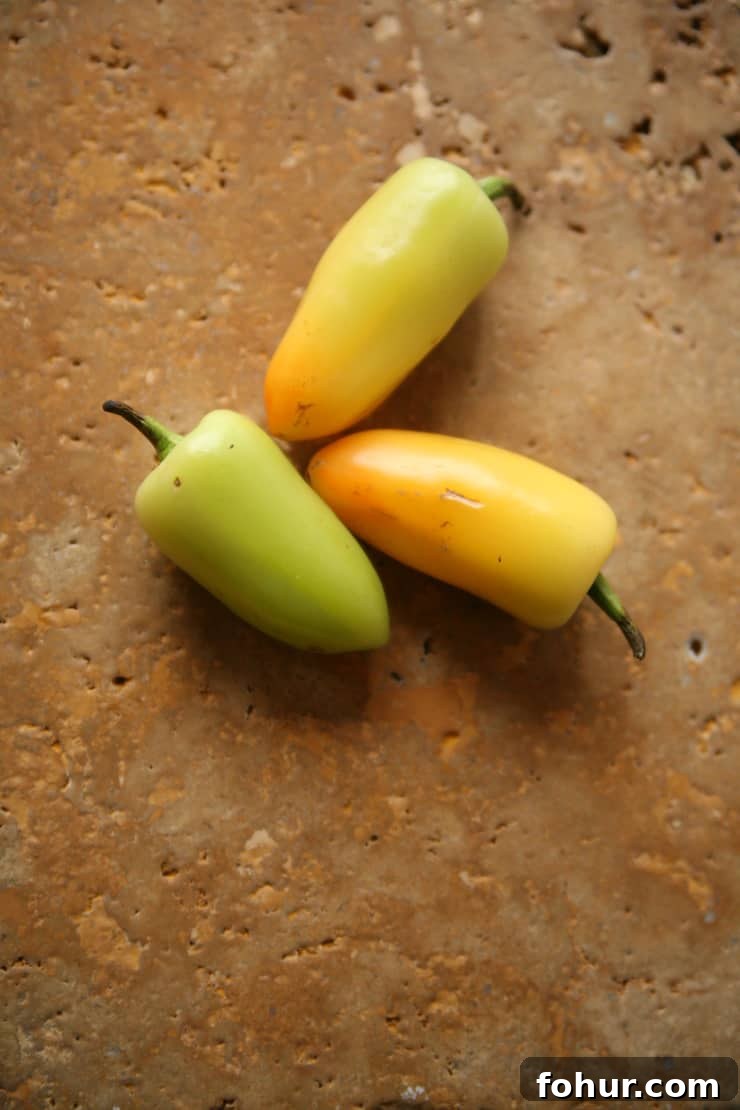
Chile Güero
Heat: Medium (5,000–8,000 SHU)
Flavor: Mildly spicy, slightly sweet and fruity; roasting deepens its richness.
Best for:
- Roasting
- Salsas
- Pickling
- Garnishes
Dried form: Rarely dried; most commonly used fresh.
Recipe ideas: Salsa ranchera for chiles rellenos or huevos rancheros.
Did you know? Güero means “blond” in Spanish, referring to this chile’s pale yellow color. The name can apply to different regional yellow chile varieties.
Bell Pepper
Heat: None (0 SHU)
Flavor: Sweet, crisp, and mild.
Best for:
- Fajitas
- Stuffed peppers
- Salads
- Grilling
Dried form: None
Why it’s included: Bell peppers aren’t traditional Mexican chiles, but they provide a useful baseline since they have no heat, helping beginners understand the Scoville Scale.
Habanero Chile
Heat: Very Hot (100,000–350,000 SHU)
Flavor: Intensely fruity with tropical and citrus notes, followed by strong heat.
Best for:
- Yucatán-style salsas
- Pickled onions
- Marinades
- Hot sauces
Dried form: Occasionally dried, but most often used fresh.
Recipe idea: Spicy pickled onions and Yucatán-style salsas.
Did you know? Habaneros are valued for their fruity flavor as much as their heat and are a staple in many dishes from the Yucatán Peninsula.
More Chile Guides
If you want to explore further, there are detailed guides on popular fresh chiles and the best roasting techniques.
Anaheim Chile Guide
Guide to Hatch Chiles
Poblano Chile Guide
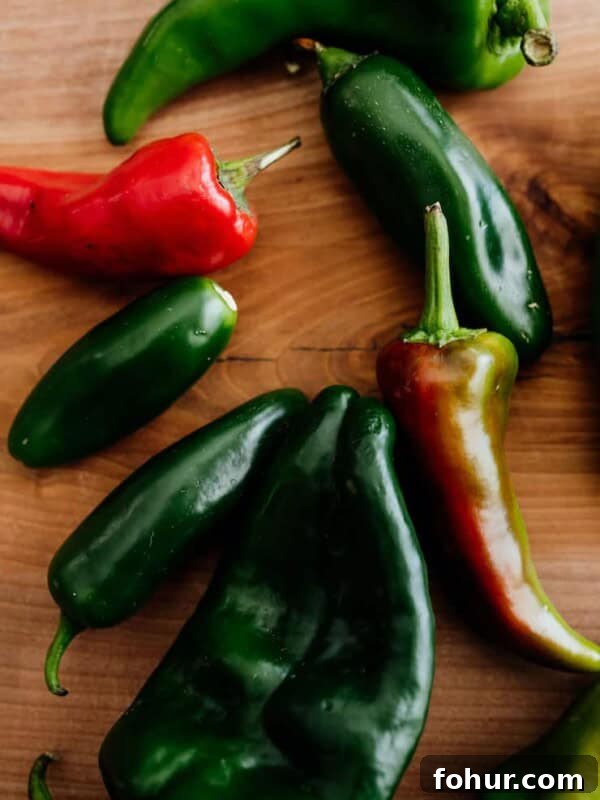
How to Roast Chile Peppers
Dried Mexican Chiles
Dried chiles are a pantry essential in many Mexican kitchens. While fresh chiles provide brightness, dried chiles contribute rich color, body, and complex flavors that form the base of countless sauces and stews.
Contrary to assumption, dried chiles aren’t all about heat. Many are quite mild and are used for their flavor — sweet, fruity, earthy, smoky, or even chocolatey notes.
Before using, dried chiles are typically stemmed and seeded, lightly toasted to release oils, then soaked in hot water until soft. Once blended, they become the flavorful foundation of enchilada sauces, moles, adobos, tamales, pozole, birria, and salsas.
If you’re building a Mexican pantry, these five dried chiles are the most useful to start with: guajillo, ancho, New Mexico, chile de árbol, and chipotle. With those, you can prepare many classic dishes.
My Pantry Staples
With a small selection of dried chiles you can make enchilada sauce, tamales, birria, pozole, adobos, soups, and salsas.
Start with these five dried chiles:
- Guajillo
- Ancho
- New Mexico
- Chile de árbol
- Chipotle
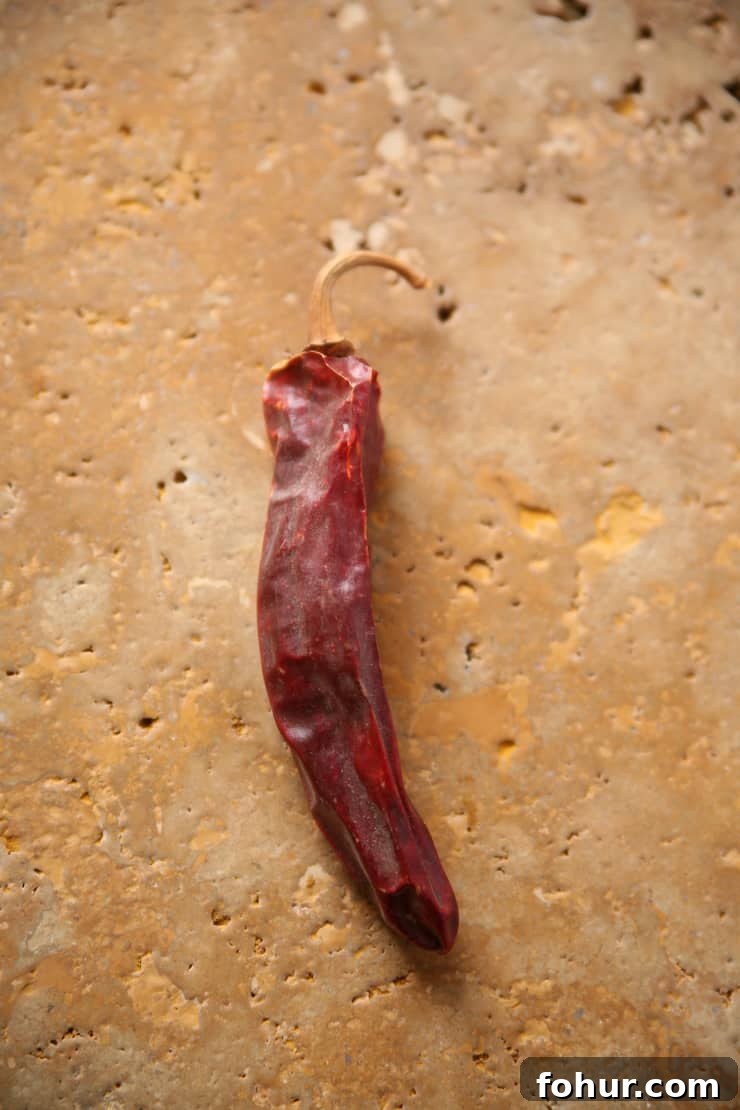
Guajillo Chile
Heat: Mild to Medium (2,500–5,000 SHU)
Flavor: Bright, tangy, slightly fruity with subtle berry and green tea notes.
Best for:
- Enchilada sauce
- Pozole rojo
- Birria
- Tamales
- Adobos and marinades
Fresh form: Mirasol chile
Recipe ideas: Red enchilada sauce; Pozole Rojo; Pork Tamales Rojos; Birria de Res.
How I use it: If I could keep only one dried chile, it would be guajillo. It’s versatile and adds balanced flavor and attractive color without overwhelming heat.
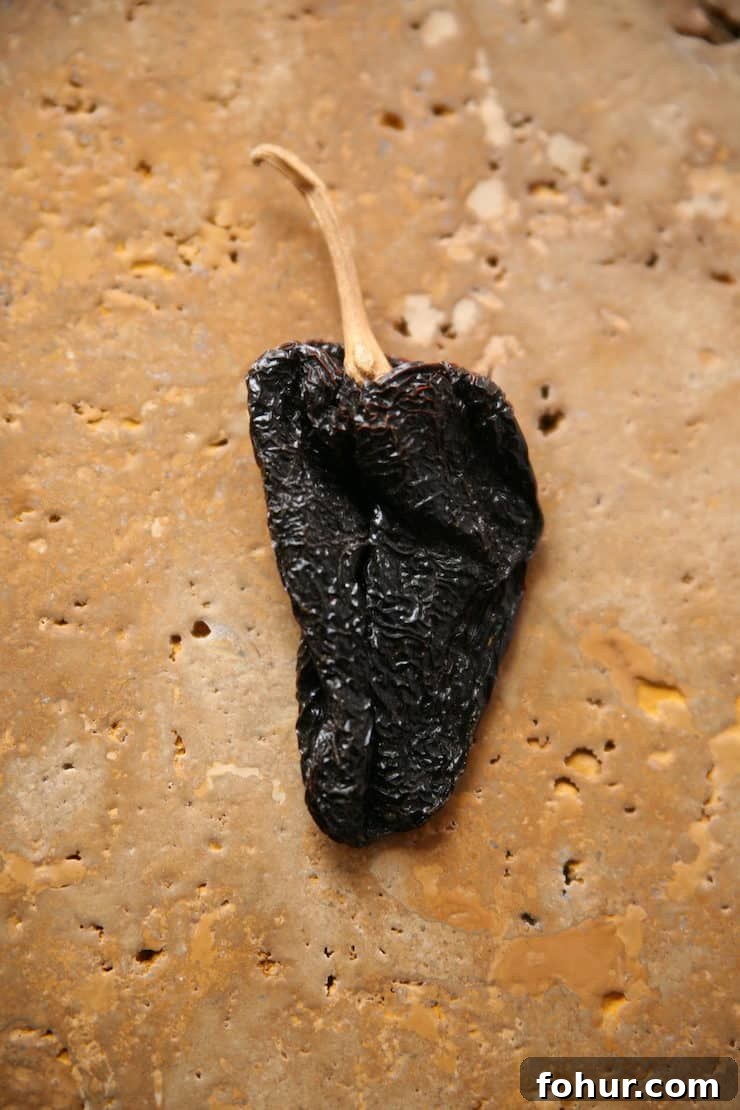
Ancho Chile
Heat: Mild (1,000–2,000 SHU)
Flavor: Sweet, rich, and earthy with notes of raisins, dried fruit, cocoa, and coffee.
Best for:
- Mole
- Enchilada sauce
- Adobo
- Marinades
Fresh form: Poblano chile
Recipe ideas: Carne Adobada; Chicken Mole Enchiladas; Chicken Mole; Salsa Macha.
Did you know? Ancho means “wide” in Spanish, referring to the pepper’s broad, heart-shaped appearance. It’s prized more for its rich flavor than its heat.
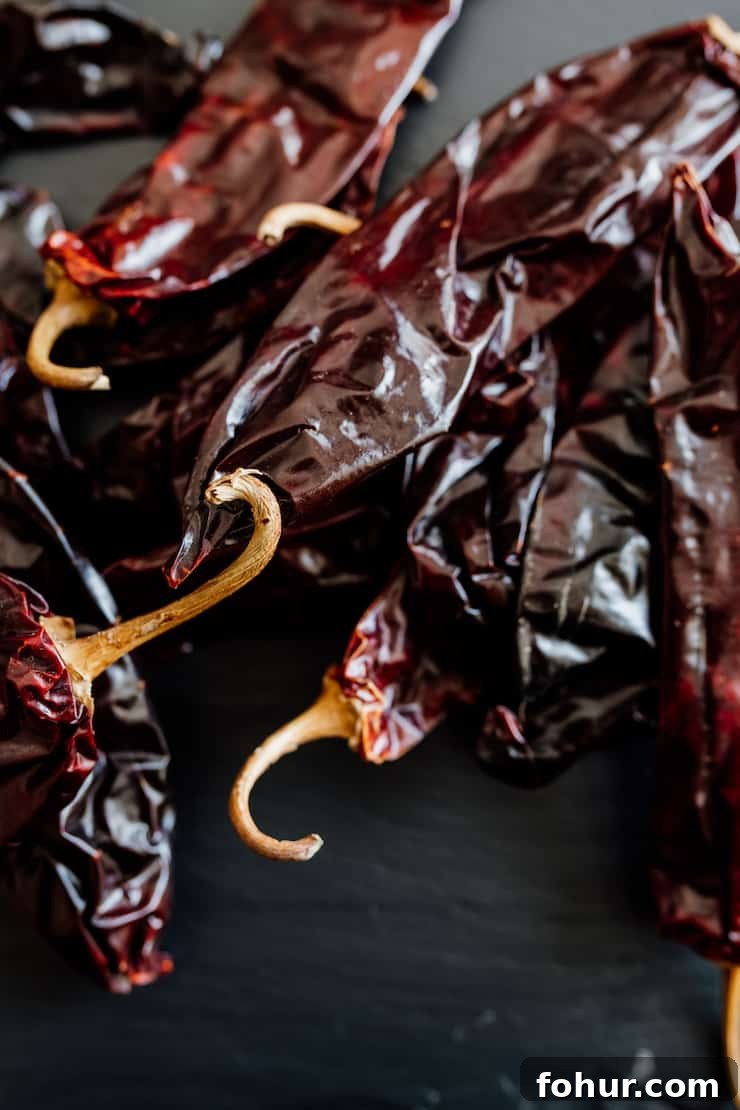
New Mexico Chile (Chile Colorado)
Heat: Mild to Medium (500–2,500 SHU)
Flavor: Earthy, slightly sweet and mellow with subtle dried cherry notes.
Best for:
- Red chile sauce
- Enchiladas
- Tamales
- Chile Colorado
- Soups and stews
Fresh form: New Mexico chile (Anaheim is a milder cultivar of this family)
Recipe ideas: Authentic red chile sauce; Red Enchiladas; Red Chile Chilaquiles.
How I use it: This chile defined red chile sauce for my family growing up. I still reach for it when I want those familiar Southwest flavors.
Note: In parts of the Southwest, these dried chiles are often referred to simply as “red chiles” or “chile colorado” because of their deep red color.
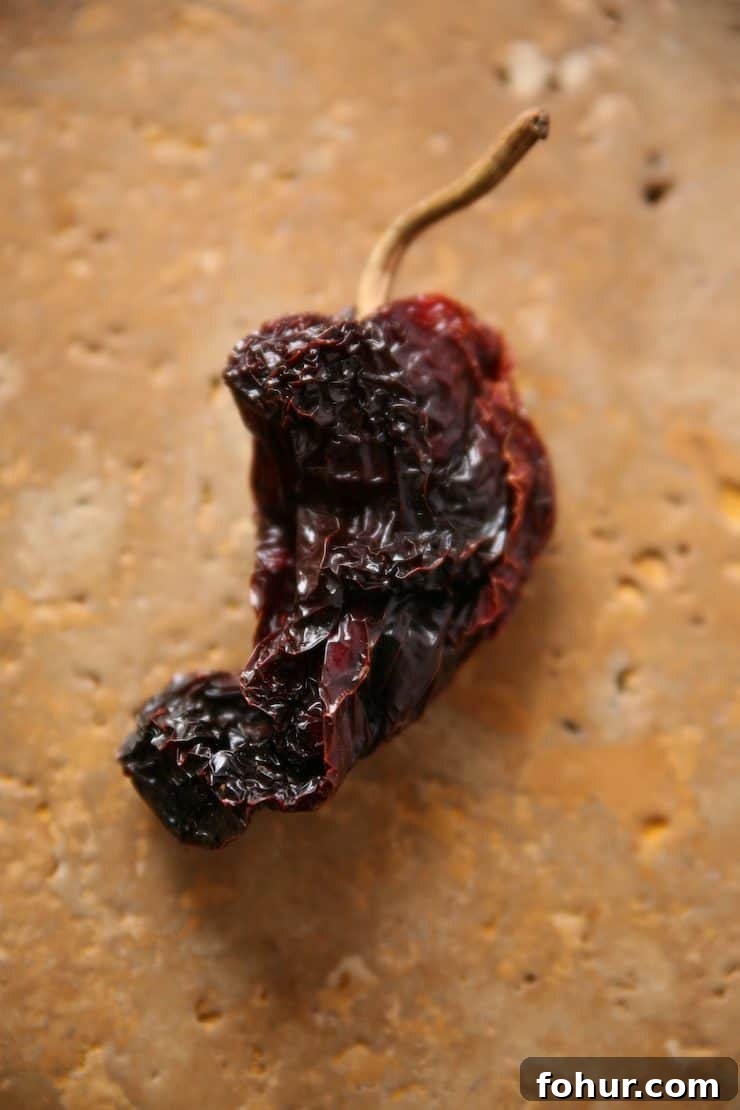
Pasilla Chile
Heat: Mild to Medium (1,000–2,500 SHU)
Flavor: Earthy, woodsy, slightly tangy with raisin and cocoa notes.
Best for:
- Moles
- Table sauces
- Salsas
- Braised meats
Fresh form: Chilaca chile
Recipe idea: Chile Pasilla Oaxaqueño-style sauces and moles.
Did you know? The name pasilla comes from the Spanish word pasa, meaning “raisin,” because of its dark color and wrinkled appearance.
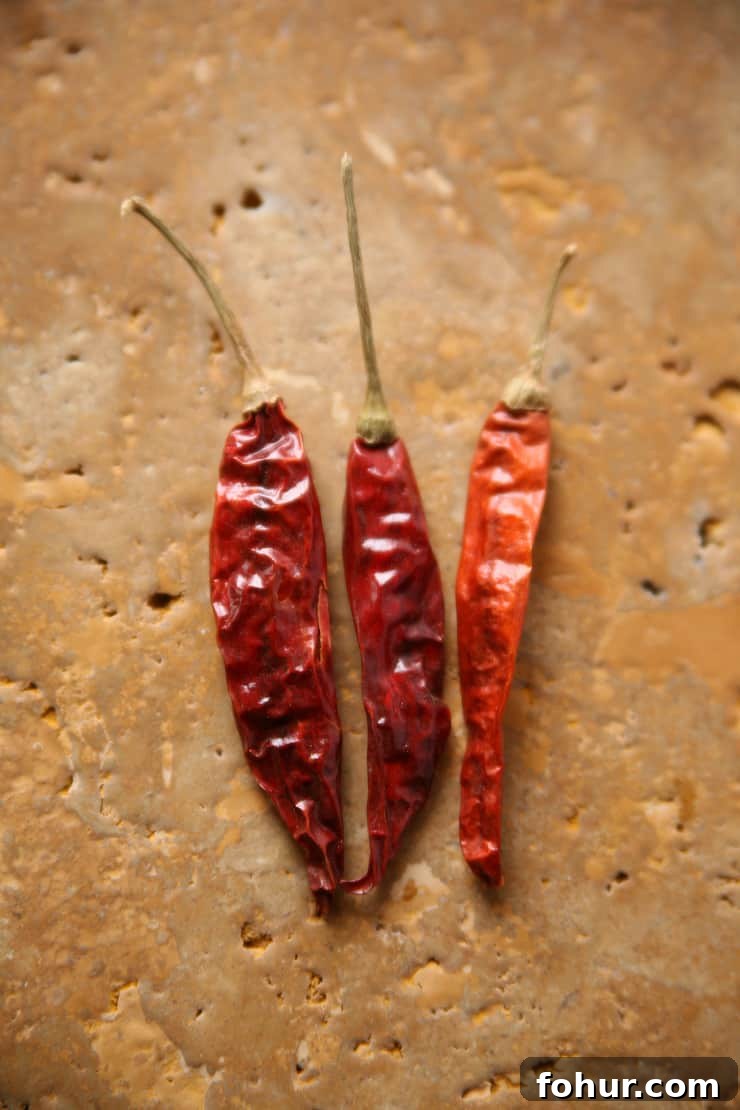
Chile de Árbol
Heat: Hot (15,000–30,000 SHU)
Flavor: Bright, grassy, nutty, and slightly smoky with a clean, lingering heat.
Best for:
- Salsa de chile de árbol
- Salsa macha
- Hot sauces
- Infused oils
Form: Typically sold dried
Recipe ideas: Chile de Árbol salsa; braised dishes with arbol-infused sauce.
How I use it: When a salsa needs extra heat without changing its character, chile de árbol is my go-to — a little goes a long way.
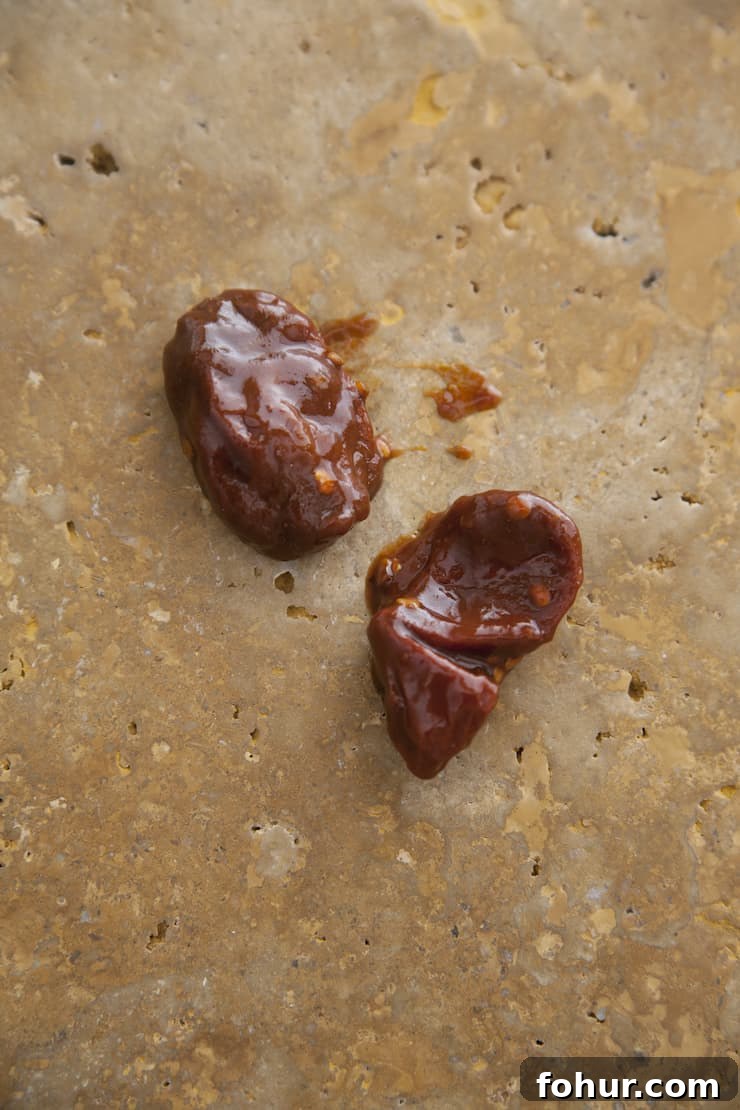
Chipotle Chile
Heat: Medium to Hot (2,500–8,000 SHU)
Flavor: Intensely smoky, earthy, and slightly sweet.
Best for:
- Tinga
- Marinades
- Beans and stews
- Barbacoa-style dishes
- Sauces and spreads
Fresh form: Red jalapeño
Recipe ideas: Chicken tinga; chipotle shrimp tacos; chipotle crema.
Did you know? Many canned chipotles are the morita variety, smoked for a shorter time and more fruity; another variety, meco, is smoked longer and develops a deeper, earthier flavor.
Optional Specialty Chiles
A few specialty chiles aren’t in every pantry but are worth knowing for specific dishes.
Mulato Chile
- Heat: Mild (2,500–3,000 SHU)
- Flavor: Chocolate, licorice, dried fruit
- Fresh form: Mature poblano
- Best for: Mole poblano
Cascabel Chile
- Heat: Mild to Medium (1,500–2,500 SHU)
- Flavor: Nutty, earthy, slightly smoky
- Best for: Salsas and table sauces
Did you know? Cascabel means “little rattle.” The loose seeds inside the dried pepper rattle when shaken.
Morita Chile
- Heat: Medium to Hot (5,000–10,000 SHU)
- Flavor: Fruity and smoky
- Best for: Salsas and adobos
Puya Chile
- Heat: Medium to Hot (5,000–8,000 SHU)
- Flavor: Fruity, bright, and slightly sharper than guajillo
- Best for: Salsas and marinades
How to Buy Mexican Chiles
Fresh
- Grocery stores
- Latin markets
- Farmers markets
Dried
- Mexican grocery stores
- Specialty spice shops or online vendors
Look for
- Flexible, not brittle
- Glossy skin for fresh chiles
- Strong, pleasant aroma
Avoid
- Brittle, dusty, or faded dried chiles
- Soft spots or wrinkles that indicate spoilage in fresh chiles
Ready to Cook with Mexican Chiles?
Now that you can tell fresh from dried chiles and understand their roles, put them to work. Whether you’re making homemade enchilada sauce, simmering pozole, roasting poblanos for rellenos, or blending a fresh salsa, choosing the right chile is the first step toward authentic flavor.
Explore recipes and experiment with combinations — once you start tasting how different chiles work together, your cooking will open up in delicious ways.