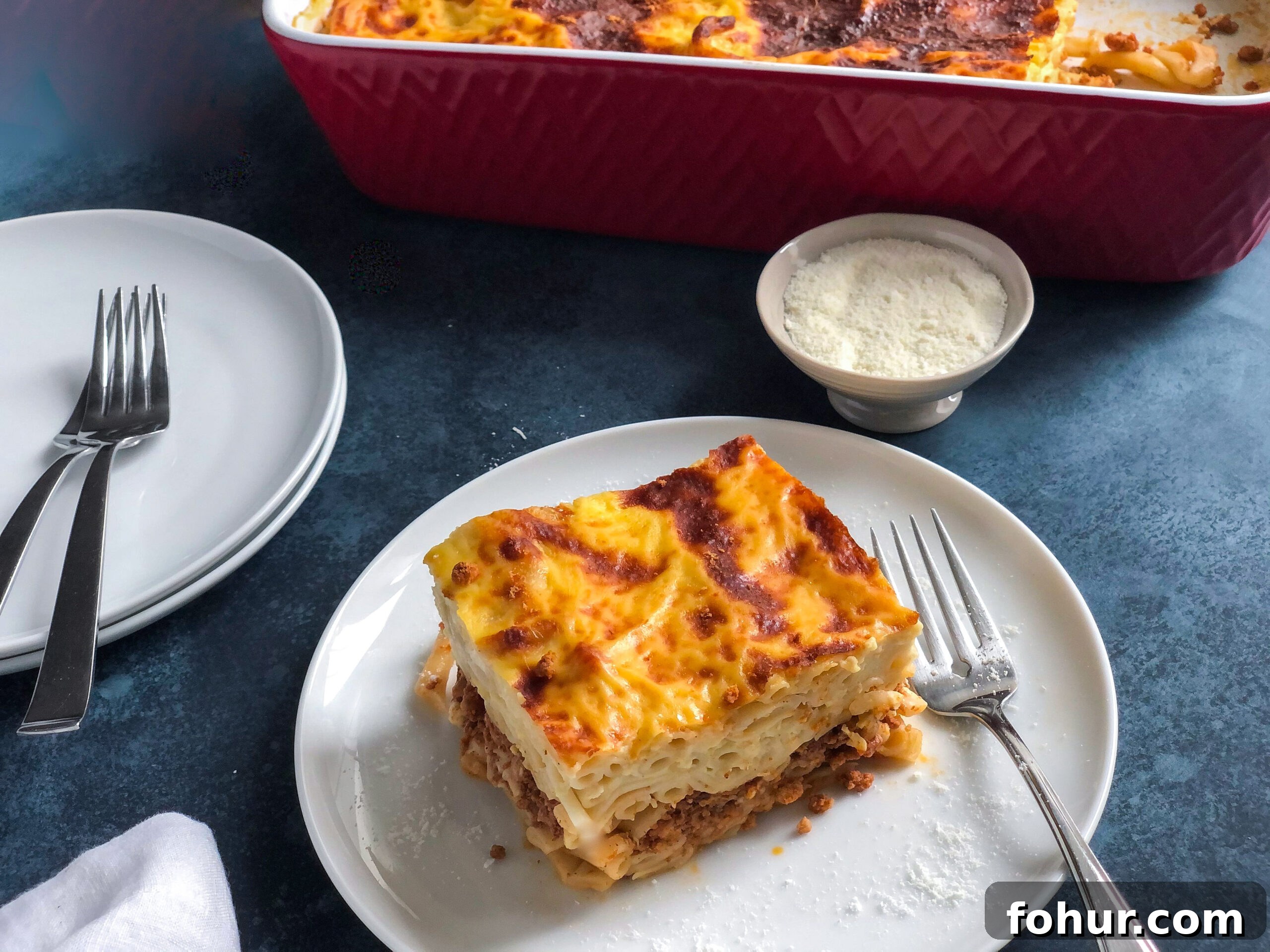
This authentic Greek pastitsio recipe (also spelled pastichio) is a classic baked pasta dish made with layers of tubular pasta, a rich meat sauce and a creamy béchamel. It’s the traditional pastitsio we grew up eating in our Greek home and remains a favourite in our family.
Pastitsio (Pastichio) is among the most beloved dishes in Greek cooking and has been part of our family for generations. If you enjoy traditional Greek comfort food, consider trying other classic recipes we grew up with such as moussaka, yemista and youvetsi — dishes that share the same heartiness, layered structure and rich flavours.
We have four daughters between us and, while they were preschoolers, our parents cared for them and kept them closely connected to our language and heritage. They were fed lovingly prepared, nutritious meals every day. If they wanted freshly baked Greek cookies, our parents would bake. If they asked for spaghetti, the water would be boiling almost immediately. Nothing was too much trouble — and pastitsio, a family favourite, was often requested by all of them.
What is pastitsio?
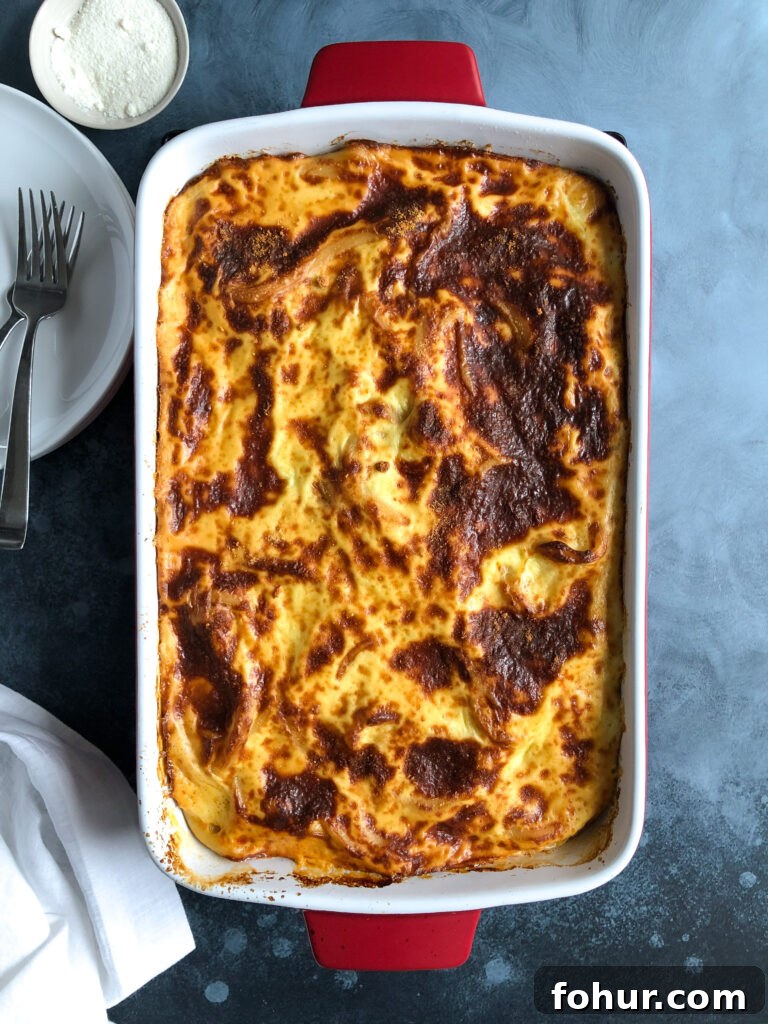
Pastitsio is a layered, baked dish consisting of pasta noodles, a seasoned ground meat sauce and a thick béchamel topping. It’s a classic Greek comfort food often served for family gatherings and special occasions. While it may appear elaborate, pastitsio breaks down into three straightforward components: the meat sauce, the pasta layer and the béchamel. Several steps, like preparing the meat sauce or boiling the pasta, can be completed ahead of time to shorten assembly and baking day workload.
One common misconception is calling pastitsio “Greek lasagna.” Although both dishes are layered and baked, they are distinct: pastitsio uses long tubular pasta and a béchamel that sets during baking, and its meat sauce is often flavoured with warm spices such as cinnamon. Pastitsio deserves its own name and recognition.
Ingredients for Greek pastitsio
Pastitsio has three main elements: meat sauce, pasta and béchamel. Below are the key ingredients used in our family recipe and why they matter.
Ground meat: A mixture of veal and pork gives the sauce depth and tenderness. You may substitute other ground meats if desired, but the veal-pork combo is traditional.
Tomato sauce: Homemade tomato sauce is ideal, but a good-quality store-bought sauce will also work. The tomato sauce combines with the meat and aromatics to form the middle layer.
Cinnamon: A small amount of ground cinnamon gives the meat sauce the warm, recognizable finish found in many traditional Greek meat sauces.
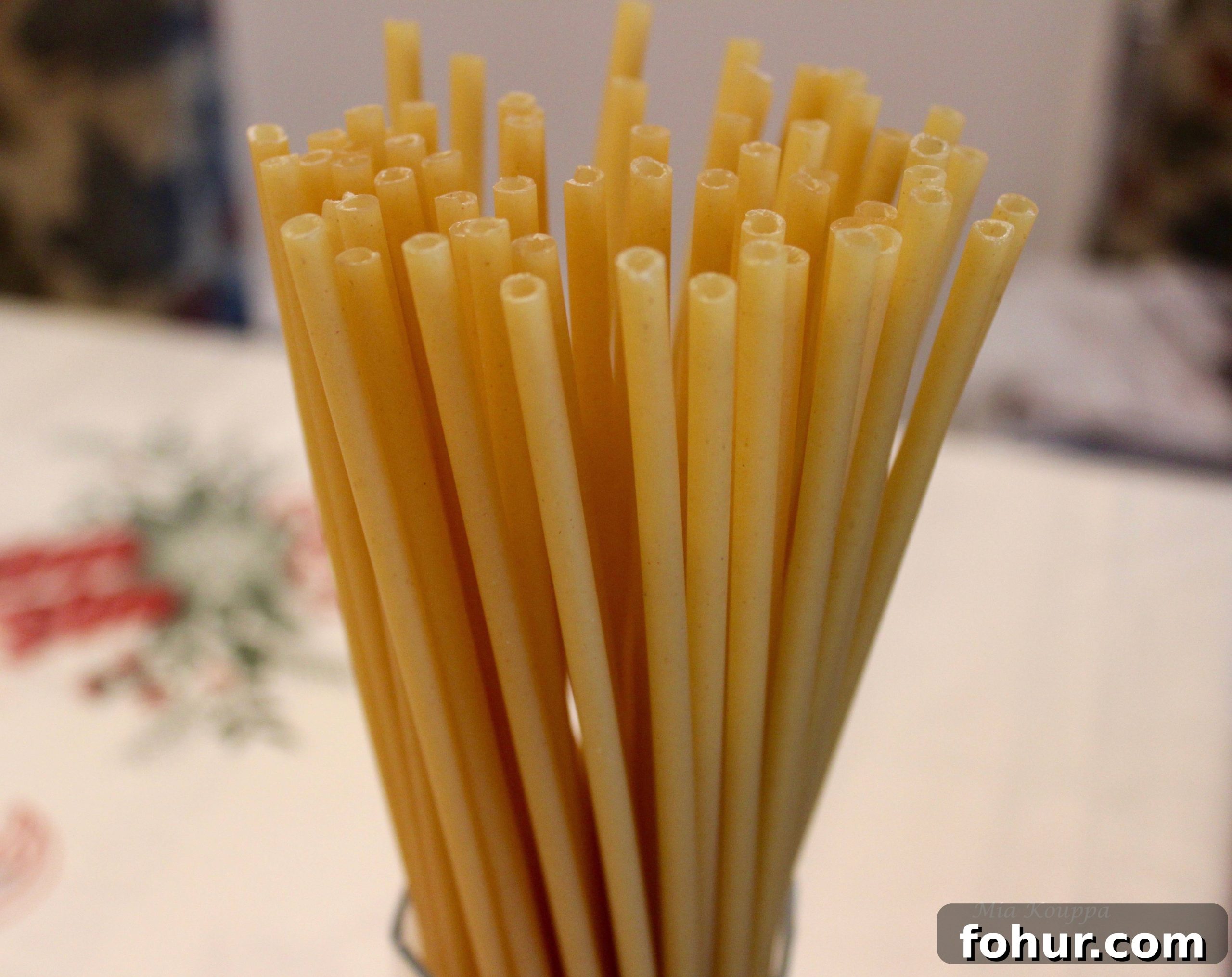
Pastitsio pasta: Long, hollow tubular pasta — typically Misko Pastitsio No. 2 — creates the firm pasta layer and makes clean slices possible. If unavailable, long tubular pasta such as bucatini or a similar shape can substitute.
Olive oil: We use Greek olive oil throughout the recipe, including in the béchamel. Using olive oil instead of butter creates a slightly different, very traditional flavour profile.
Milk, flour and eggs: These form the béchamel. The eggs help the sauce set as it bakes, producing a silky, sliceable top layer.
Mizithra cheese: Aged mizithra is the traditional choice for pastitsio. If it’s not available, grated Parmesan and Romano make a suitable substitute.
How to make pastitsio
Divide the work into three parts: meat sauce and pasta, béchamel, and assembly. Preparing components ahead of time speeds the process.
1. Prepare the meat sauce
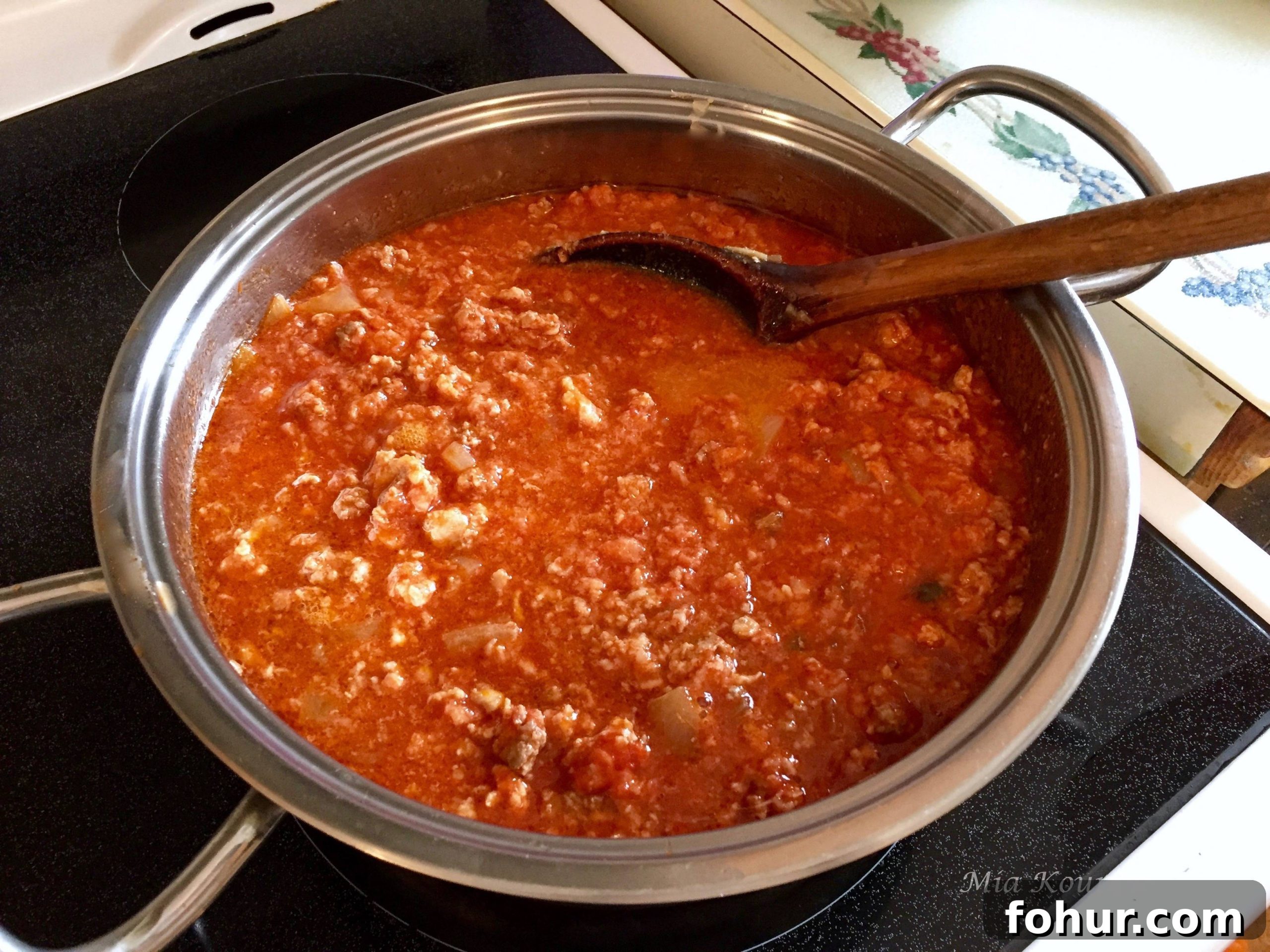
Sauté finely chopped onion in olive oil until soft. Add the ground meat and brown. Stir in tomato sauce, salt, pepper, cinnamon and a little boiling water. Simmer uncovered over medium heat about 45 minutes until the sauce is thick and flavours have melded.
2. Cook the pasta
Boil the pastitsio pasta according to package directions with a splash of olive oil and salt. Do not undercook: the pasta should be fully edible when assembled, as it will continue to bake in the oven.
3. Make the béchamel
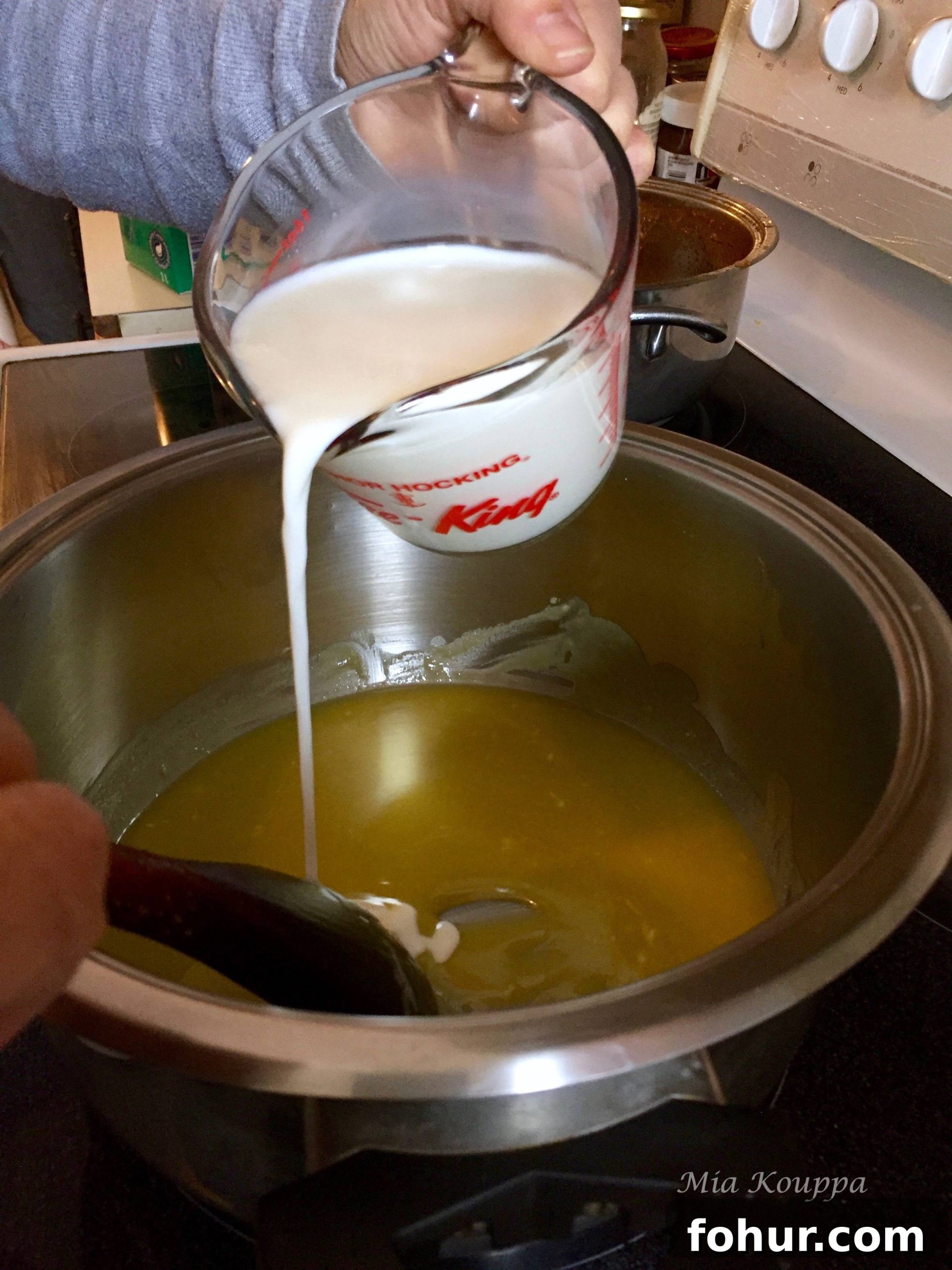
Heat olive oil in a heavy saucepan. Stir in flour and cook for 2–3 minutes without allowing it to brown. Gradually whisk in milk, then stream in beaten eggs while stirring constantly. Cook over medium-low, stirring until the béchamel thickens but remains pourable—about 8–12 minutes—until it coats a spoon.
Assemble the pastitsio
Grease a baking pan with olive oil and sprinkle the bottom with a little grated mizithra. Spread half the pasta evenly and toss with more mizithra. Spoon the drained meat sauce over the pasta in an even layer and dust with nutmeg. Add the remaining pasta and sprinkle with grated mizithra.
Pour the béchamel over the top and spread it smoothly. Insert a fork into several places and wiggle gently so some béchamel seeps between the top noodles, which helps bind the layers. Finish with a light sprinkle of mizithra.
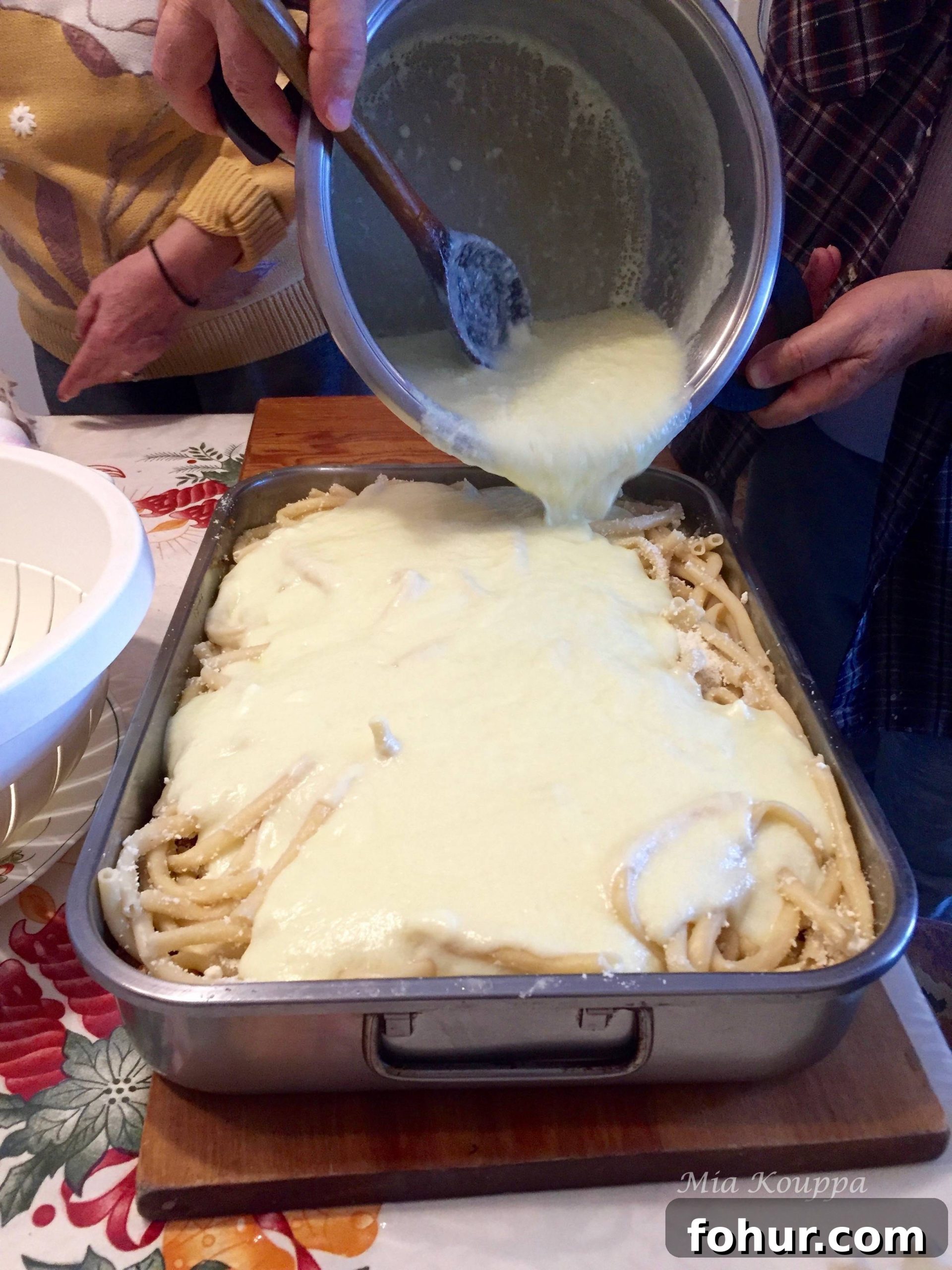
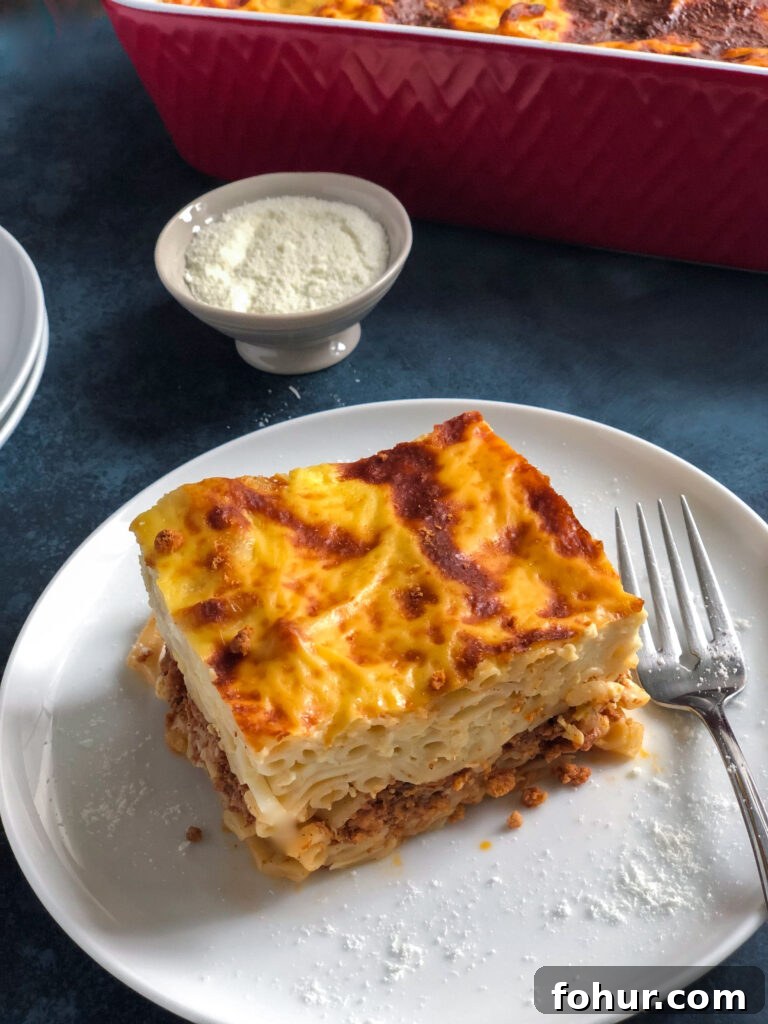
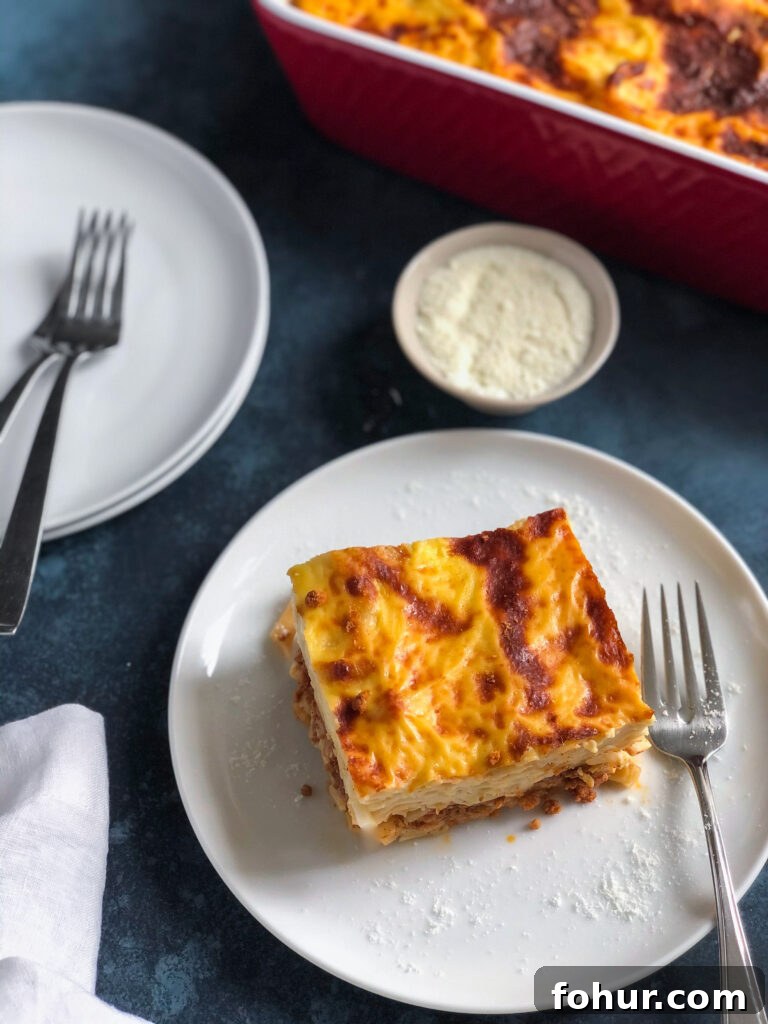
Bake: Bake at 400°F (204°C) for about 50 minutes until the top is golden. Let the pastitsio rest 20–30 minutes before slicing so the layers set and you can cut neat squares.
Tips for making the best Greek pastitsio
Pastitsio rewards a little planning. These tips help ensure consistently excellent results:
- Make extra meat sauce: The meat sauce also works well with pasta on another night, so preparing extra is efficient.
- Prep ahead: The meat sauce and cooked pasta can be made a day ahead. Make the béchamel just before assembly for the smoothest texture.
- Cook pasta fully: Don’t undercook the noodles; sturdy tubular pasta holds up during baking and yields cleaner slices.
- Let béchamel seep: Use a fork to create small gaps in the top pasta layer so the béchamel penetrates and binds the dish.
- Use olive oil in béchamel: Traditional Greek béchamel often uses olive oil instead of butter; it produces a silky, flavourful topping.
- Allow resting time: 20–30 minutes of rest is essential before cutting.
Pin this recipe if you like it!
Substitutions and variations
For an authentic result, follow the recipe as written. If ingredients are hard to source, these substitutions work:
- Pasta: If Misko Pastitsio No. 2 is unavailable, use bucatini or another long tubular pasta. The texture will be similar, though not identical.
- Mizithra: Substitute a mix of grated Parmesan and Romano when mizithra cannot be found.
- Milk: Regular milk or lactose-free milk both work in the béchamel. Use what you prefer.
- Meat: Swap the veal-pork blend for ground beef or a different mixture, keeping in mind the flavour will change.
If you want a meat-free option, try a vegan pastitsio developed specifically to reproduce the layered textures and flavours without meat or dairy.
Frequently asked questions
What is pastitsio?
Pastitsio is a classic Greek baked pasta dish made with tubular pasta, a seasoned meat sauce and a thick béchamel topping. It’s baked until golden and set, then cut into generous squares for serving.
Is pastitsio the same as Greek lasagna?
Not exactly. While both are layered and baked, pastitsio uses tubular pasta and a thick béchamel, and its meat sauce often includes warm spices such as cinnamon. Lasagna traditionally uses pasta sheets and different cheese layers.
Can you make pastitsio ahead of time?
Yes. You can prepare the meat sauce and cook the pasta ahead, assemble the pastitsio and refrigerate, then bake when ready. Leftovers reheat well and often taste even better the next day.
Recipe
Pastitsio (9 × 13 inch pan)
Ingredients — Meat sauce
- 1/2 medium onion, chopped
- 2 tbsp olive oil
- 650 g ground meat (veal and pork mixture)
- 3 1/2 cups tomato sauce
- 1 tsp salt
- 1/2 tsp pepper
- 1/2 tsp heaping cinnamon
- 1/4 cup boiling water
Ingredients — Pasta
- 500 g Greek pasta (Misko Pastitsio No. 2)
- 1/2 tbsp olive oil
- 1/2 tsp salt
Ingredients — Béchamel
- 1/4 cup olive oil
- 1/4 cup plus 1 1/2 tsp all-purpose flour
- 1 liter milk
- 4 eggs, beaten
Assembly
- 1 1/2 tbsp olive oil for greasing
- 1/4 tsp ground nutmeg
- 1/4 cup + 3 tbsp grated mizithra (or Parmesan/Romano)
- 1 tsp mizithra to sprinkle on top
Instructions — Summary
- Sauté onion in olive oil until soft. Add meat and brown. Stir in tomato sauce, salt, pepper, cinnamon and boiling water; simmer uncovered 45 minutes.
- Cook pasta in salted boiling water with a splash of olive oil until fully cooked; drain and set aside.
- For béchamel, heat olive oil, whisk in flour and cook 2–3 minutes. Gradually add milk, then beaten eggs, stirring constantly until thickened but pourable.
- Preheat oven to 400°F. Grease pan and sprinkle bottom with mizithra. Layer half the pasta tossed with mizithra, spread meat sauce, sprinkle nutmeg, add remaining pasta and grated mizithra.
- Pour béchamel over, spread evenly, pierce with a fork so béchamel seeps between noodles, sprinkle top with mizithra. Bake ~50 minutes until golden. Let rest 20–30 minutes before slicing.
Pastitsio (large pan)
For larger gatherings, scale ingredients proportionally: increase meat, pasta, béchamel and mizithra quantities and follow the same method. Bake time remains similar but monitor browning and consider rotating the pan during baking.
Enjoy this comforting, timeless Greek classic — a dish that feeds family, traditions and memories. Serve with a simple green salad and a squeeze of lemon for balance.