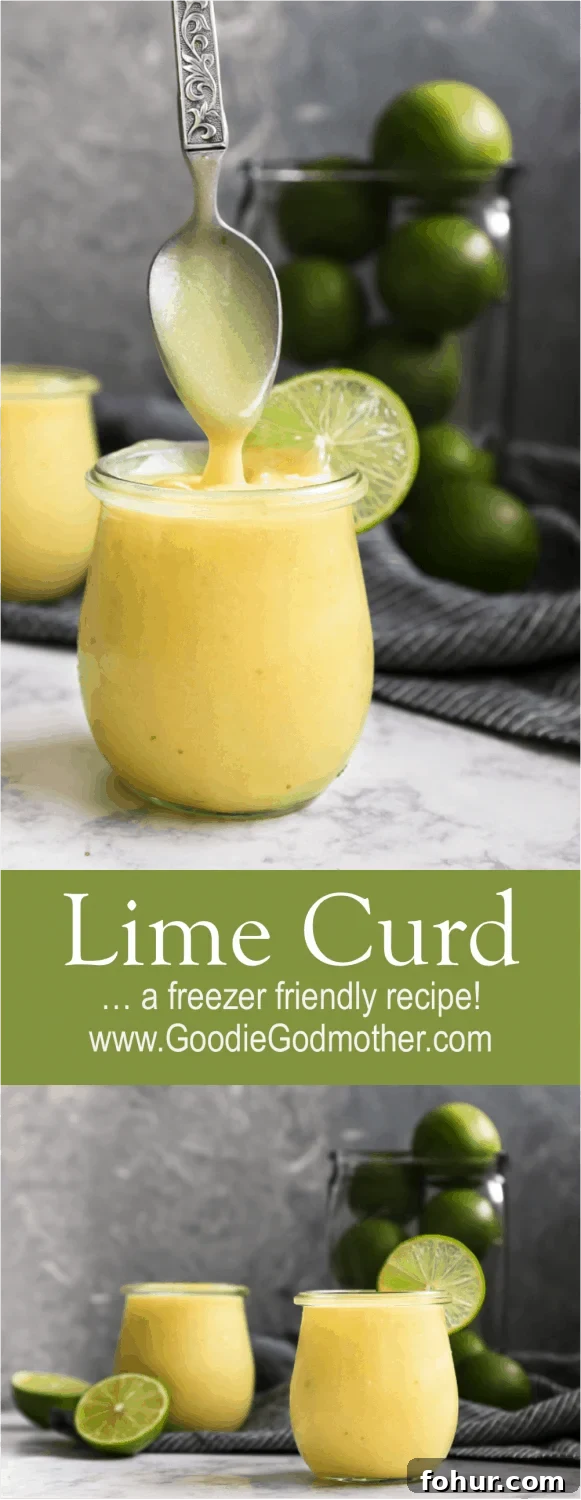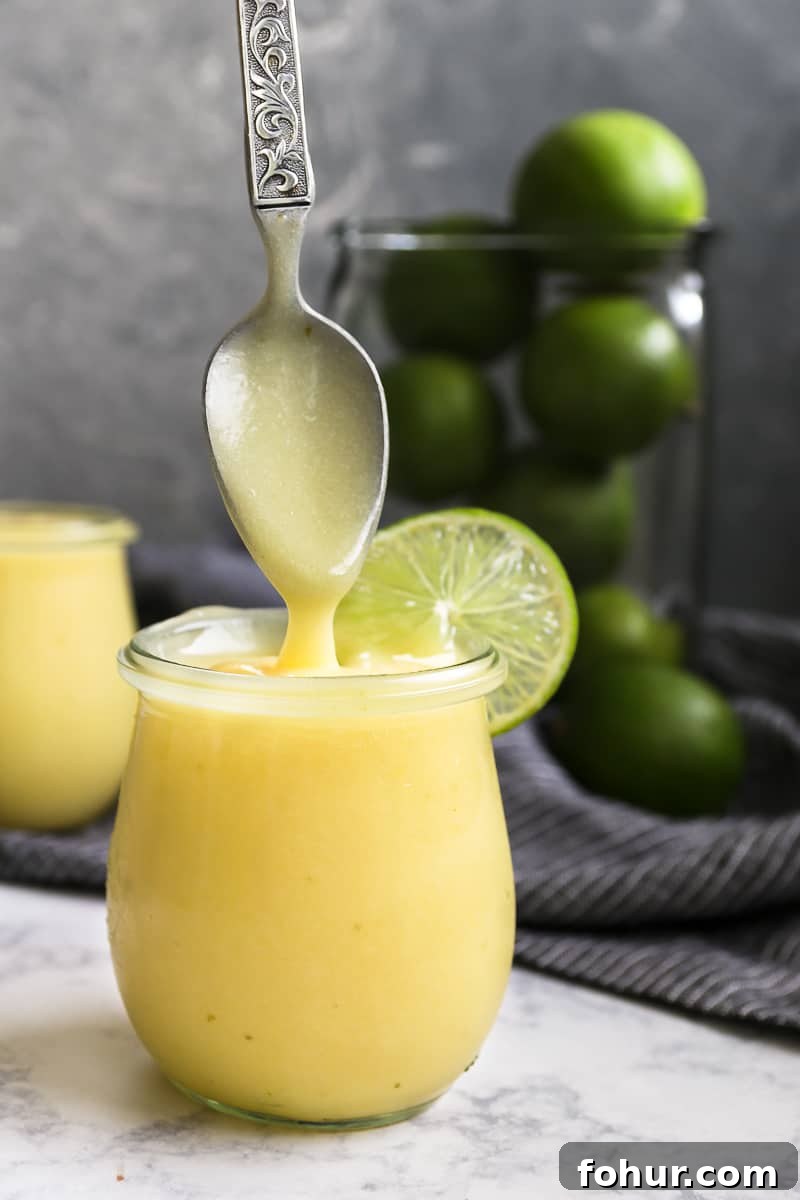
Just the right balance of sweet and tart, this lime curd is quick to make and endlessly useful. Spread it on scones or pancakes, use it as a simple filling for tarts and cakes, or enjoy it straight from the jar. Make now or freeze for later.
When a lime craving hits, nothing else will do but lime curd. If you’ve never made citrus curd at home, this is an ideal place to start. Homemade lime curd is fresher and brighter than anything you can buy, and once you master the technique you’ll find yourself looking for reasons to make more—stashed jars in the fridge, portions in the freezer, or dollops on pastries and yogurt.
Which limes should you use?
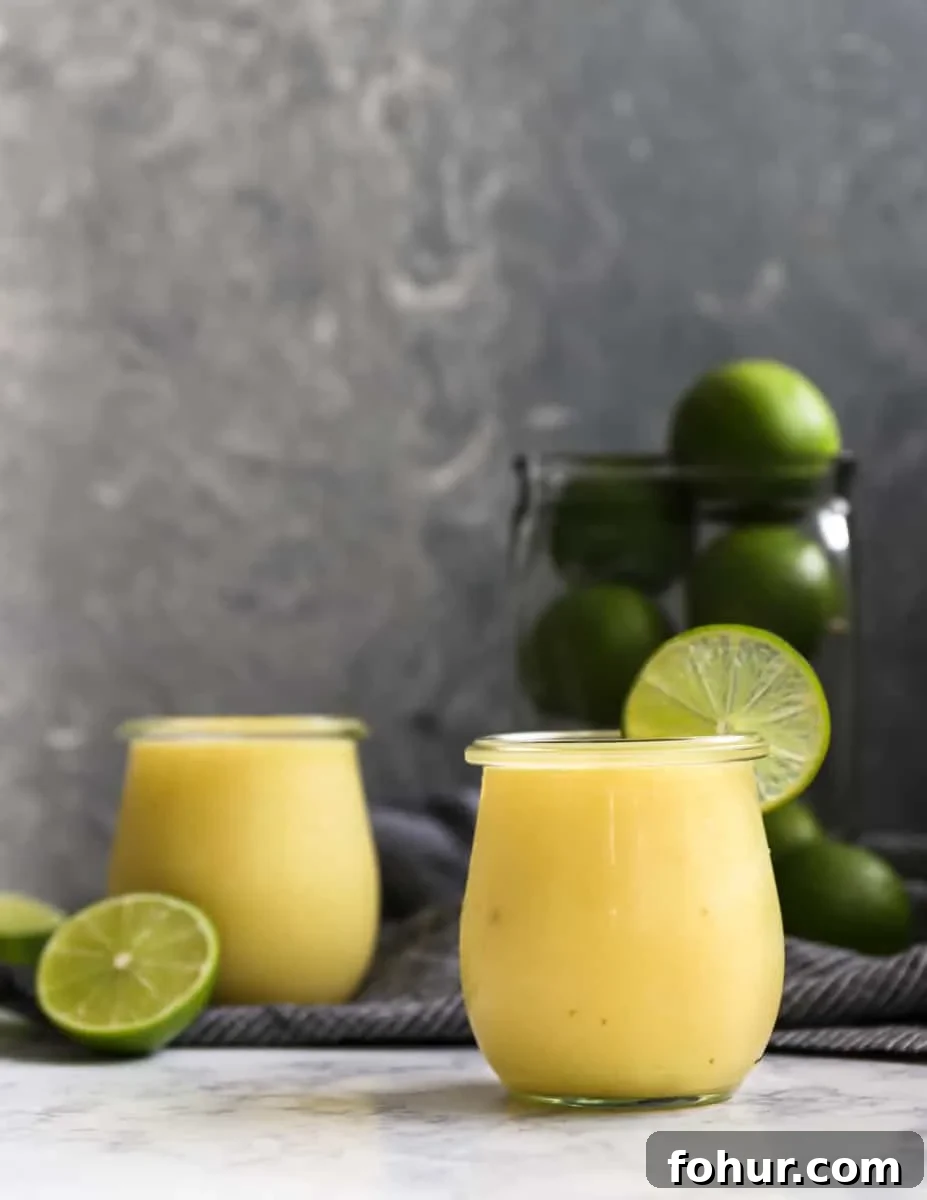
You can make excellent lime curd with either key limes or the more common Persian (Tahitian) limes. The difference in sugar and acid between the varieties is small, so use whatever is available. If you love the perfume and classic brightness of key limes, they’re lovely here, but Persian limes work beautifully and are often easier to find.
Seasonality and uses
Lime curd is a versatile, year-round ingredient. Bright citrus flavors feel natural in summer desserts, but limes are often at their peak in winter, when their freshness is especially welcome. Use lime curd to brighten cakes and tarts, spoon it into macarons or thumbprint cookies, fold it into whipped cream for a quick filling, or simply spread it on toast and scones.
Tips for a silky-smooth curd
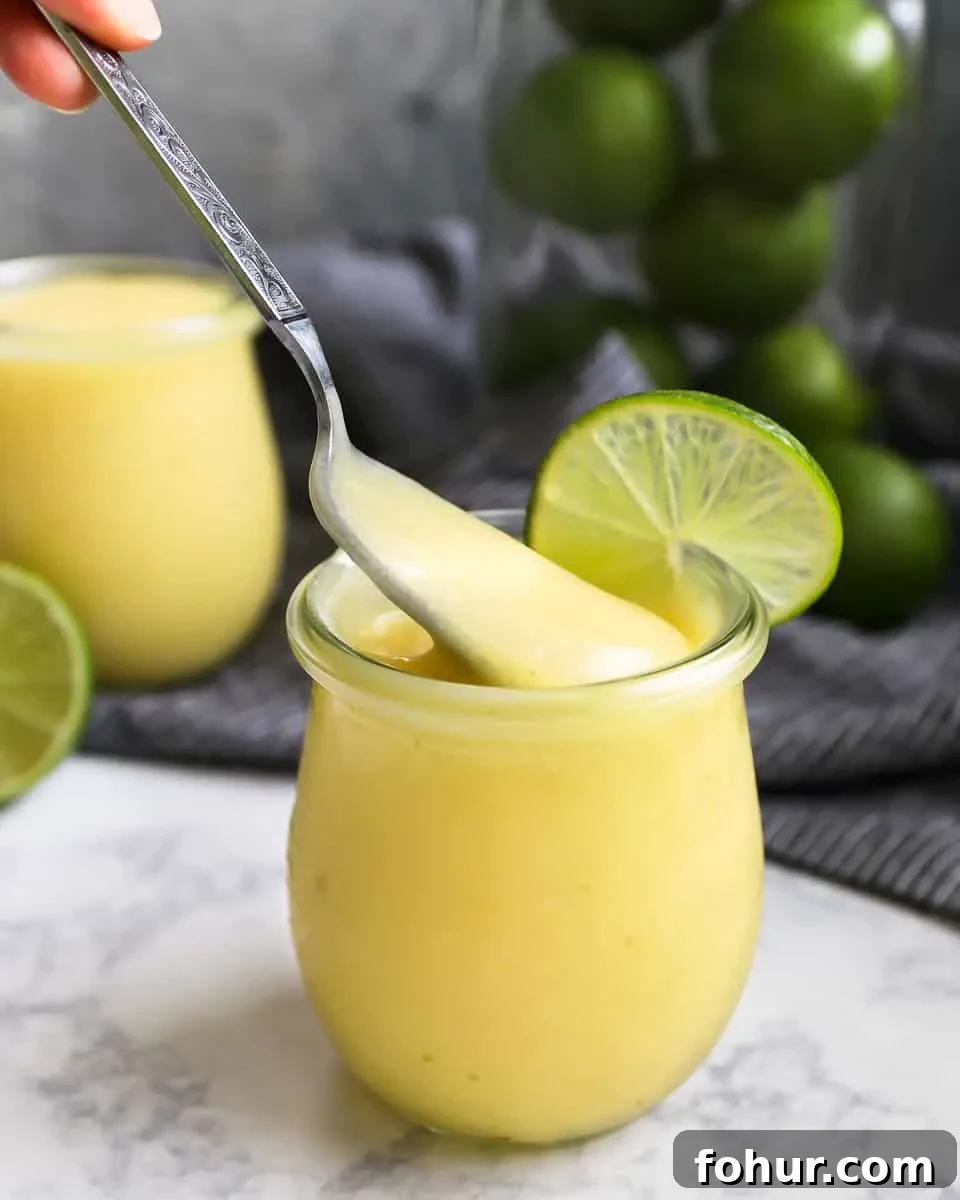
I recommend straining the finished curd through a fine-mesh sieve. Even if you finely process the zest, some texture can remain; straining produces a luxuriously smooth result and catches any tiny bits of cooked egg if you accidentally stop stirring for a moment. If you don’t mind a little texture, you can skip this step, but most people prefer the velvety finish.
For zesting, you can grate by hand for a single batch—it’s simple and leaves fewer dishes. For larger batches, a quick trick is to peel the lime skins with a vegetable peeler, then pulse the peels with the sugar in a food processor until very fine. That method blends the zest into the sugar and speeds up prep, especially when you’re making more than one batch.
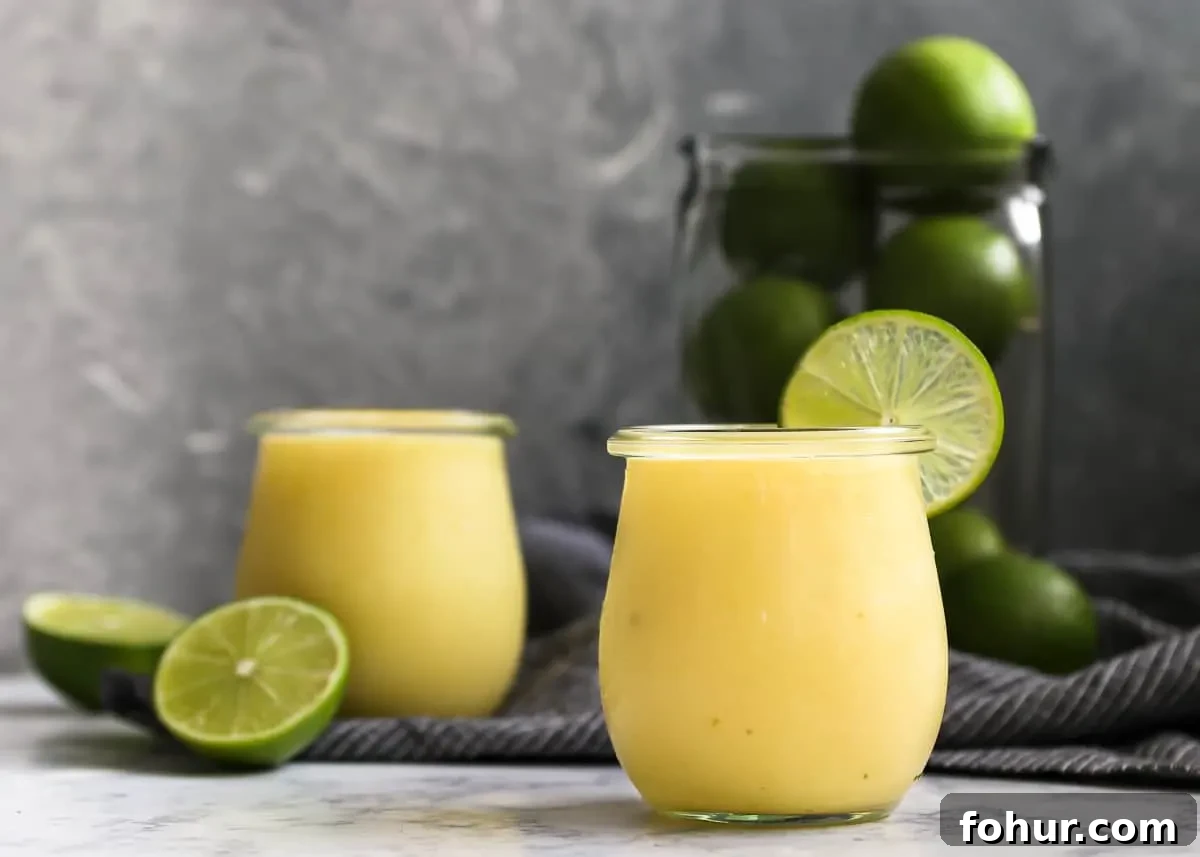
Yield and timing
- Yield: About 2 cups
- Prep time: 5 minutes
- Cook time: 20 minutes
- Total time: 25 minutes
Ingredients
- ¼ lb unsalted butter
- 2 tablespoons lime zest (about 3 standard limes or 6 key limes)
- ⅔ cup lime juice
- 1½ cups sugar
- 4 large eggs
- ⅛ teaspoon salt
Instructions
- Carefully remove the lime peel using a serrated peeler, avoiding as much of the white pith as possible. If you like, peel and then pulse the zest with the sugar in a small food processor until very fine; this combines the flavors and shortens prep time. Alternatively, grate the zest by hand and stir it into the sugar.
- In a small saucepan over medium heat, melt the butter. Add the zested sugar, lime juice, eggs, and salt. Stir constantly—this prevents the eggs from curdling and helps the mixture thicken evenly.
- Continue stirring as the mixture heats. After roughly 15 minutes it will begin to thicken; it should coat the back of a spoon so you can draw a visible line through the curd on the spoon’s back.
- When the curd has reached the desired thickness, remove the pan from the heat. For the smoothest texture, press the curd through a fine-mesh sieve into a heatproof container to remove any bits of zest or small egg solids.
- Cool the curd, then cover with plastic wrap pressed directly on the surface to prevent a skin from forming. Store in the refrigerator for up to a month. For longer storage, freeze in airtight containers for up to four months; press plastic wrap directly on the surface before sealing to prevent freezer crystals.
If you plan to can curd, follow safe, tested canning guidelines; this recipe has not been validated for home canning. For everyday use, refrigeration or freezing are reliable methods for preserving texture and flavor.
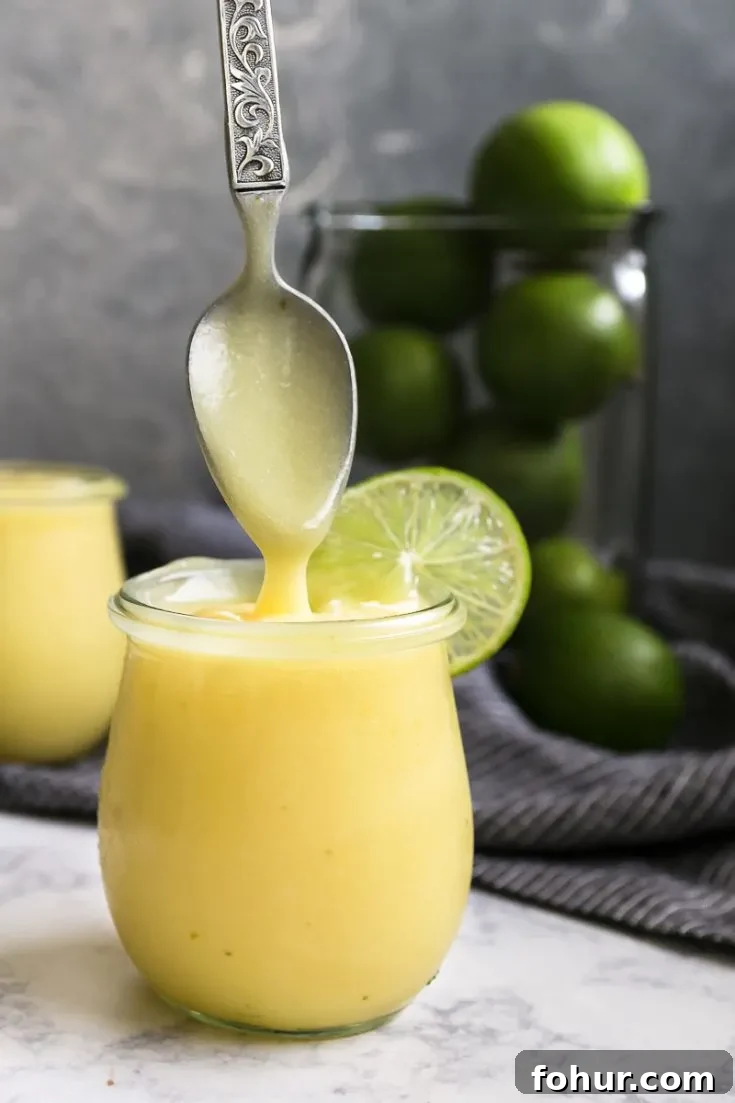
I hope you enjoy this lime curd recipe. It’s a simple, vibrant way to add citrus brightness to many desserts and breakfasts. Try it as a tart filling, a macaron buttercream component, or simply spooned over yogurt or ice cream.