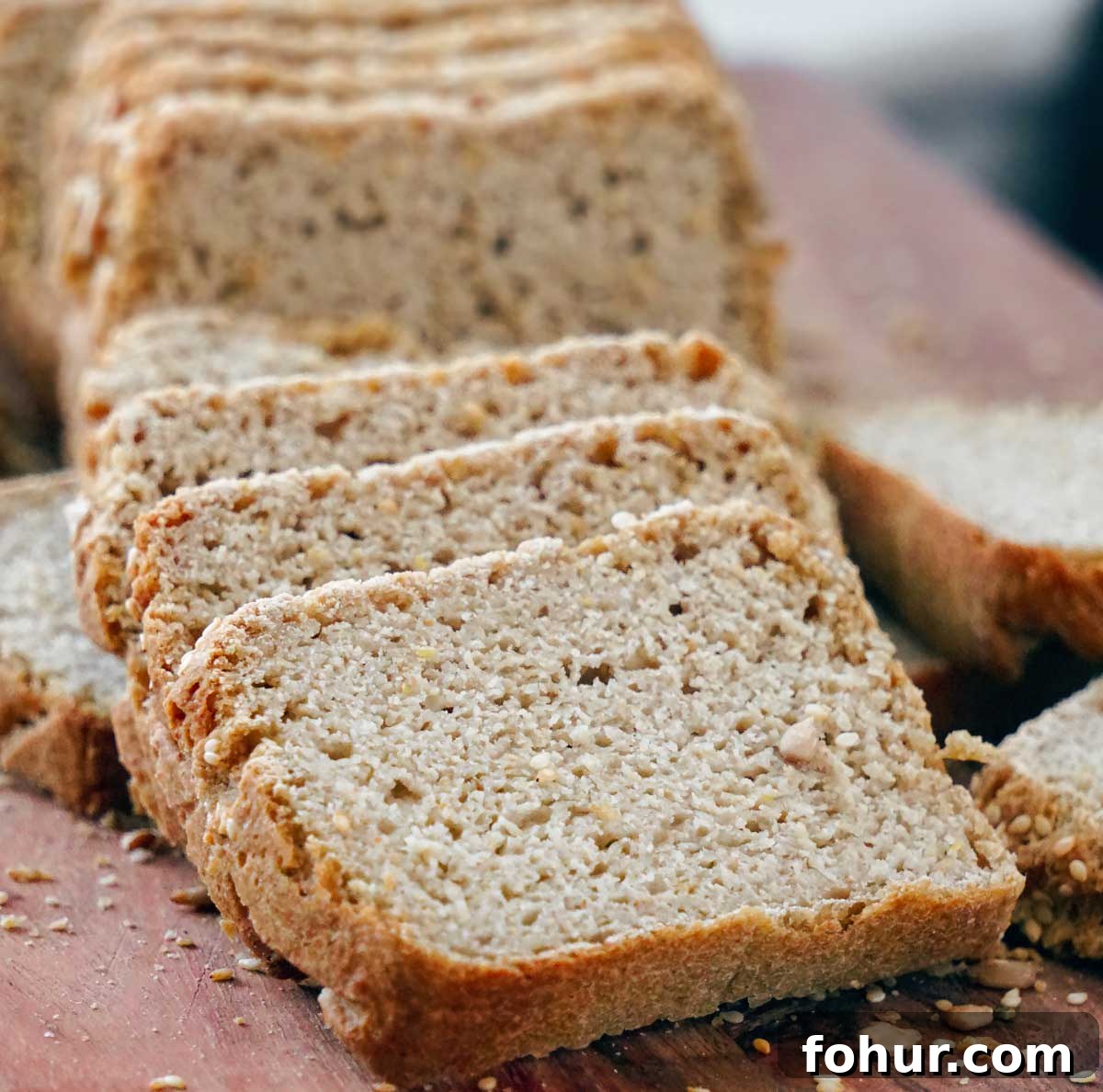
This is our everyday gluten-free sourdough loaf: vegan, naturally leavened (no commercial baker’s yeast), and free of xanthan gum, oils and psyllium (optional). It’s made with an active gluten-free sourdough starter and sprouted whole-grain flours to deliver a sliceable crumb that toasts beautifully.
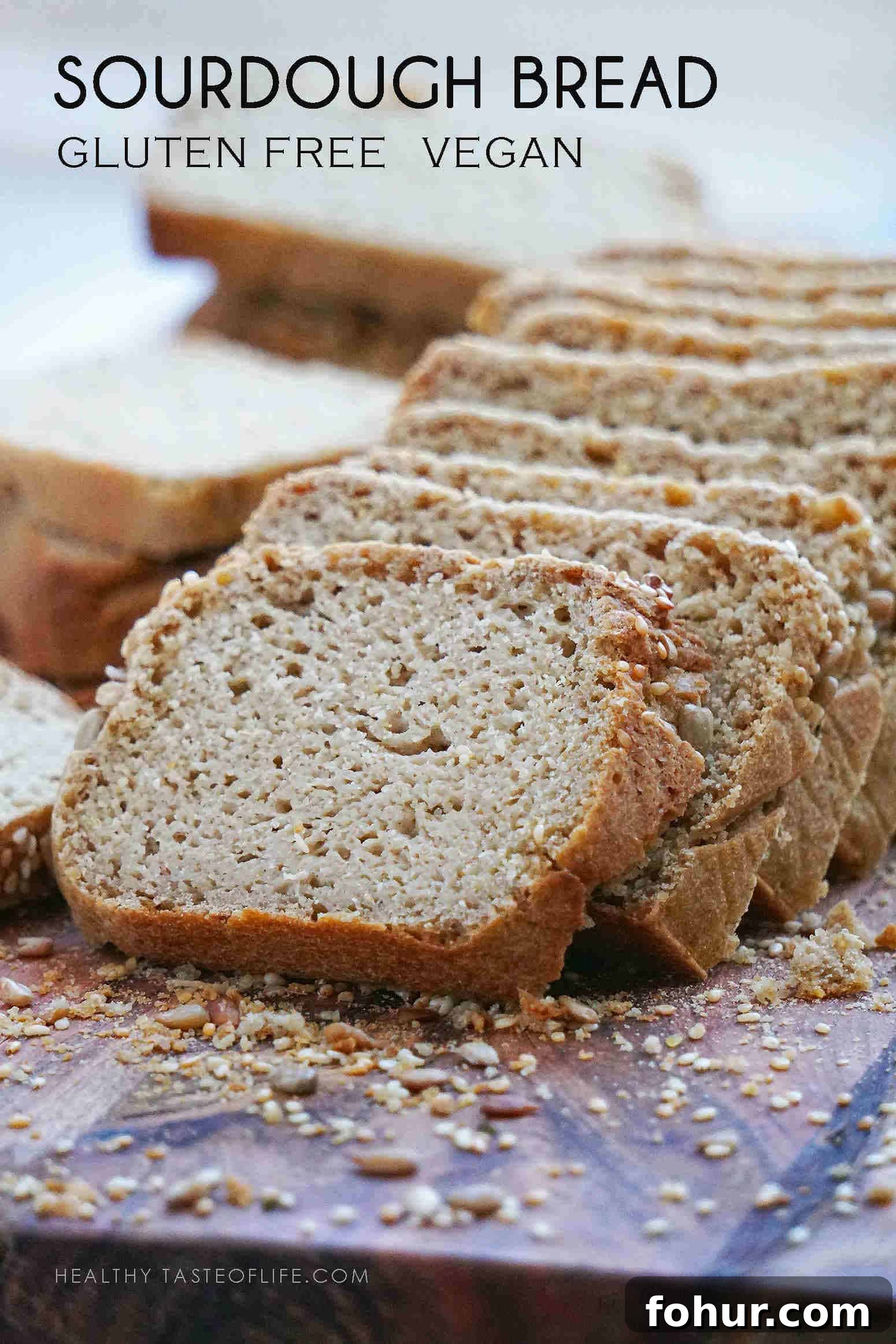
When I began baking gluten-free bread in 2018 I wanted simple, whole-food ingredients. Many commercial gluten-free loaves rely on refined starches, gums, and oils, which can lack fiber and be hard on sensitive digestion. This recipe focuses on sprouted whole-grain flours, a strong gluten-free starter, and gentle binders so you get a nutritious, sliceable loaf without technical tricks.
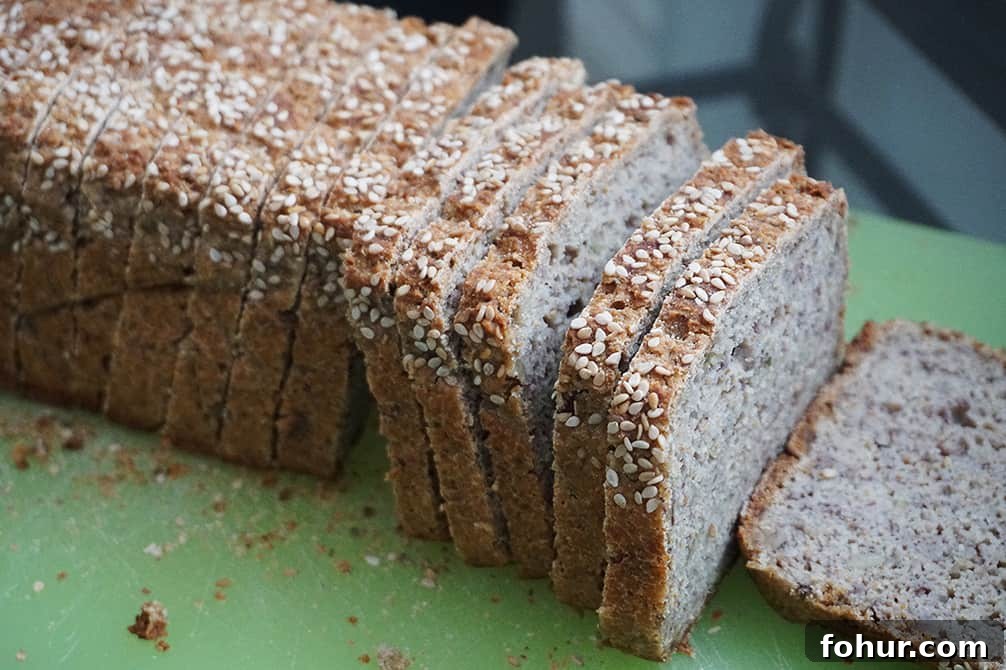
Why this loaf works
- No commercial yeast – the loaf is naturally leavened with a gluten-free sourdough starter, allowing slow, stable rise and flavor development.
- No xanthan gum – ground flax acts as the primary binder for structure and sliceability; psyllium is optional for extra elasticity.
- No added oils – this recipe keeps fats out of the batter for a cleaner, whole-food loaf.
- Sprouted whole-grain flours – they add flavor, fiber and nutrients; sprouting can improve digestibility and mineral availability.
- Sliceable crumb – the batter-like dough bakes tall in a high-wall loaf tin so you get neat, even slices suitable for toasting.
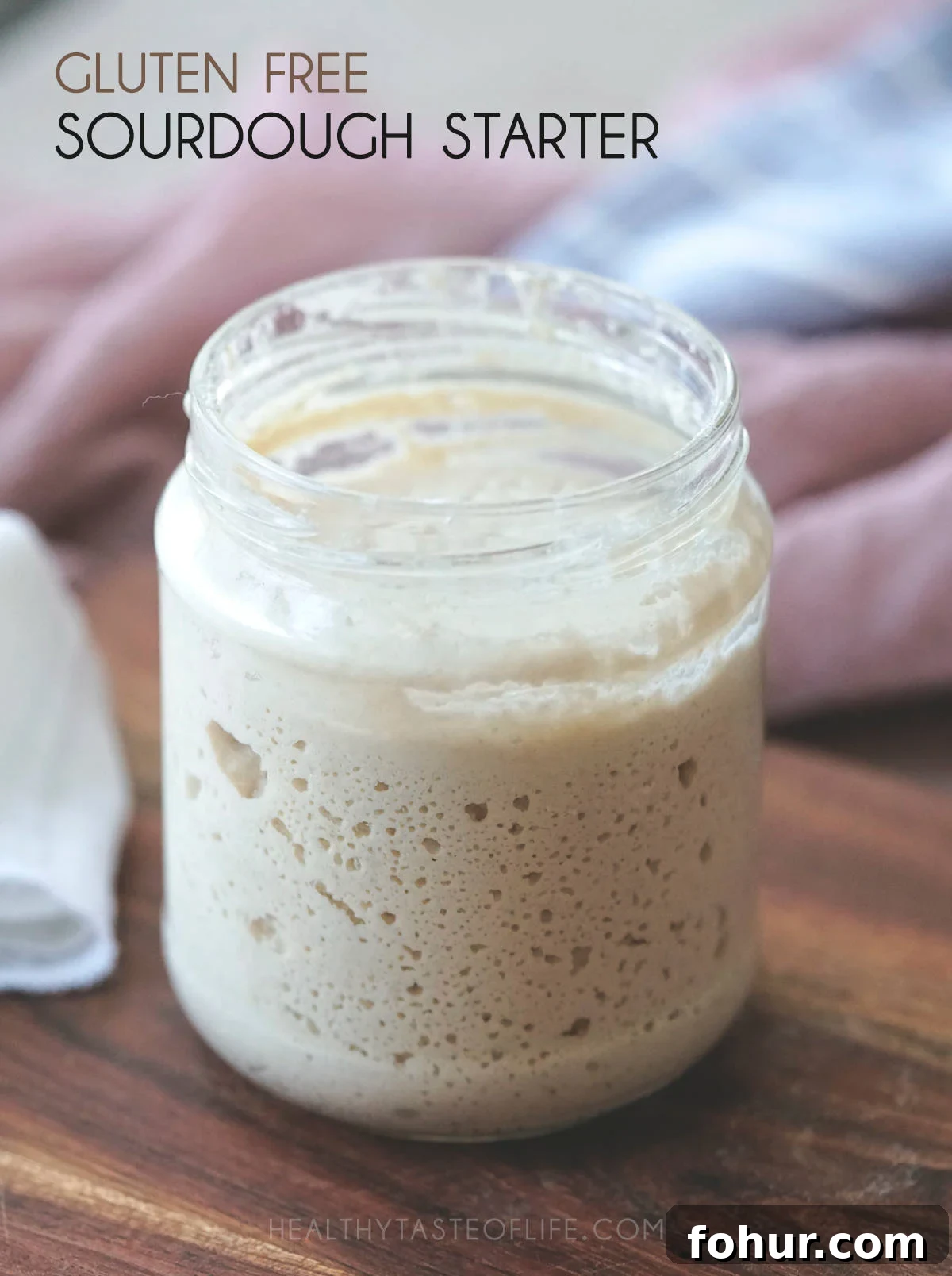
A reliable active gluten-free starter is essential. If your starter is sluggish, give it an extra feed to ensure it’s lively and bubbly before you mix the dough. Once I switched to sourdough for most of my gluten-free baking, I found the starter useful for breads, rolls, tortillas, English muffins and more.
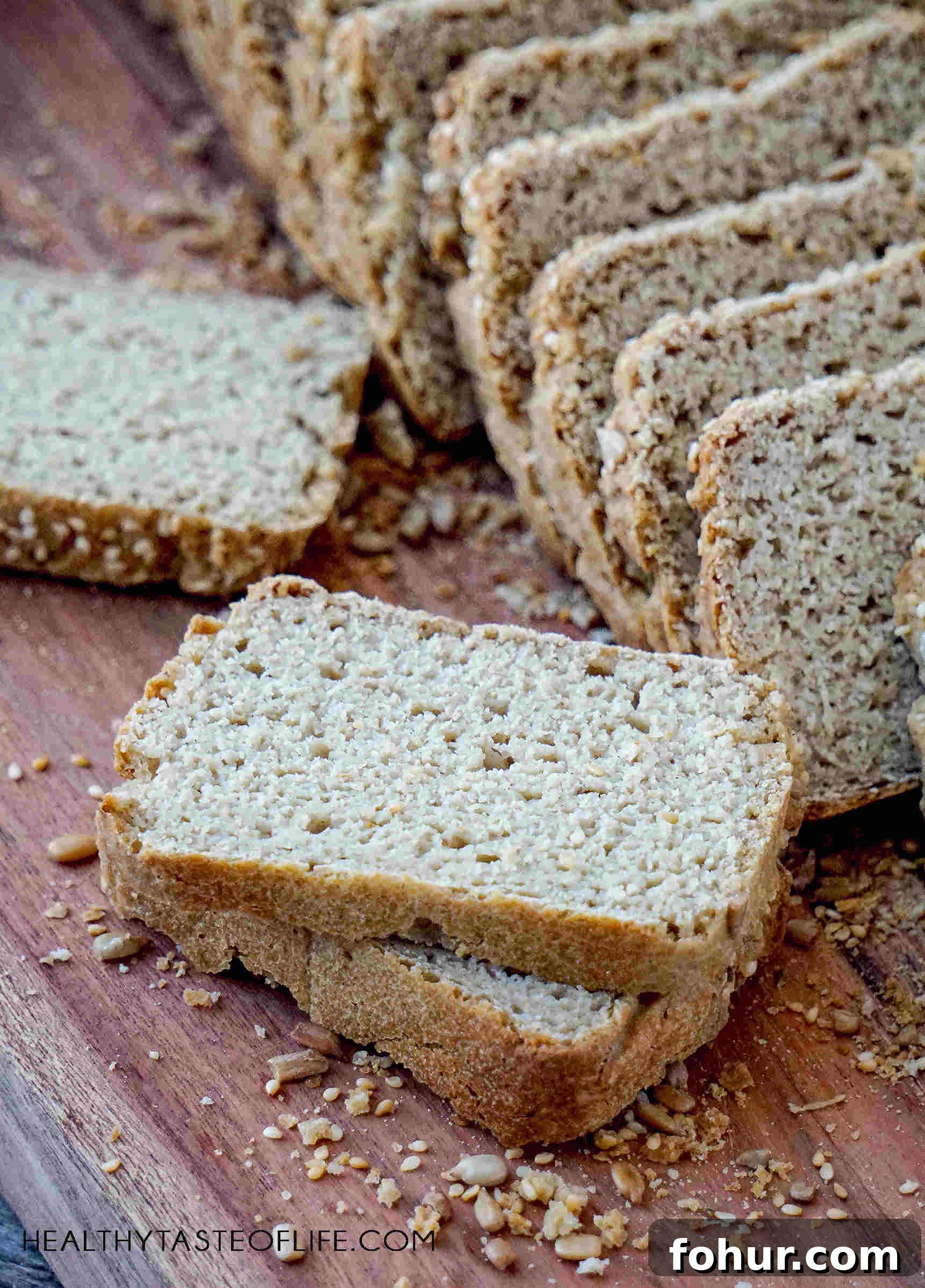
Key ingredients and simple swaps
- Active gluten-free sourdough starter: fed and bubbly. Use 1 cup (about 240 g) of active starter for the recipe.
- Flours: light buckwheat plus millet or oat. Sprouted versions are preferred for flavor and digestibility.
- Binder: ground flax seed (primary). It holds the crumb and remains stable in the oven.
- Liquid: filtered water (or plant milk) and a pinch of sea salt. A tablespoon of maple syrup is optional to aid rise and improve flavor.
Note on oats: If you use oat flour, choose certified gluten-free oats from a trusted source. Some people can react to avenin in oats.
How to make this gluten‑free sourdough bread
Step 1 — Wake the starter
You need 1 cup of active starter. Feed it with about 1/2 cup brown rice flour and 1/2 cup filtered water, then rest it in a warm spot until bubbly (3–5 hours, depending on temperature). If your starter is thin, reduce the added water; if thick, add a little more.
Step 2 — Mix a thick batter (no kneading)
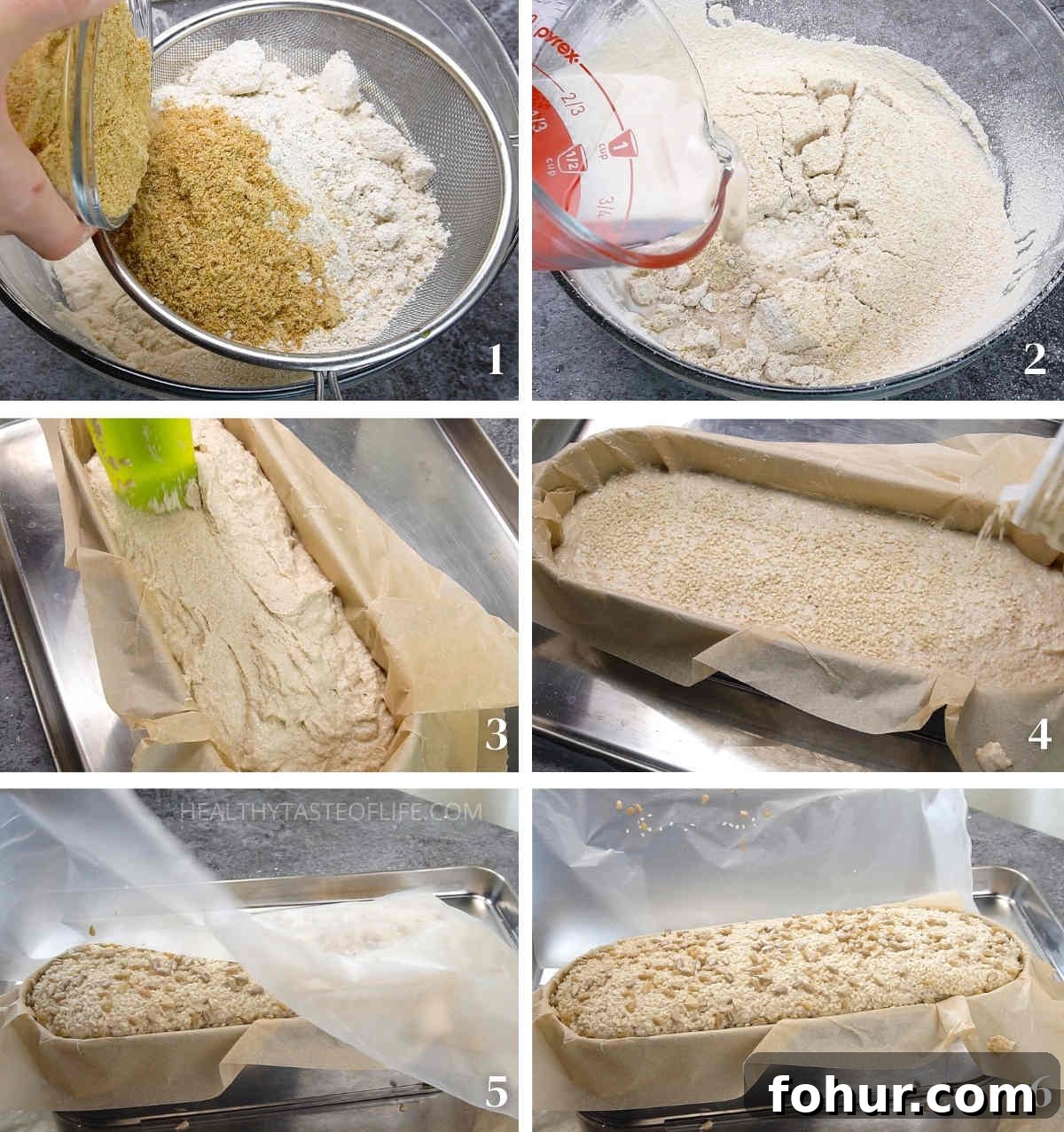
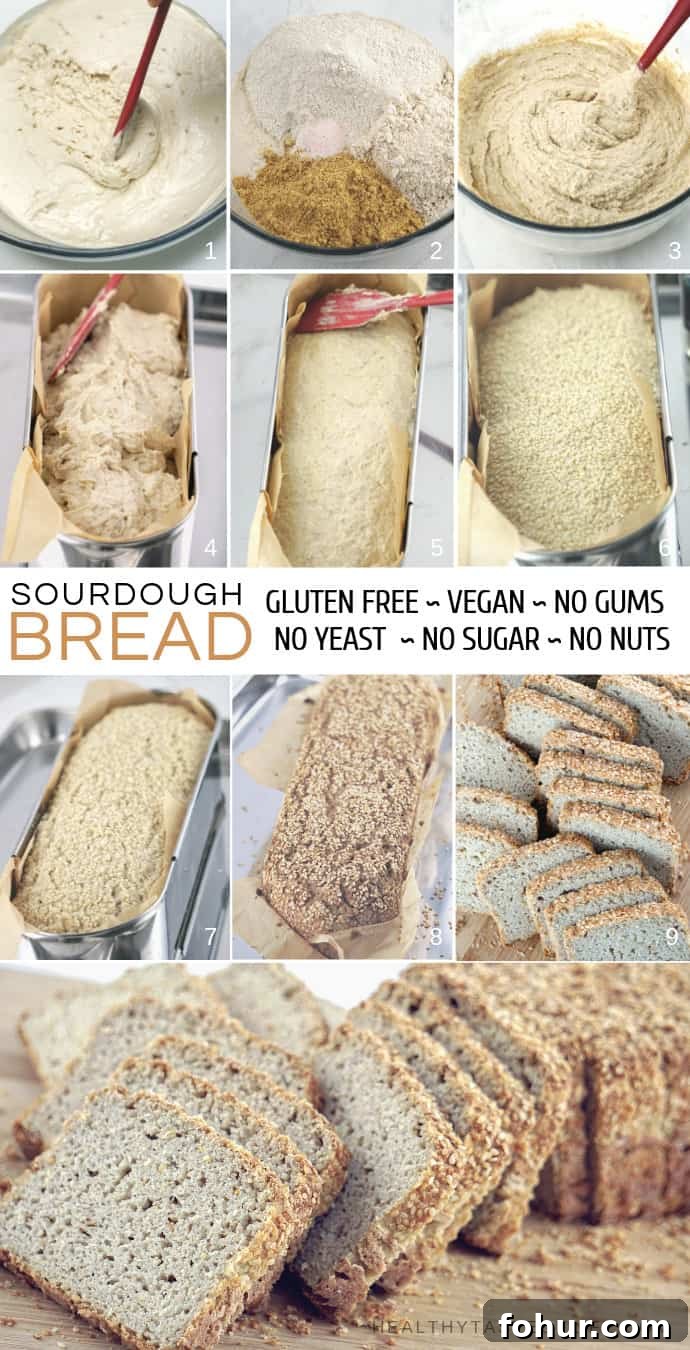
- When the starter is bubbly, add the sifted flours, ground flax, salt, the rest of the water (about 1½ cups) and maple syrup (optional) in the same bowl.
- Mix until you have a thick, scoopable batter—think thick oatmeal or brownie batter. No kneading is required.
Step 3 — Pan and proof
- Scrape the batter into a high‑wall loaf tin, smooth the top with a wet spatula to form a dome, and add seeds or nuts if desired.
- Cover loosely to retain moisture and proof in a warm spot until the loaf is noticeably domed—about 4–5 hours depending on room temperature.
Step 4 — Bake
- Preheat the oven to 425°F (220°C).
- Uncover and tent the loaf with foil (without touching the batter). Reduce the oven to 390°F (200°C) and bake 30 minutes.
- Remove the foil and, if using parchment, take the loaf out of the tin to allow even browning. Bake another 40–45 minutes until golden.
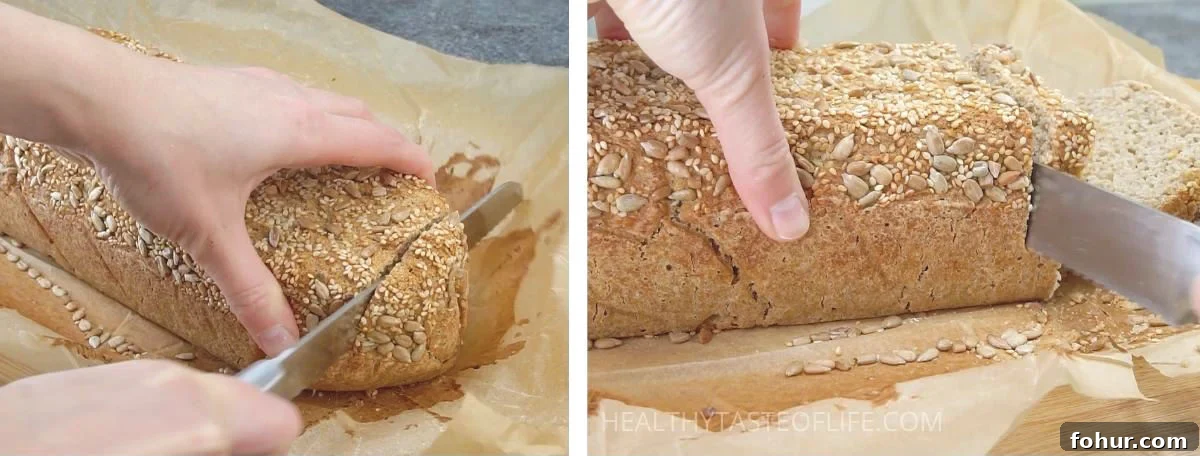
- Cool completely before slicing—ideally slice the next day with a serrated knife for best results.
Pro tips for baking gluten‑free sourdough bread
- Flour balance: use a mix rather than a single flour—about 70% medium density flours (buckwheat, millet, oat), 10% coarser flours (teff, quinoa, amaranth) and 20% soft/fine flours (finely milled oat or rice) for a balanced crumb and less crumbling.
- Use finely milled flours if you want a finer, more cohesive slice.
- More starter = faster rise: increase the active starter slightly to speed fermentation or proof at a cooler temperature.
- Tang control: a shorter proof gives milder flavor; a longer one produces more sourness.
- Do not disturb the dough once it has risen and is ready to bake—jostling will collapse the loaf.
How to store
Slice and keep at room temperature for 3–4 days in a breathable bag. For longer storage, freeze slices flat in bags and toast from frozen. Re-toasting gives excellent texture and aroma.
Gluten‑Free Sourdough Bread (Vegan, No Yeast, No Xanthan, No Psyllium)
Ingredients
Activate the starter
- 1 cup active gluten‑free sourdough starter (~240 g)
- 1/2 cup brown rice flour (80 g), to revive starter
- 1/2 cup filtered water (approx. 118 ml), adjust as needed
Main batter (add to the active starter)
- 1 cup light buckwheat flour (120 g)
- 1 cup millet flour (120 g) — or 100 g oat flour or 120 g sorghum
- 1/3 cup ground flax seeds (37 g)
- 1½ cups filtered water (355 ml) or plant milk
- 1½ tsp pink salt (or ¾ tsp sea salt)
Optional
- 1 tbsp maple syrup (15 ml) for flavor and faster rise
Instructions
Wake the starter
- Scoop 1 cup of your refrigerated starter. Feed with 1/2 cup brown rice flour and 1/2 cup water. Cover and leave in a warm spot 3–5 hours until light and bubbly. Feed and refrigerate any remaining starter.
Add the rest and mix
- When the starter is active, add sifted flours, ground flax, salt, water and maple (if using) in the same bowl.
- Mix to a thick, scoopable batter—no kneading required.
Pan and proof
- Scrape batter into a high‑wall loaf tin, smooth the top, add seeds if desired. Cover to retain moisture and proof until domed (about 4–5 hours depending on temperature).
Bake
- Preheat oven to 425°F (220°C). Uncover, tent with foil (not touching the batter), reduce to 390°F (200°C) and bake 30 minutes.
- Remove foil and bake 40–45 more minutes until golden brown. Cool completely before slicing; best sliced the next day.
Notes
- Do not shake or touch the dough once it has risen; it will collapse if disturbed.
- For a lighter crumb, use hulled light buckwheat and lighter flours like oat or sorghum.
- If you want extra elasticity, add 1 tbsp psyllium husk mixed with 3 tbsp water (optional).
- Switch flours gradually and only once your starter has been healthy and fed for at least a week.
Nutrition (estimate per slice)
Calories: 136.5 kcal | Carbs: 26.5 g | Protein: 4.1 g | Fiber: 3.5 g
FAQs
It contains no commercial baker’s yeast. The loaf is leavened naturally by the wild yeasts and bacteria in the starter.
No. Fermentation does not reliably remove gluten from wheat or rye. This recipe is gluten‑free because it uses only gluten‑free flours.
Long fermentation can modify starches and reduce some fermentable carbohydrates, which some people find gentler. Results vary by individual.
Sprouting may reduce phytates and can improve mineral availability and digestibility, depending on the grain and processing.
If you try this loaf, please leave a quick rating and share how it turned out. Your feedback helps other bakers.
©HealthyTasteOfLife. Content and photographs are copyright protected and require permission to use. Sharing a link to this recipe is appreciated.