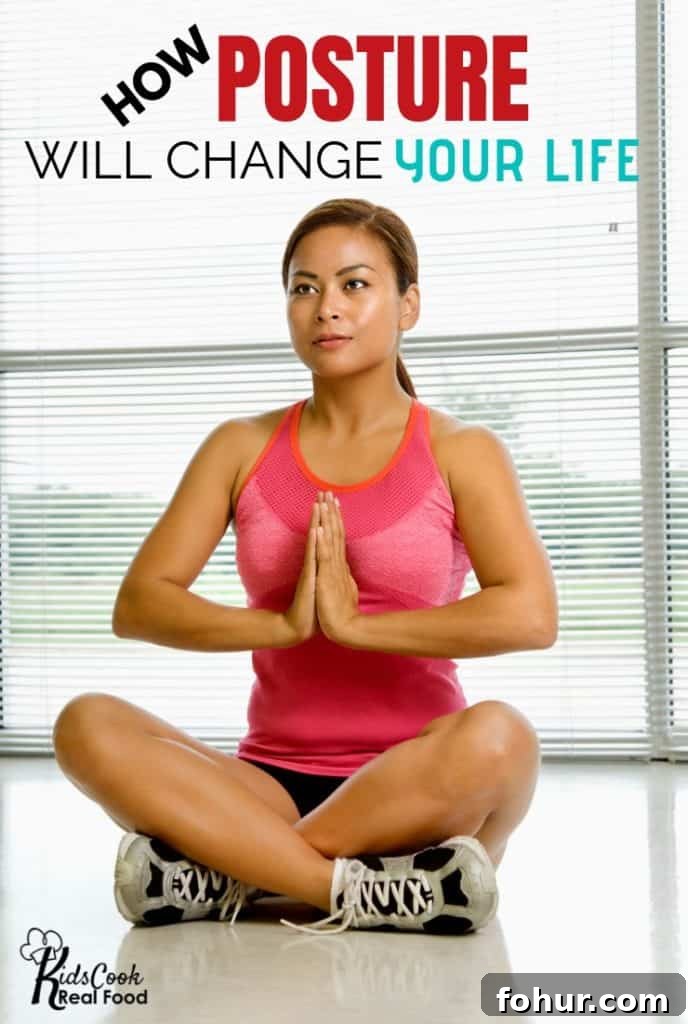
Margie Bissinger, MS, PT, CHC, is an osteoporosis specialist, physical therapist, and integrative health coach who emphasizes that strong bones begin with good posture.
Tech neck. Text neck. Whatever the label, we clearly spend far too much time looking down—and it’s reshaping our spines.
I’m grateful to Margie for sharing so many practical tips. After hearing her speak I started texting my mom notes about posture and bone health, and our family has already made small habit changes. The earlier we begin, the easier it is to avoid long-term problems.
In this interview we cover:
- Why posture matters—not just for physical comfort but for mood and function.
- The three natural spinal curves needed for proper alignment and how common habits flatten or over-stretch them.
- Lessons from people who retain healthy movement patterns into old age, and how toddlers’ natural habits protect their spines.
- How to carry bags and backpacks safely and the best way to cross your legs while seated.
- Kitchen posture: counter height, how to stand while cutting, and which muscles to engage when teaching kids safe knife skills.
- Why laptops make good posture difficult and simple equipment fixes that help.
- How a towel and a few easy exercises can train the spine to settle into the correct position—practical routines the whole family can do several times a day.
- Why chairs encourage slouching and simple strategies to resist the temptation to round the back.
This is one of the most actionable interviews we’ve done. If you feed your family well, protect sleep, move regularly, and limit toxins, posture should be part of that health foundation—otherwise you may still pay for it with pain later on.
Margie offers free videos demonstrating family-friendly posture exercises; you can find them here. We played them on the TV after dinner and set phone reminders to “wake up” the muscles Margie says often go dormant.
Can’t see the video? Click to watch “Why Posture Will Change Your Life” on YouTube.
Why Posture Will Change Your Life — Key Time Stamps
- 1:12 — Introduction to Margie: physical therapist and integrative health coach who blends exercise, nutrition, and mind-body techniques. She’s recognized for her work on bones and posture.
- 2:29 — Posture is often overlooked in modern health conversations; “sit up straight” may sound old-fashioned, but it still matters.
Why Posture Matters
- 3:30 — Try this: slump forward and say “I feel great.” Now sit tall and say it again. Your mood and physical comfort change with posture. Slouching can pinch nerves, lead to numbness or headaches, weaken muscles, and cause chronic discomfort.
- 6:10 — The neck naturally curves inward. Excessive forward head posture—common with phone use—alters that curve and shows up on X-rays.
- 7:07 — There are three essential curves in a healthy spine: the cervical curve (neck) curves inward, the thoracic curve (mid-back) curves outward, and the lumbar curve (lower back) curves inward. These curves absorb shock and allow fluid movement.
“The postures that today’s technology puts us in are not normal. We’re moving out of alignment with how our body is meant to be.” — Margie Bissinger
How Sitting Affects the Spine
- 7:58 — In places where people squat naturally through life, the lumbar curve stays healthy. Children squat frequently, which preserves spinal curves; excessive chair use leads to rounding and loss of that natural shape.
- 9:15 — Squatting for everyday tasks used to maintain alignment. Modern life encourages bending from the waist instead of hinging at hips and knees, which stresses the back.
- 10:04 — Encourage young children to move: play on the floor, squat, crawl, and get plenty of tummy time. Avoid long periods in containment seats so infants can develop the strength and sensory experiences they need.
“When we’re using our body how it’s meant to be, we don’t have any problems with posture.” — Margie Bissinger
How You Carry Things Matters
- 12:11 — Bags can pull your spine out of alignment. Heavy loads, low placement, or carrying on one shoulder cause problems. Choose backpacks and bags that distribute weight evenly and sit properly on the back.
- 14:48 — Changing posture by willpower alone is hard. Short, regular exercises performed three to five times daily increase awareness and retrain muscles. Margie’s free videos demonstrate easy routines to start.
Practical Posture Tips
- 15:34 — Proper sitting begins with the lower back. Maintaining the lumbar curve helps the upper back and neck fall into alignment.
- 19:48 — Use phone reminders to build a habit of doing posture exercises throughout the day.
- 20:09 — The exercises are simple and intended to reactivate muscles, not brute-force them. Consistency brings change.
- 22:27 — With good alignment, muscles work less. Forward head posture can place the equivalent of up to 60 pounds of force on the neck and upper back muscles.
- 26:22 — Crossing legs shifts the lower back. Sitting with feet wider or both feet on the floor helps maintain the lumbar curve. A seat that gently tilts the pelvis forward can also help.
- 28:32 — Posture improves gradually; with practice you’ll prefer the better position and won’t want to revert.
Standing Posture and Workstation Setup
- 29:59 — Visualize your spine lengthening, as if a balloon lifts your head. Stand tall but relaxed.
- 31:17 — Keep joints soft, avoid locking knees, and vary your stance when standing for long periods—raise a foot on a small stool, go up onto your toes, or do gentle hip circles to shift muscle load.
- 33:04 — In the kitchen, strengthen the upper back for stability. Keep wrists neutral when cutting and use your whole body in the motion rather than isolating the arm.
- 34:24 — Counter height matters: elbows should form roughly a 90-degree angle when working—low counters make you bend, high ones raise the shoulders.
- 35:27 — For computer work, set the top of the screen at eye level and keep elbows near 90 degrees. Laptops often require stands, external keyboards, or monitors to reach an ergonomic setup.
- 36:03 — For kids and adults using phones and tablets, bring the device to eye level instead of leaning forward to look down.

Resources Mentioned
- Free “Improve Your Posture in Two Weeks” videos — the exercises shown in the interview (link).
- Happy Bones Quiz and masterclass materials mentioned by Margie (search titles on her site for details).
- Guidance on foam rolling and muscle recovery referenced for post-exercise recovery.
Margie Bissinger, MS, PT, CHC, blends physical therapy and integrative coaching to help people improve bone health, posture, and overall well-being through whole foods, movement, and relaxation techniques. She authored Osteoporosis: An Exercise Guide and created the Happy Bones, Happy Life™ program and Move Today statewide exercise initiative.
Find more about Margie on her website.
Disclosure: I participate in Margie’s affiliate program; this does not affect pricing.