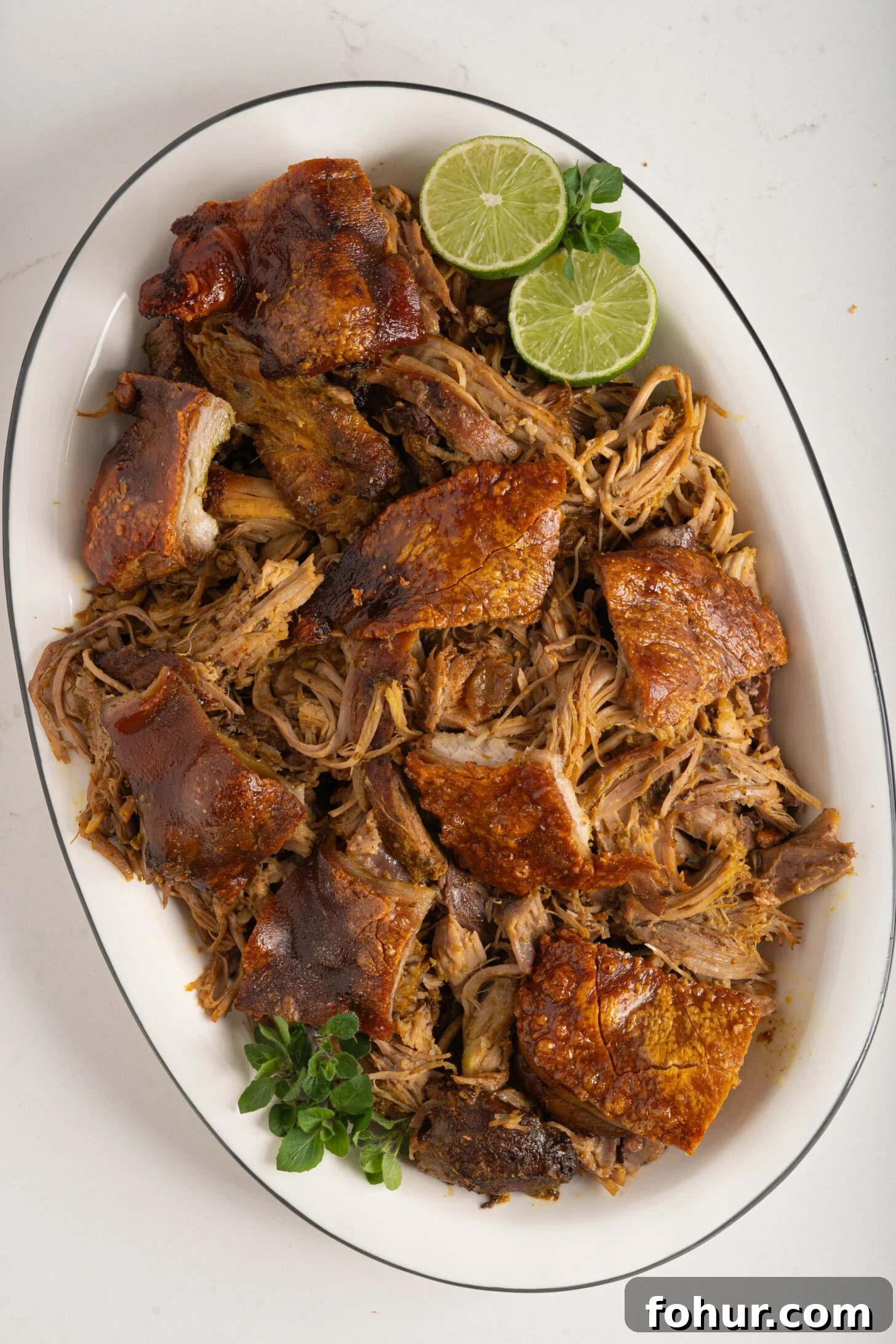
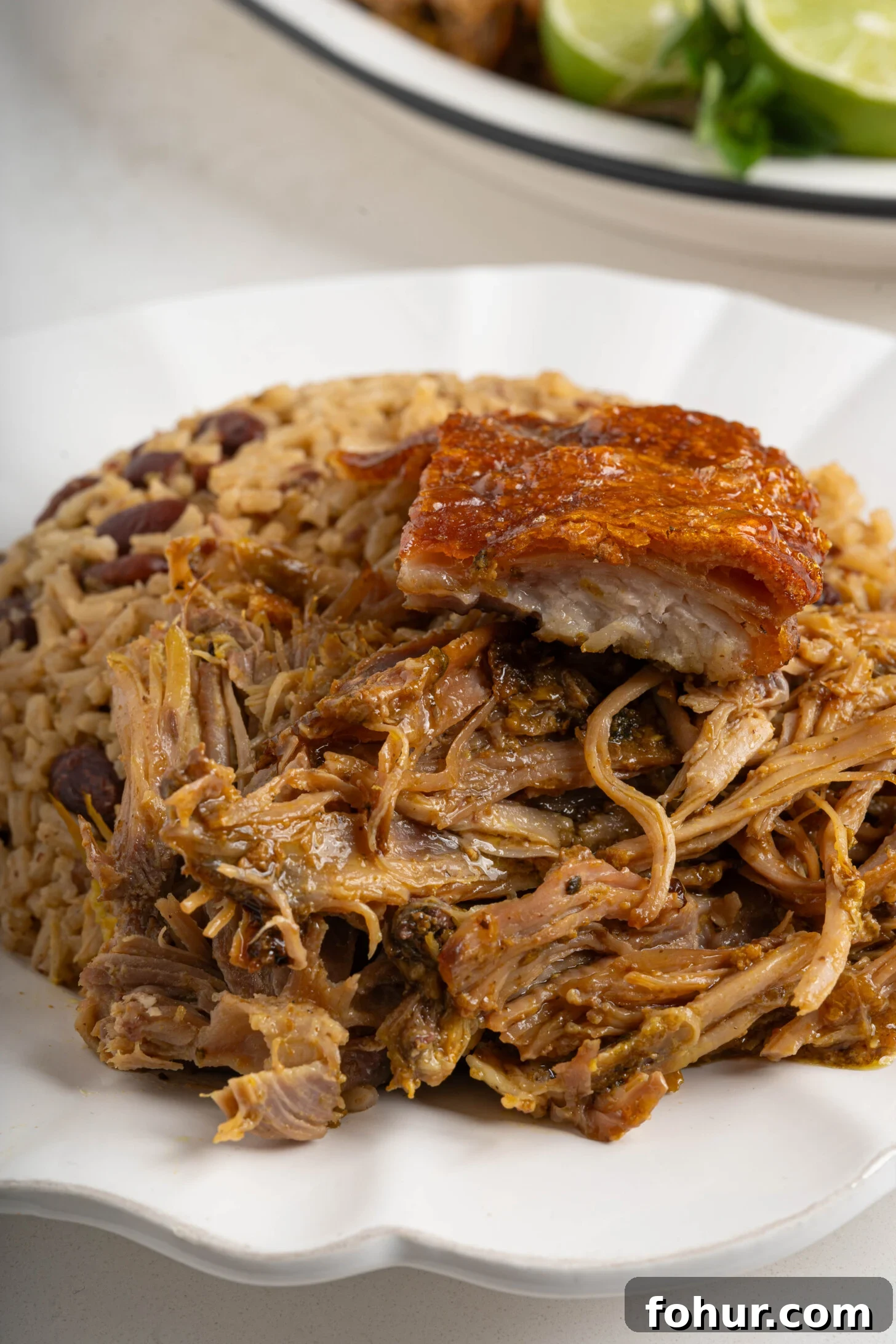
Learn how to make a moist, tender, and flavorful Pernil — the classic Puerto Rican roast pork shoulder with that unmistakable crisp chicharrón skin. The marinade blends garlic, adobo seasoning, fresh oregano, sofrito and a touch of oil. Patience is essential: a minimum of 12 hours of marinating is the key to the fork-tender, falling-apart texture.
Step by Step Instructions
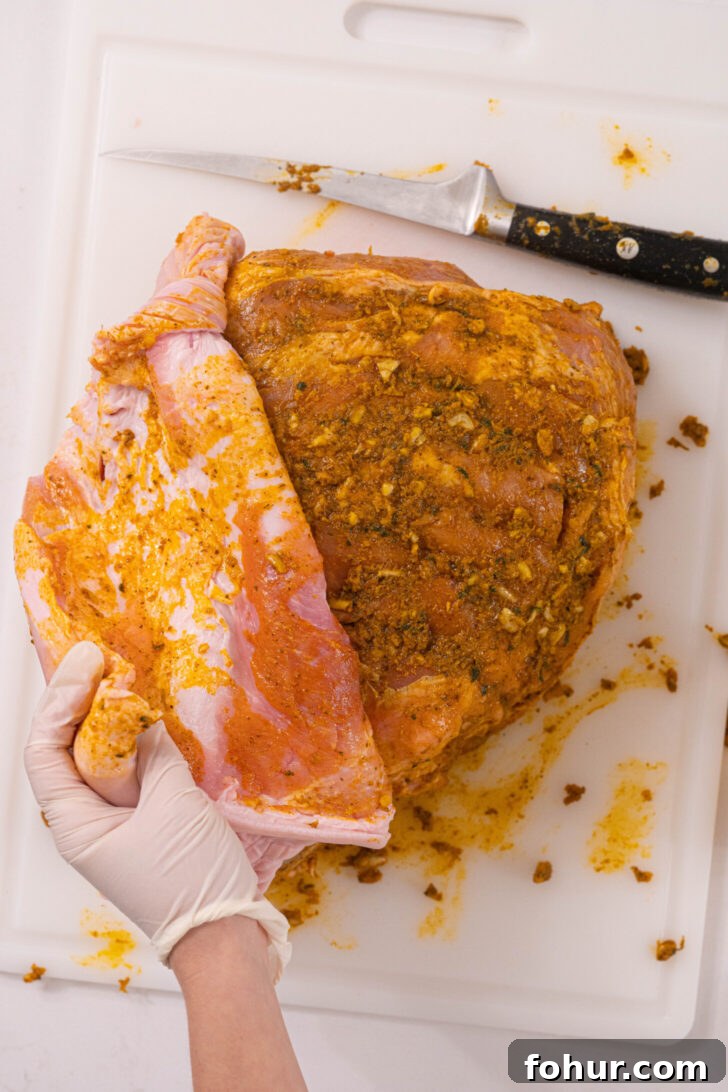
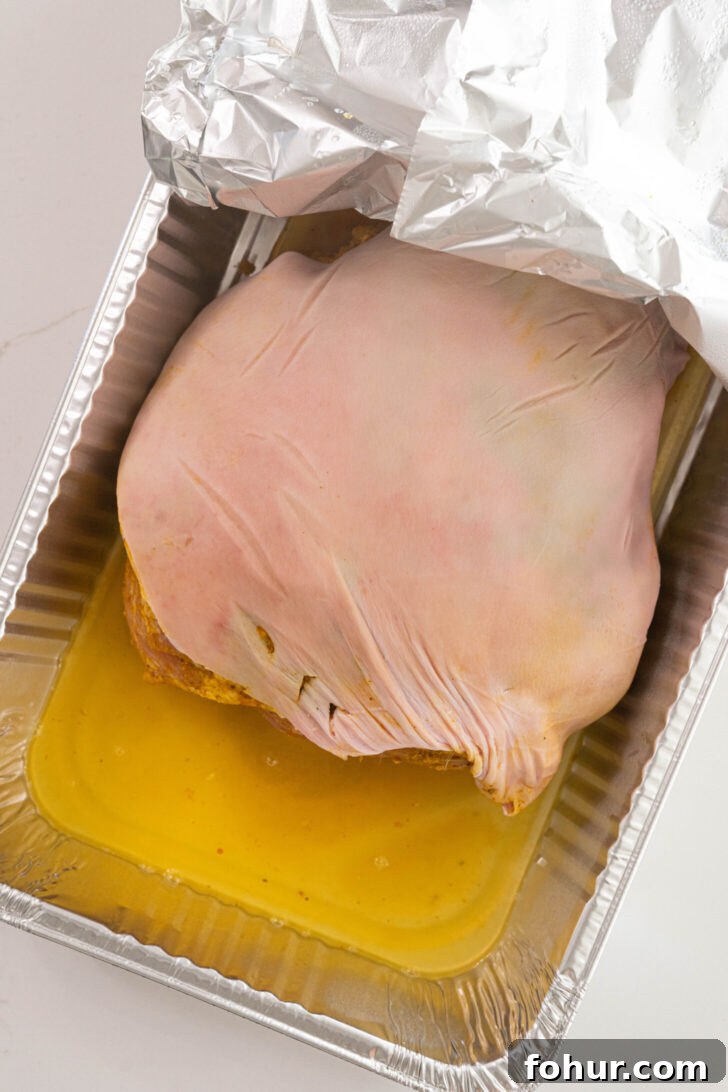
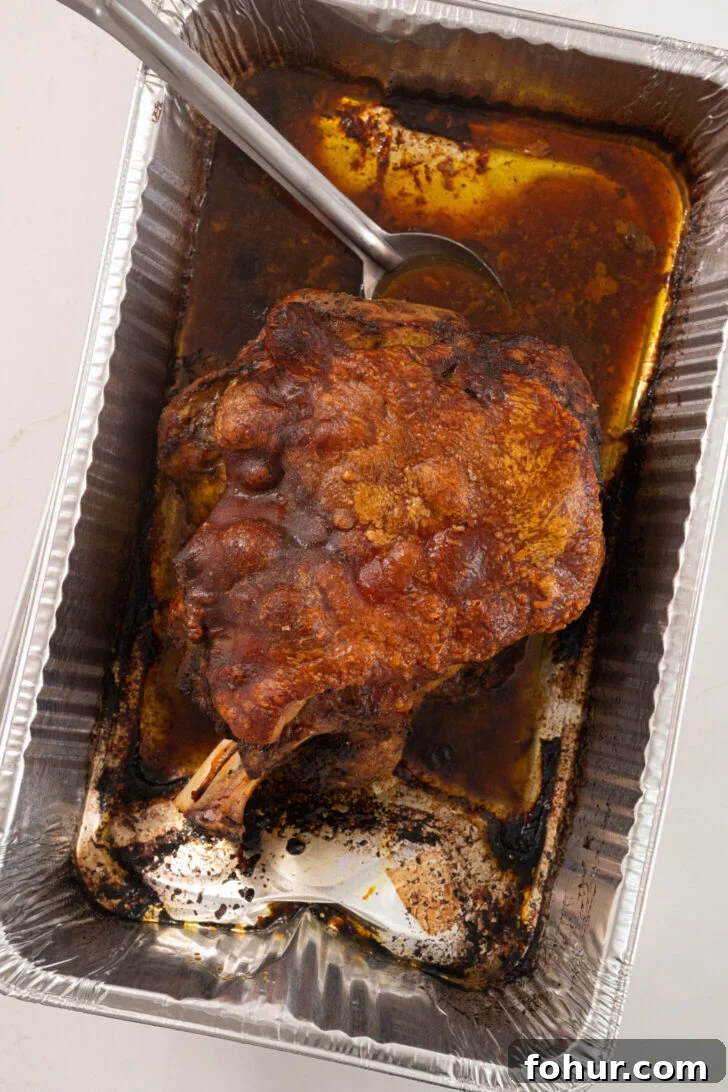
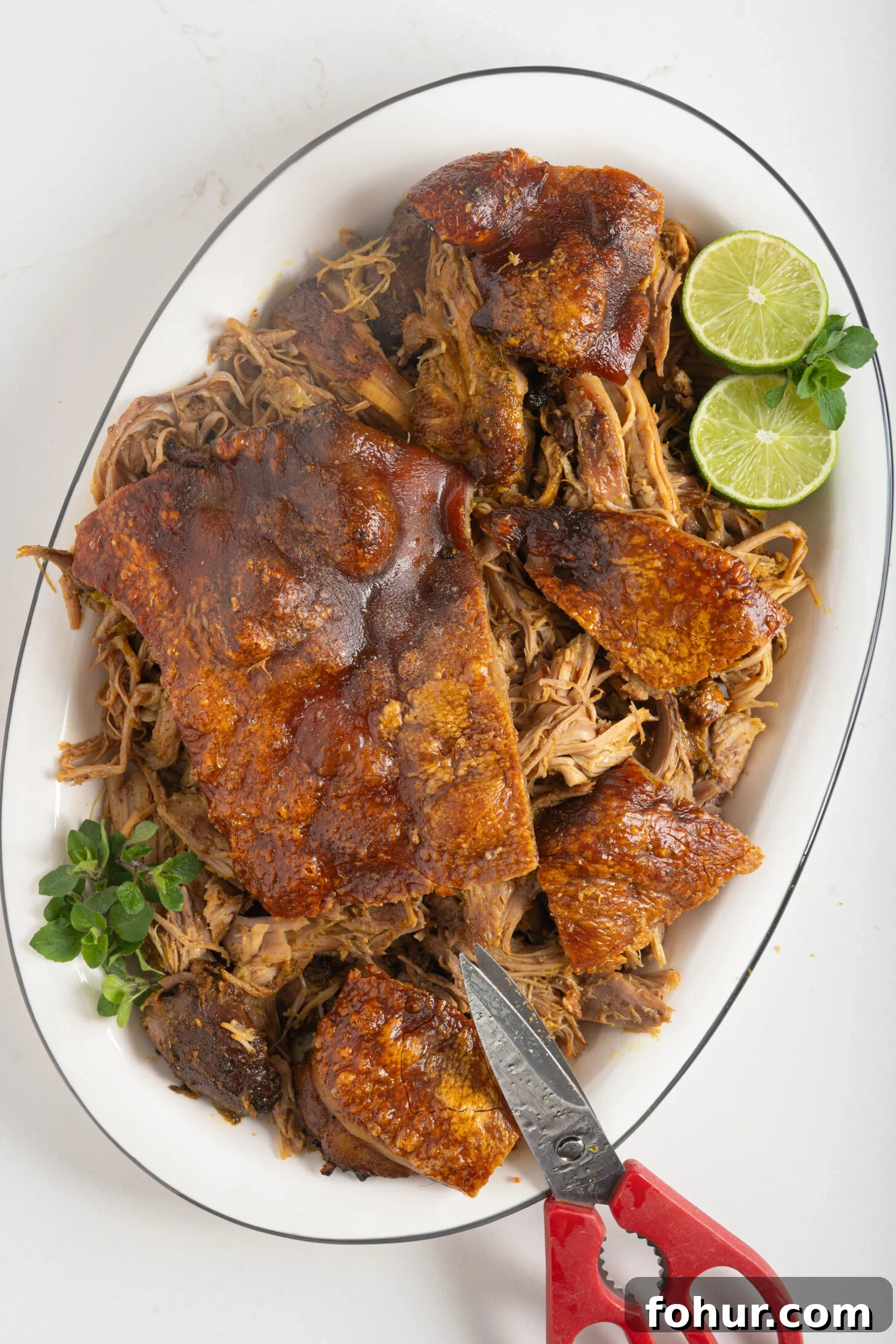
Tip: Use kitchen scissors to cut the chicharrón into portions so everyone gets a crunchy piece.
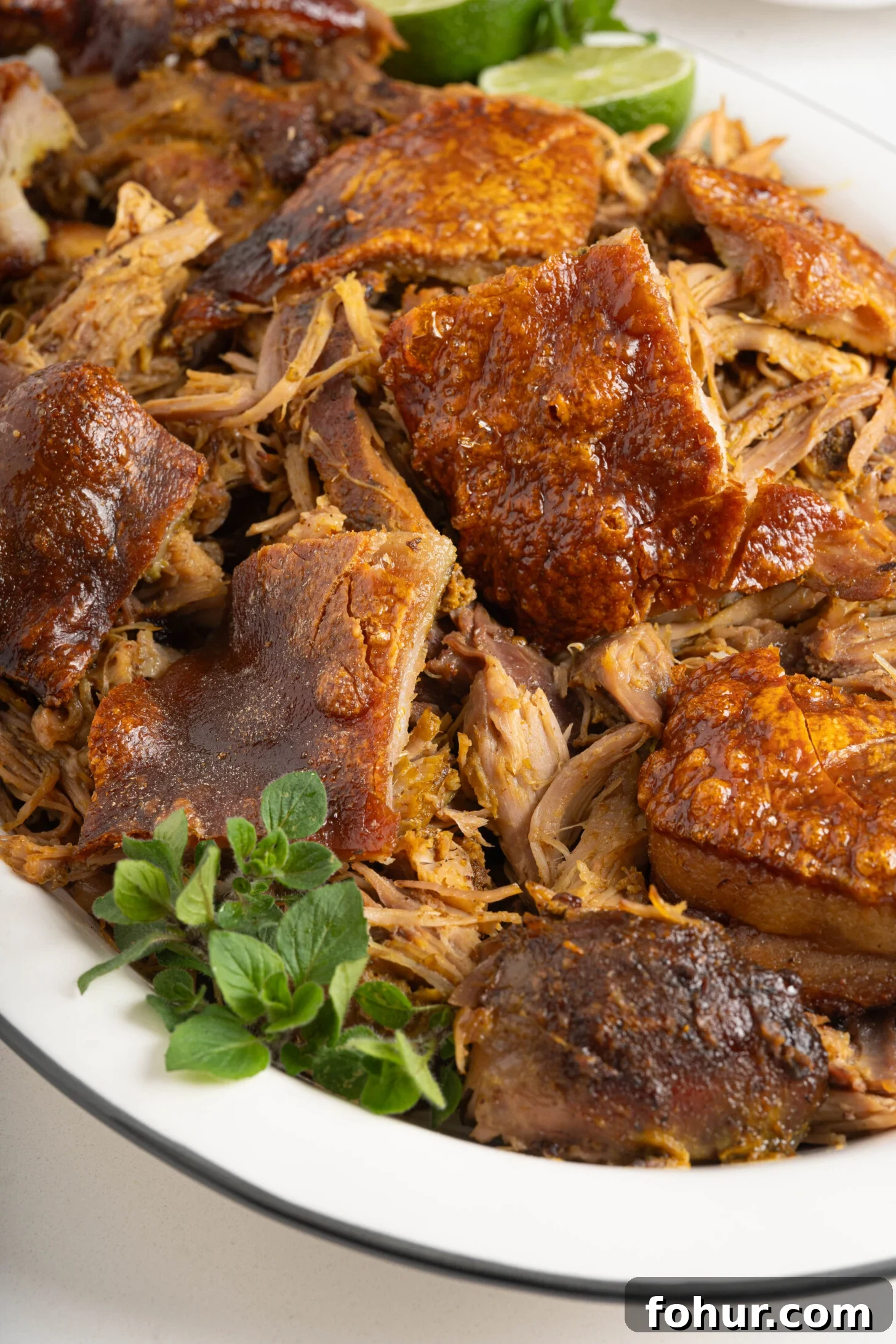
Family Secrets
From family kitchens that have made pernil for generations, these small practices make a big difference in texture and flavor:

- For crispy skin: Keep the skin free of marinade, pat it very dry and salt it before roasting.
- For juicy meat: Push the marinade well into the deep cuts so the interior absorbs the seasoning.
- Respect the marinating time: A minimum of 12 hours is essential; marinating up to 48 hours yields even richer flavor.
Cooking Times for Different Weights
You don’t need to buy a giant shoulder for a small gathering. Scale the ingredients to match the size of your roast and use the following guidelines for oven timing. These are general targets—an instant-read thermometer is the best way to ensure doneness.
- 2–3 lb pork shoulder: about 2 hours at 300°F
- 4–6 lb pork shoulder: about 3 hours at 300°F
- 7–9 lb pork shoulder: about 4 hours at 325°F
Aim for an internal temperature of roughly 175°F before the final high-heat stage; this ensures the meat will be tender enough to pull apart easily. After the covered roast reaches that temperature, always finish uncovered at a higher heat (about 400°F) for roughly an hour to crisp the skin. Watch closely so the skin browns and bubbles but does not burn.
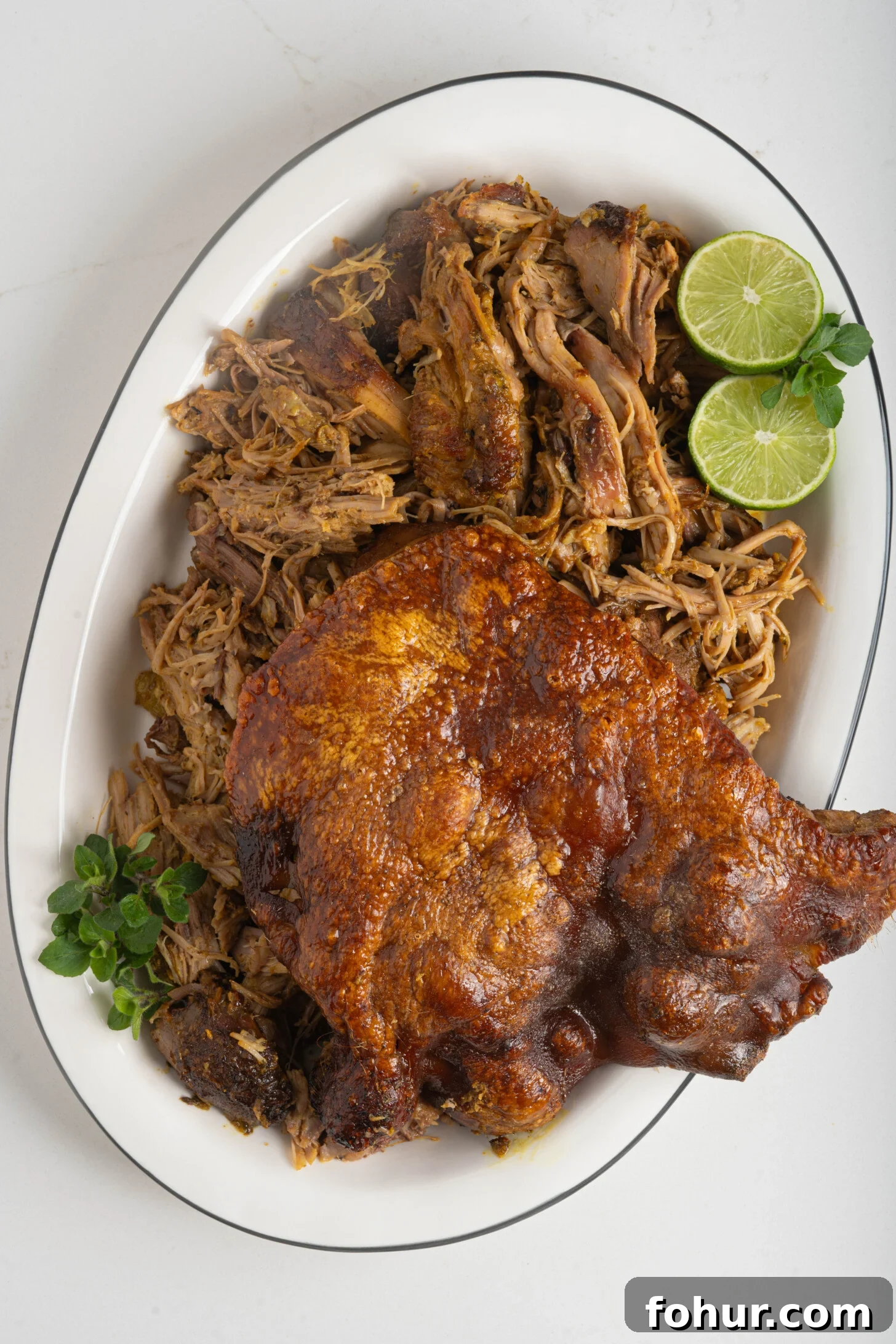
Buen provecho!

Description
This pernil recipe produces a juicy, seasoned pork shoulder with a crisp top layer of chicharrón. The flavor relies on a simple but aromatic marinade—garlic, fresh oregano, adobo seasoning, sofrito and oil—and on time in the refrigerator so the meat soaks up the seasoning. The result is a tender interior and a perfectly crunchy skin for contrast.
Ingredients
- 16 cloves garlic, minced
- 1/4 cup fresh oregano, minced
- 3 tbsp adobo seasoning
- 1 tbsp salt (plus extra for skin)
- 1 tbsp achiote oil (or olive, vegetable or canola oil)
- 1/4 cup sofrito
- 2 cups vinegar (for cleaning the pork)
- 1 whole pork shoulder (10–12 lb) — adjust size and quantities as needed
- 1 cup fresh-squeezed orange juice or water (for the pan)
Instructions
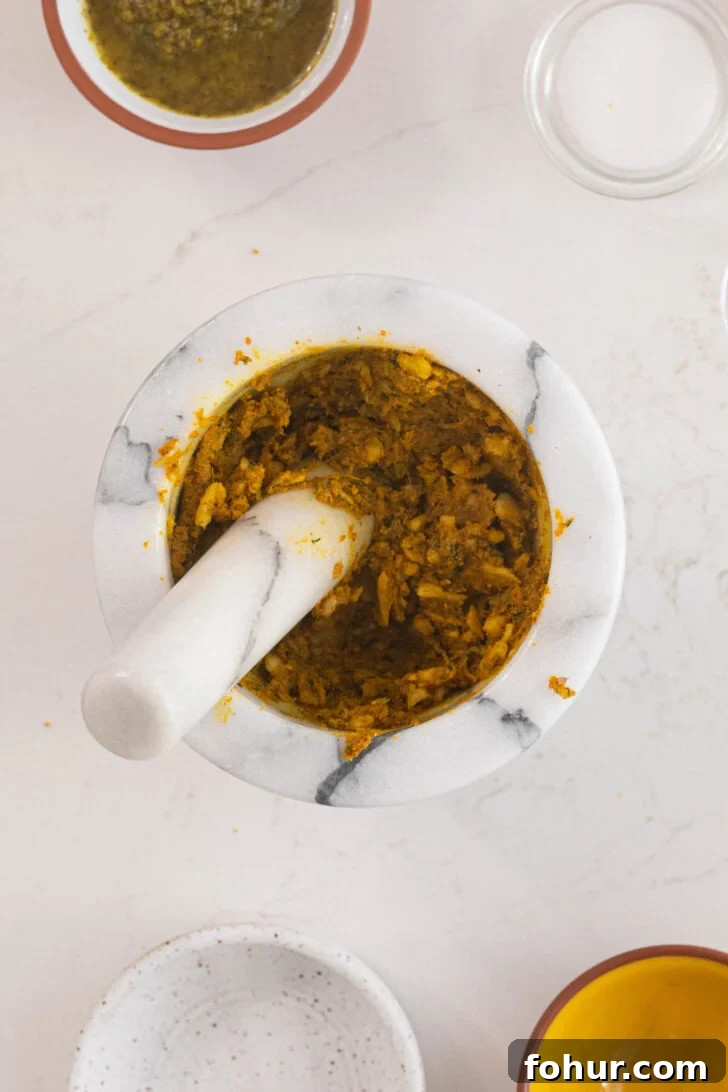
- Make the marinade: Combine minced garlic, chopped oregano, adobo and half of the salt in a mortar and pestle or food processor. Mash or pulse until well combined, then stir in the oil and sofrito to form a spreadable paste.
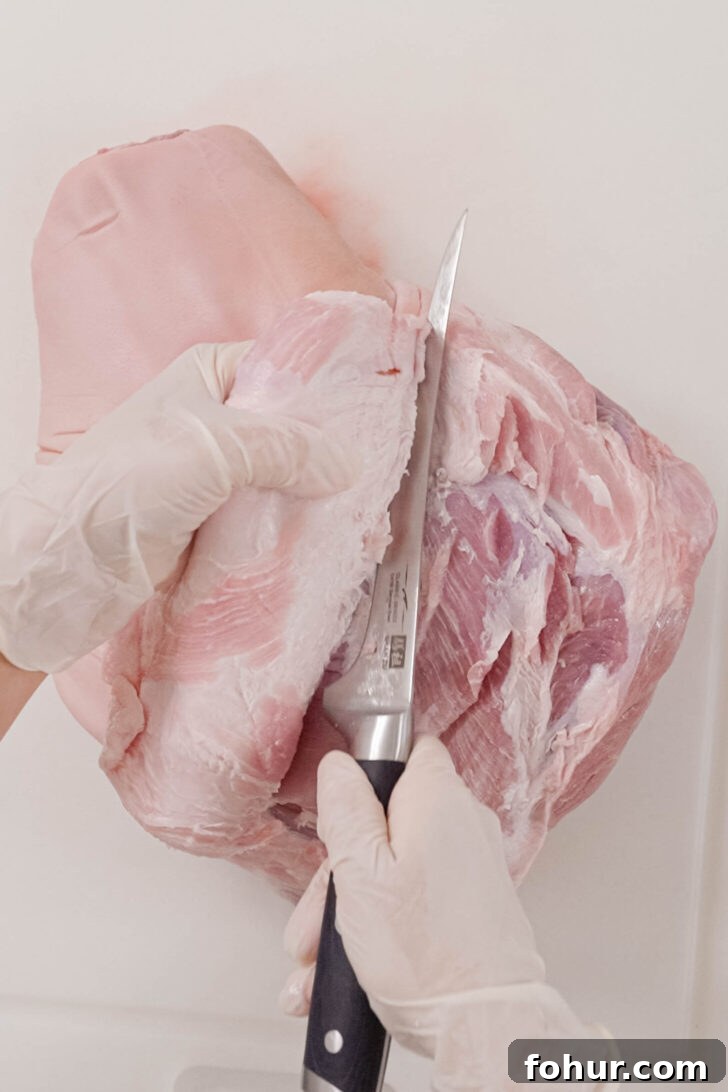
- Prep the pork: Rinse the shoulder in cold water with a little vinegar, then pat thoroughly dry. Use a sharp knife to carefully lift the fat cap from the meat and make 12–15 deep slits across the surface and sides of the roast so the marinade can penetrate.
- Marinate: Rub the paste all over the meat, pressing it into the cuts, but keep the top of the fat cap free of marinade. Place the fat cap back in position, pat the skin dry, and sprinkle with the remaining salt.
- Rest in the refrigerator: Cover tightly with foil and refrigerate for at least 12 hours, and up to 48 hours for deeper flavor.
- Roast covered: Bring the pork to near room temperature before cooking. Preheat the oven to 325°F. Pour orange juice or water into the bottom of a roasting pan—avoid getting the skin wet—and place the pork in the pan. Cover with foil and roast, basting the sides occasionally, until the interior reaches about 175°F. Cooking time will vary by size (see times above).
- Crisp the skin: Remove foil, increase oven temperature to 400°F, and return the roast to the oven on a middle rack for about 1 hour, or until the skin becomes bubbly and crisp. Monitor closely to prevent burning.
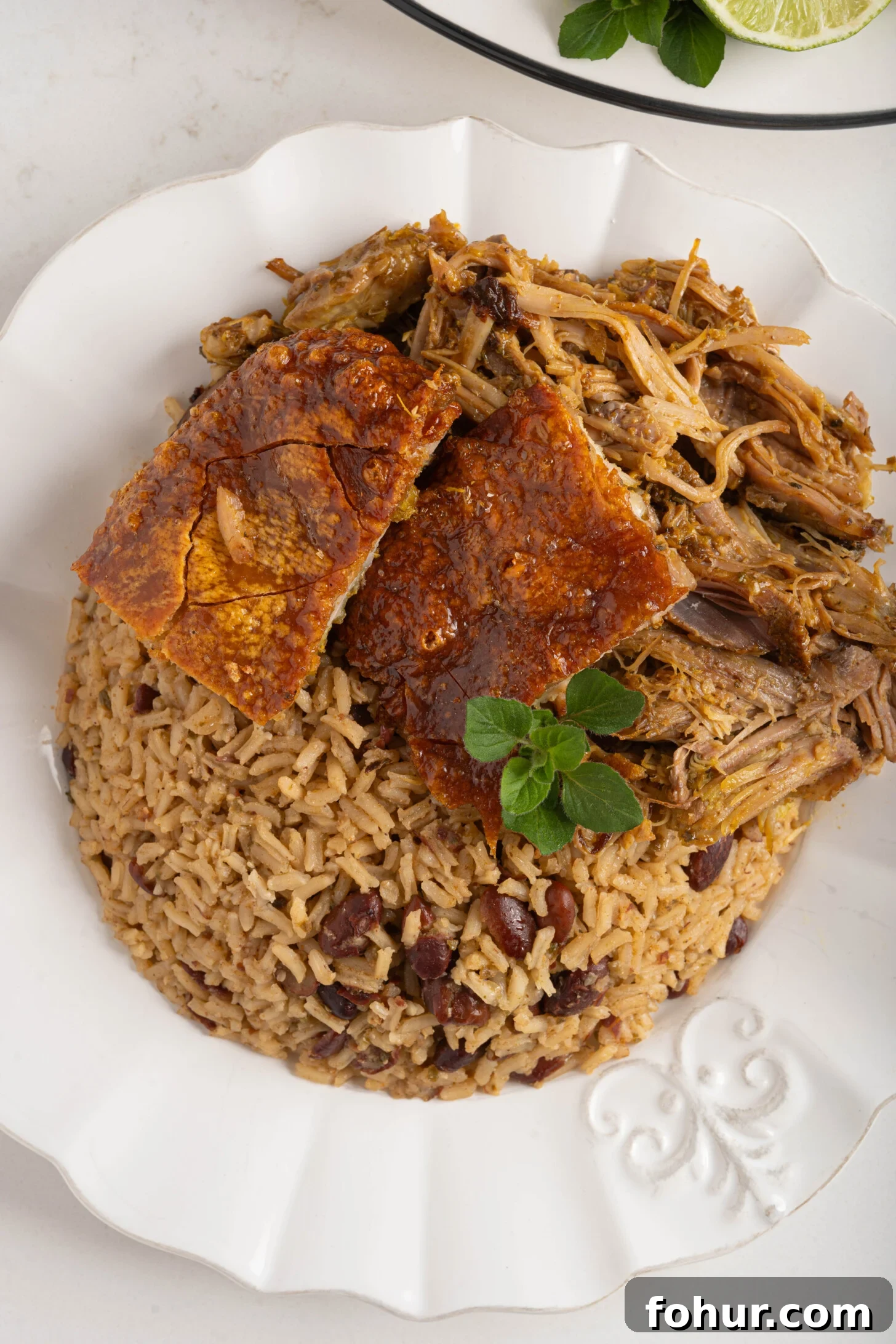
- Rest and serve: Transfer the pork to a cutting board, tent with foil, and let rest 15 minutes. Shred the meat with forks and cut the crispy skin into pieces using scissors. Serve warm with rice and beans or your favorite sides.
Equipment
- Large roasting pan
- Sharp chef’s knife
- Mortar and pestle or food processor
- Meat thermometer (recommended)
- Kitchen scissors for cutting the crispy skin