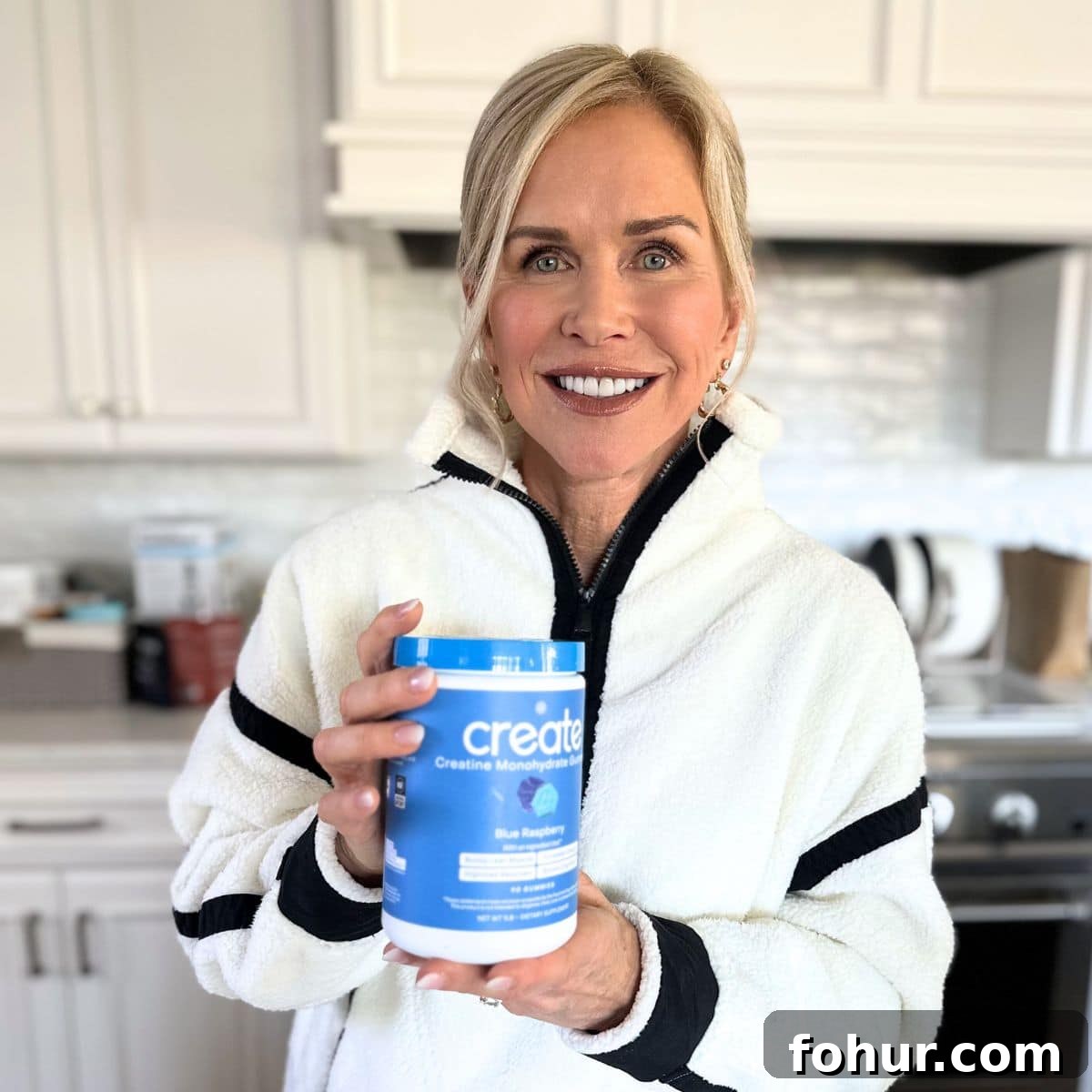
If you’d told me two decades ago that I’d recommend creatine to women over 50, I would have laughed. Back then creatine carried myths about unwanted water weight and “bulking up.” As a trainer with 35+ years working with women through menopause and beyond, my perspective changed after trying Create Creatine Gummies for myself at 59. More than a year later, they’re still part of my daily routine.
Creatine is a naturally occurring compound that helps muscles produce quick energy during strength work. That becomes especially valuable after menopause, when muscle loss accelerates and maintaining strength matters for long-term independence and metabolic health.
I dug into the research on muscle loss after menopause, explored cognitive health studies, compared product labels, and tested options based on real-life convenience. I chose a creatine gummy that fit my lifestyle, and here’s what I learned from using it consistently.
PS. If you’re curious about everything I take, that’s included in my daily supplement routine as a 60-year-old.

What You’ll Love About Create Creatine Gummies ❤️
If you’re wondering whether creatine for women over 50 is worth trying, here are the benefits I noticed after eight months of consistent use.
1. Muscle Support Without Bulk
I saw improved muscle tone and the ability to challenge myself with slightly heavier weights—without getting “big.” For most women, creatine supports firmness and strength rather than unwanted size.
2. Simple, No-Mix Convenience
Three gummies each morning. No mixing, no shaker bottle, no gritty powder. That ease removed one more barrier to staying consistent.
3. Consistency Made Easy
The best supplement is the one you’ll actually take. Because these are easy to use, I stayed consistent for months, and consistency is where results accumulate.
4. Travel Packs Help You Stay on Track
Create offers travel packs that are simple to toss in a purse or carry-on. For anyone who travels or has unpredictable days, pre-portioned packs make it much easier to avoid missed doses.
5. No Water Weight Drama
Creatine increases water inside muscle cells as part of its mechanism, but I experienced no bloating or sudden scale changes.
My Experience
Here’s how I incorporated creatine into my routine and what I observed along the way.
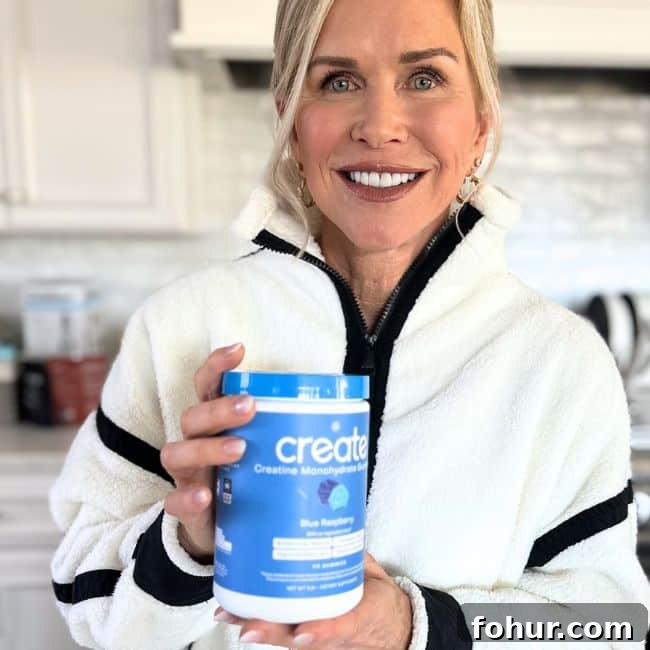
Unboxing & First Impressions
The ingredient list was simple: creatine monohydrate as the active ingredient and pre-measured gummies. No unnecessary extras. For midlife women, transparent labels and third-party testing are important considerations.
Setup & First Use
There was no loading phase or complicated timing. I started with about 5 grams daily (three gummies) in the morning and kept it straightforward.
Routine & Adaptation
I take the gummies most mornings before my strength sessions. With travel packs, they go into my gym bag or carry-on, so I rarely miss a day. Timing mattered less than simply taking them every day.
Results & Reflections
Week 1: No big change.
Week 4: A slightly better muscle pump.
Month 3+: Able to lift heavier weights.
Month 8: Noticeable improvements in tone and functional strength.
Creatine is not a magic shortcut. You still need to strength train, eat enough protein, and progress your workouts. But in midlife, small consistent advantages add up—supporting power, recovery, and potentially cognitive health.
Considered But Skipped
I evaluated powders and blended supplements. Powders are economical and effective, but since I already use protein and collagen powders, gummies won for simplicity and ease.
What to Consider
Before adding creatine for women over 50 to your routine, consider these practical points.
Cost
Gummies are typically pricier than powder. For many, the convenience and improved adherence justify the cost.
Usage Frequency
Take creatine daily. It works by saturating muscle stores, so consistency matters more than exact timing.
Lifestyle Fit
Creatine pairs well with strength training 2–4 times per week and is a practical addition for women who want to protect muscle during and after menopause.
Safety & Limits
Creatine monohydrate is among the most researched supplements. Still, consult your healthcare provider if you have kidney conditions or other medical concerns.
Potential Downsides
Don’t expect overnight transformations. Creatine provides subtle, cumulative benefits rather than instant results.
Buying Guide 🛒
If creatine makes sense for your goals, look for a product that uses creatine monohydrate, provides a clear daily serving (around 3–5g), and has transparent labeling or third-party testing.
What to expect in the product:
- Creatine monohydrate (roughly 3–5g total per day)
- Pre-measured servings for convenience
- No unnecessary fillers or proprietary blends

How to Use Creatine (Quick Start)
A few practical tips to get the most from creatine for women over 50.
Frequency
Take about 3–5 grams daily. No loading phase is necessary for most people.
Timing
Any time of day works. I prefer mornings before workouts, but the most important factor is taking it consistently.
Pair It With
- Regular strength training, 2–4 times per week
- Aim for 25–30 grams of protein per meal to support muscle repair
- Progressive overload—gradually increase weight or reps
Safety Reminder
Follow the recommended dosage, stay hydrated, and consult your healthcare provider if you have questions.
Maintenance
Store in a cool, dry place. Pre-portioned gummies make storage and travel simple.
Why Creatine Matters More After 50
After menopause, estrogen declines and muscle loss (sarcopenia) can accelerate. That leads to a slower metabolism, lower bone density, and greater risk of balance problems. Muscle is a key element of long-term health and independence—so preserving it matters.
When combined with strength training, creatine can support muscle power, recovery, metabolic health, and emerging research suggests possible cognitive benefits as well. In short, creatine is a small, evidence-backed tool to support active aging.

Final Thoughts
For women over 50, creatine is less about trends and more about practical, long-term support for strength and vitality. At 60, my goal isn’t to be skinny—it’s to stay strong, independent, and energized. Creatine is a low-risk, well-researched supplement that can add a small but meaningful edge when combined with consistent strength training and good nutrition.
If you’re strength training in midlife and want an extra, evidence-based advantage, consider trying creatine in a form you’ll actually take—whether gummies or powder.
Creatine FAQs
Common questions about creatine for women over 50, answered succinctly.
It helps muscles produce ATP, the quick energy used during short, intense efforts like strength training.
Most women do not experience noticeable weight gain from creatine. Any initial changes are often water held within muscle tissue rather than fat.
Daily—consistency matters more than timing.
Creatine monohydrate is well studied and generally safe. Talk to your healthcare provider if you have kidney issues or other medical concerns.
No. A daily dose of 3–5 grams is effective for most people without a loading phase.
Both forms can work. Pick the form you’ll reliably take.