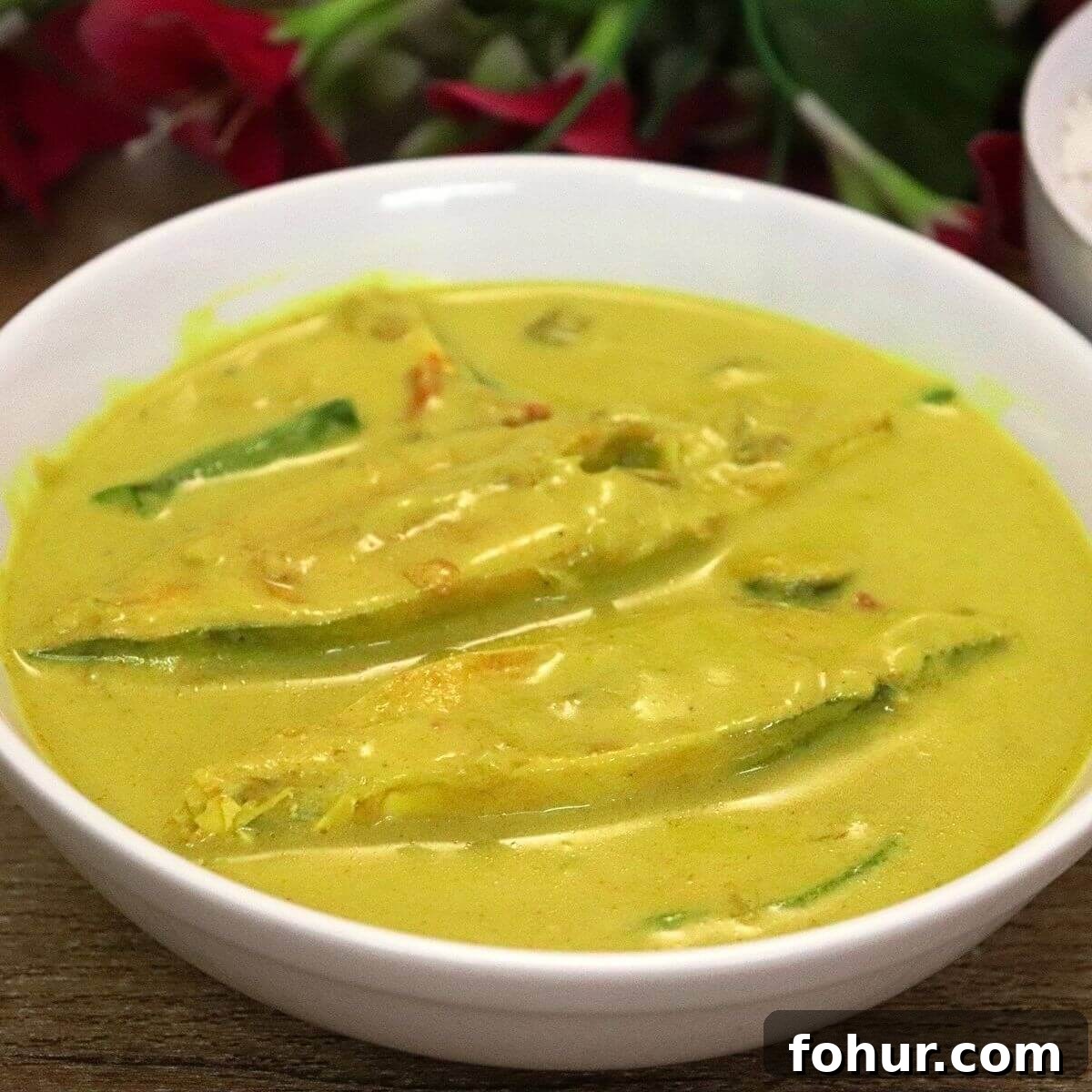
Goan Caldin Curry (also called Caldine or Caldinho) is a light, mildly spiced coastal curry from Goa made with freshly extracted coconut milk. Traditionally prepared with pomfret, this delicate fish caldin is also commonly made with prawns or vegetables for a lighter, everyday meal.
Unlike many Goan curries that are bold and fiery, this version relies on a handful of whole spices and green chilies to keep the flavor gentle and nuanced. It takes about 30 minutes from start to finish and pairs beautifully with steamed rice or crusty bread.
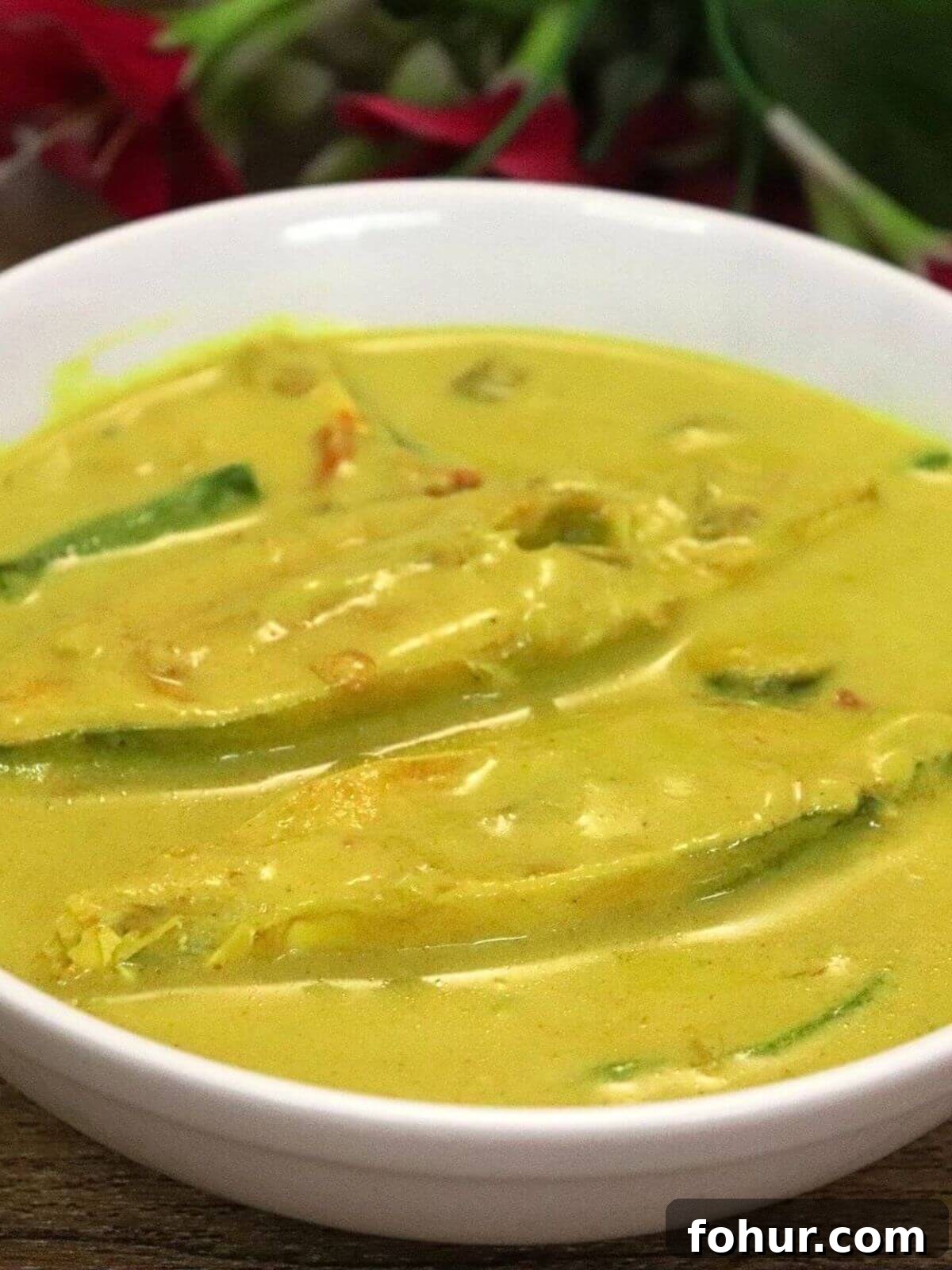
The word “Caldin” (or “Caldinho” in Portuguese) means “little broth” or “small soup,” which describes its light, slightly soupy texture while still tasting rich thanks to fresh coconut milk.
This is my favorite creamy fish caldin recipe because it’s mild, family-friendly, and reliably delicious. My first taste of pomfret caldin at a beachside shack left a strong impression: the coconut warmth and subtle spices were wonderfully comforting without overwhelming heat.
Where other Goan preparations might use red chilies and heavier spice blends, caldin keeps things simple: green chilies provide a soft heat, while freshly squeezed coconut milk adds creaminess and body. Serve it with plain steamed rice and an occasional fried fish on the side if you like.
Quick Look: Goan Caldin Curry Recipe
- Prep Time: 15 minutes
- Cook Time: 20 minutes
- Total Time: 35 minutes
- Calories: ~308 kcal per serving
- Key Ingredients: Pomfret (or prawns/vegetables), fresh coconut, coriander seeds, cumin, peppercorns, turmeric, green chilies, tamarind
- Cooking Method: Marinate fish → grind coconut masala → extract coconut milk → sauté onions & tomatoes → add thin coconut milk → add fish → finish with thick coconut milk
- Flavor Profile: Mild, creamy, lightly spiced
- Difficulty: Easy
SAVE THIS RECIPE
Disclaimer: AI summaries and quick notes may contain small errors. Refer to the full recipe card below for complete ingredients and steps.
About This Fish Caldin
Fish caldin is a classic Goan curry made with coconut milk, mild spices and green chilies. The pomfret version is especially popular along the Goan coast, but this recipe adapts well to other firm white fish, kingfish, prawns or even mixed vegetables.
What makes caldin special is its balance: gentle aromatics, a touch of tang from tamarind, and the natural sweetness of coconut. It’s light, comforting, and versatile — ideal for weekday dinners or relaxed meals with family.
Ingredient Notes
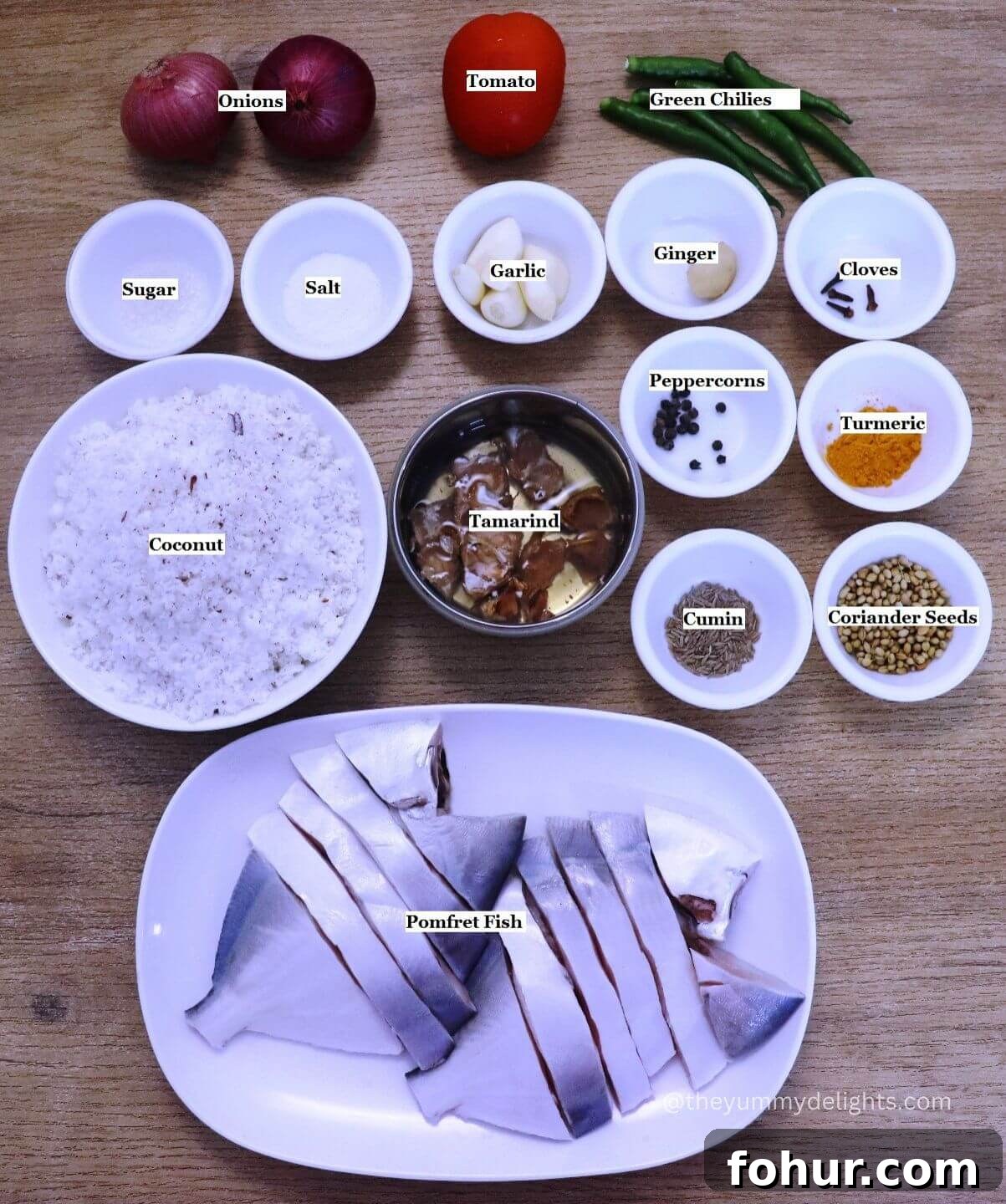
See the recipe card at the end of the post for full quantities and a printable version.
- Fish: Pomfret is classic and cooks quickly. Substitute kingfish, snapper, mackerel or prawns as needed.
- Tamarind: A small ball of tamarind brings the curry’s gentle tang. If unavailable, a splash of vinegar can work in a pinch.
- Caldin masala: Freshly grated coconut, coriander seeds, cumin, peppercorns, ginger, garlic, turmeric and green chilies make the core paste.
- Substitutes: Desiccated coconut will not give the right texture; canned full-fat coconut milk is a convenient alternative when fresh coconut is not possible.
- Green chilies: The recipe is intentionally mild. Use hotter chilies or increase the count if you prefer more heat.
- Onions & tomatoes: Red onions add color but yellow or white onions work fine. Ripe tomatoes give a pleasant acidity; canned tomatoes are acceptable too.
How To Make Goan Caldin Curry (Step-By-Step)
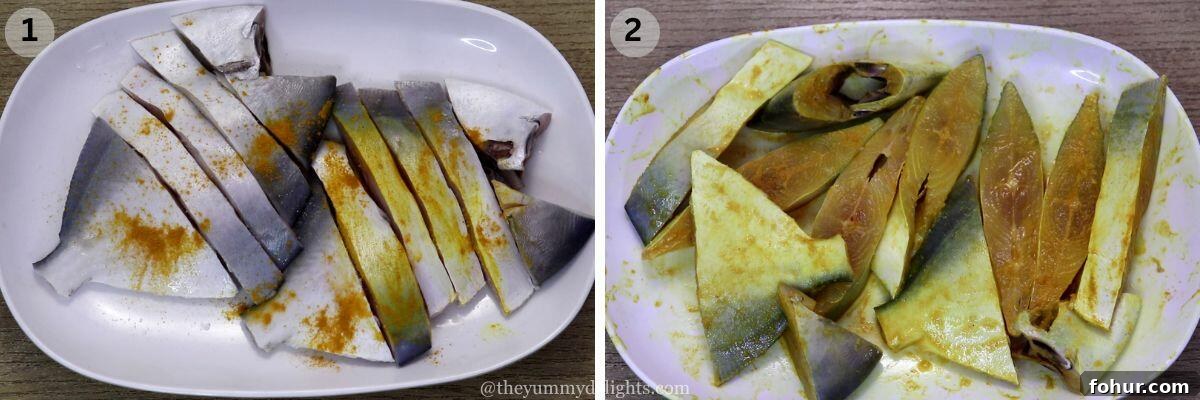
Step 1: Marinate the fish with salt and turmeric, coating well. Set aside.
Step 2: Soak tamarind in hot water for 15 minutes, then set aside.
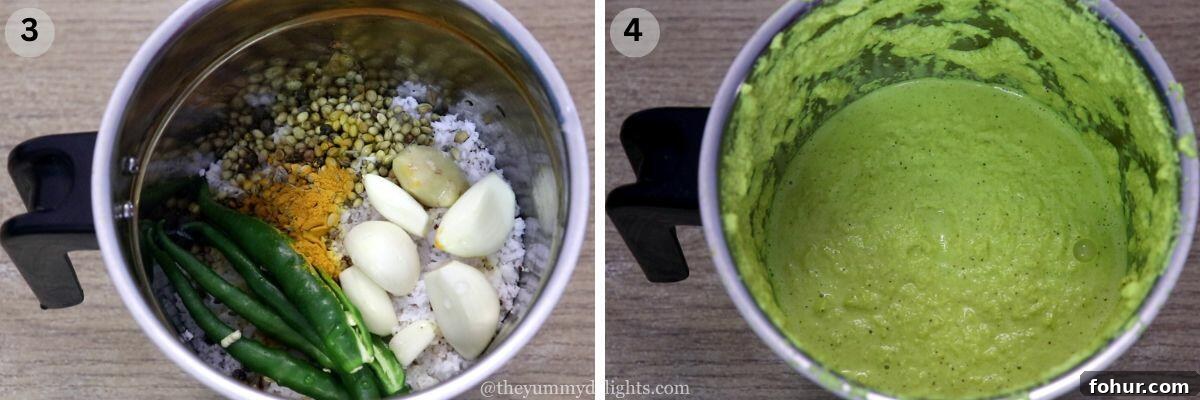
Step 3: Prepare the caldin masala: in a blender combine grated coconut, coriander seeds, cumin, peppercorns, ginger, garlic, turmeric and green chilies with about 1½ cups water. Blend to a smooth paste.
Step 4: Strain the blended mixture through a fine sieve or muslin to obtain the first (thick) coconut milk. Reserve this richer extract for finishing the curry.
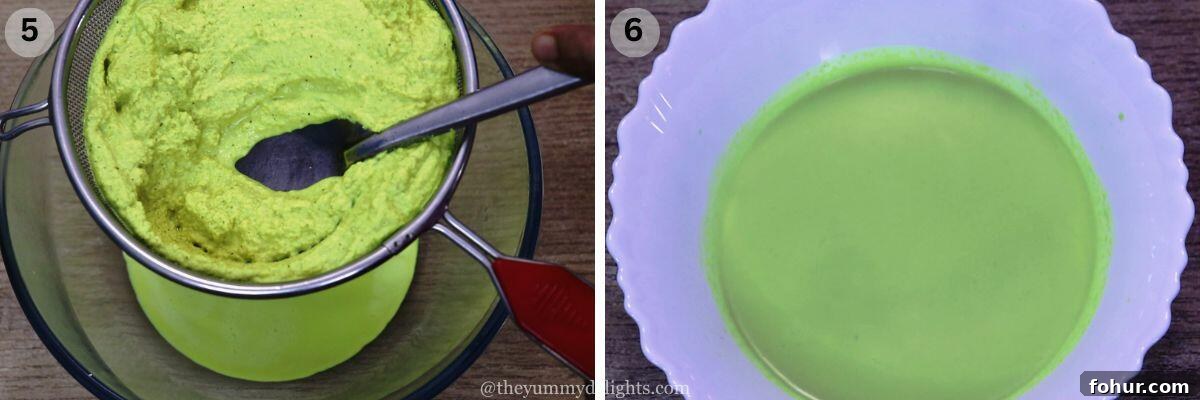
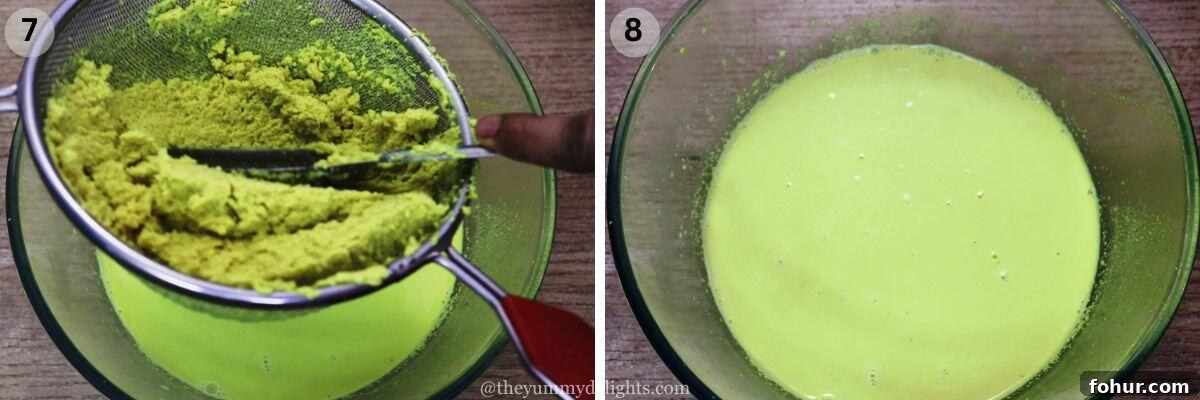
Step 5: Reblend the remaining pulp with 1 cup water and strain again to get the second (thin) coconut milk, which will be used to cook the curry. Optionally blend once more with ½ cup water for a third, thinner extract and add it to the second extract.
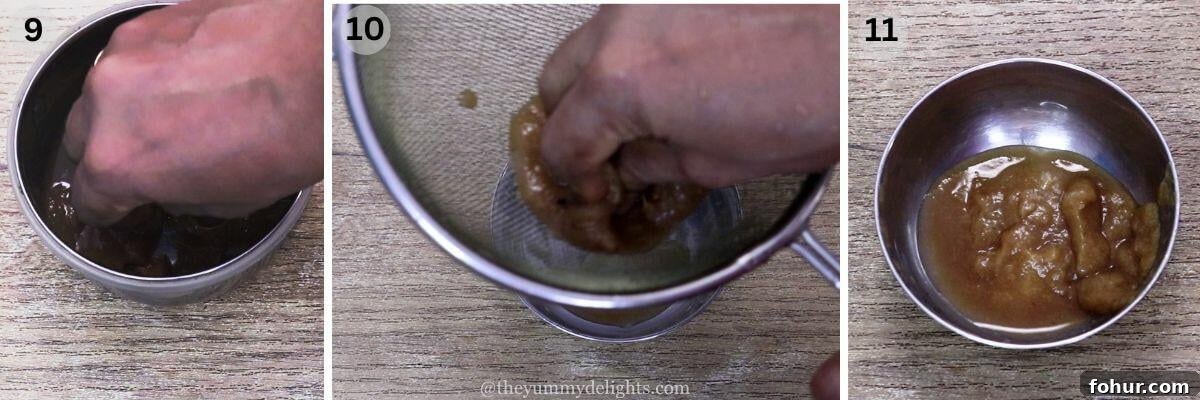
Step 6: Squeeze the soaked tamarind to extract the pulp and strain to remove fibers.
Step 7: Heat 2–3 teaspoons of oil over medium heat. Sauté the chopped onions until golden brown, then add the chopped tomato and cook until soft and pulpy.
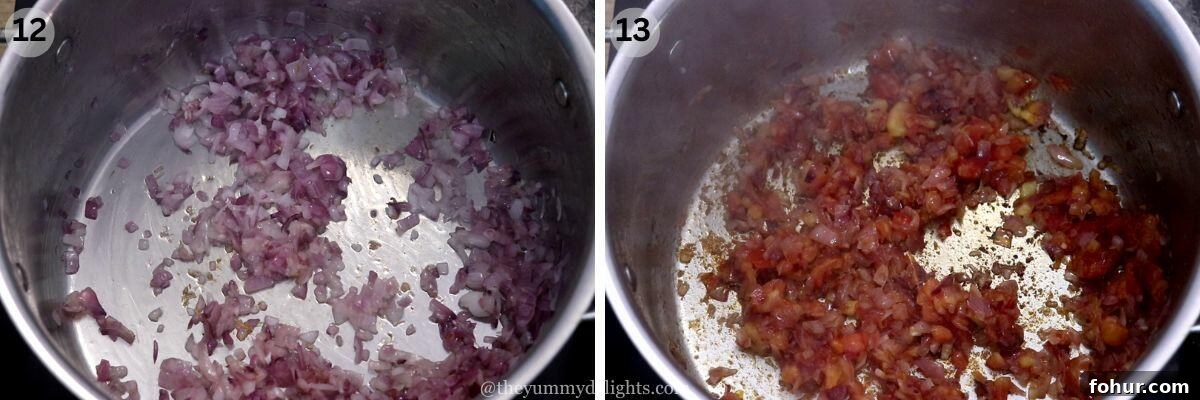
Step 8: Reduce the heat and stir in the second (and optional third) coconut milk extracts. Cook gently for 2 minutes so the flavors meld.
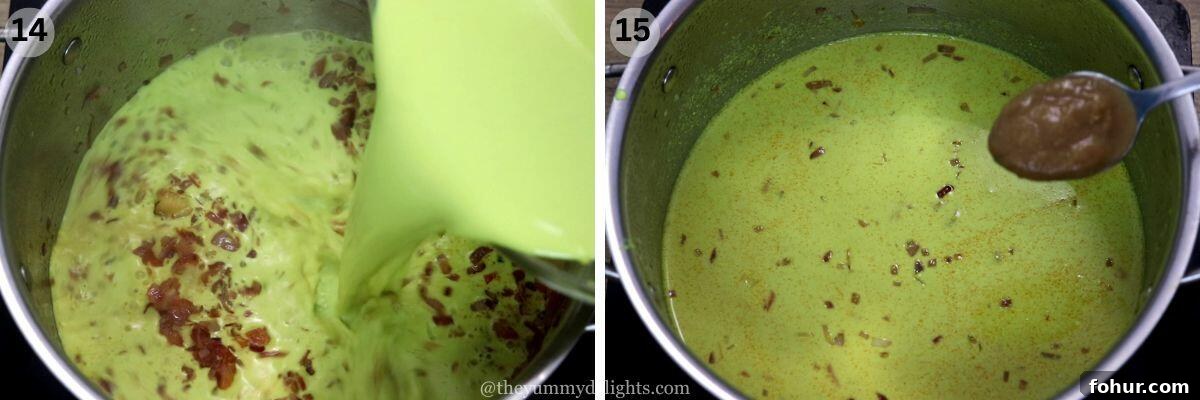
Step 9: Add the tamarind pulp, salt, and a slit green chili (add more green chilies to taste). Increase the heat to bring the curry to a gentle boil, then reduce slightly so it simmers.
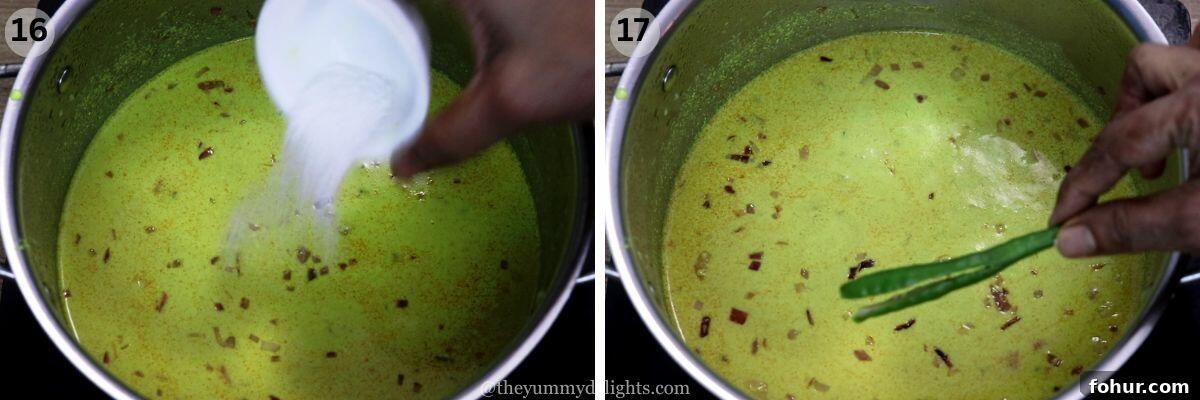
Step 10: Carefully add the marinated fish pieces to the simmering coconut broth. Avoid stirring directly; instead, tilt and rotate the pan gently to distribute the sauce without breaking the fish.
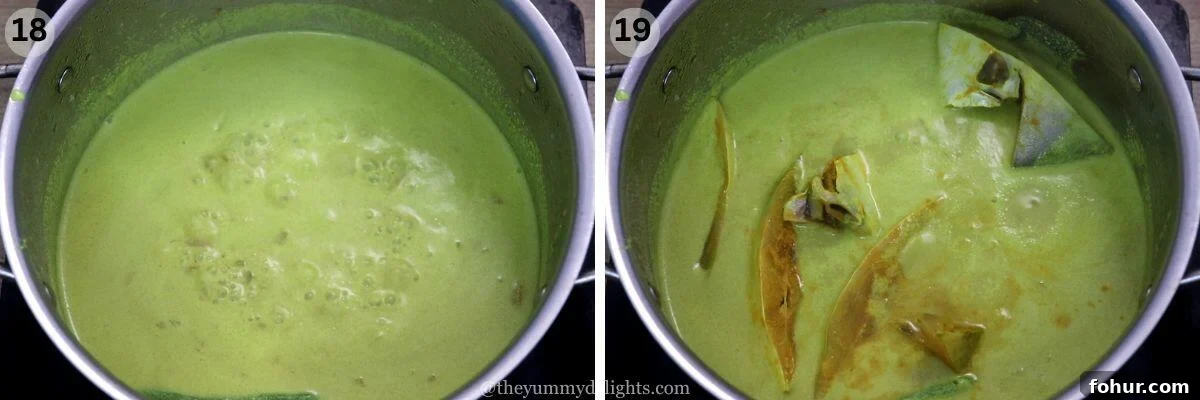
Step 11: Add 1 teaspoon of sugar, bring the curry briefly to a boil, then lower the heat. Stir in the reserved first (thick) coconut milk and warm gently for 1–2 minutes.
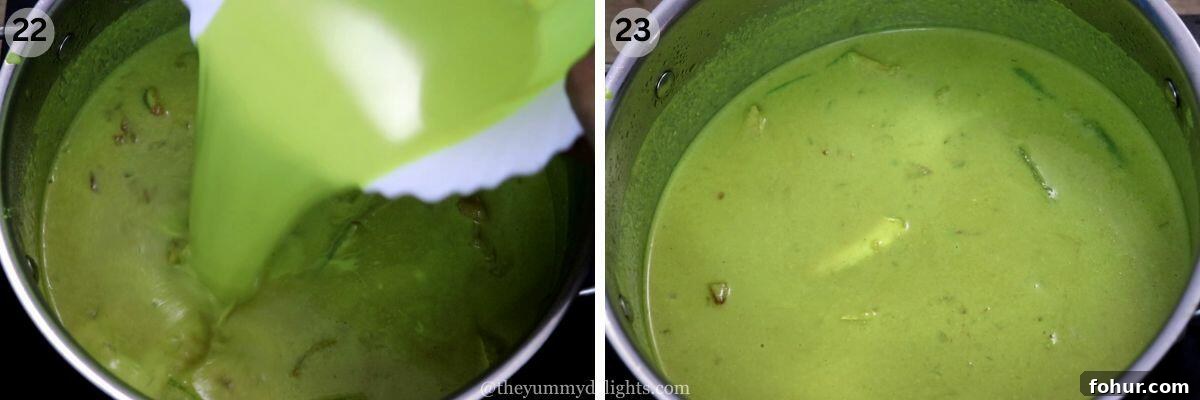
Step 12: Do not boil after adding the thick coconut milk, or it may split and turn grainy. Keep the heat low and serve the fish caldin warm with steamed rice.
Tips for the Best Caldin Curry
- Use fresh coconut milk: Freshly extracted milk gives the best aroma and texture. If using canned milk, choose full-fat and dilute to desired consistency.
- Adjust spice level: Caldin is mild by design. Increase green chilies or peppercorns if you want more heat.
- Avoid green discoloration: Don’t grind too many green chilies into the masala; slit and add them during sautéing to keep the curry’s color warm and appetizing.
- Finish gently: Add the thick coconut milk only at the end and never allow the curry to come to a hard boil afterwards.
Recipe FAQs
Serve caldin with steamed rice, Goan pav (bread) or soft flatbreads. Cooling sides like a cucumber-tomato salad, yogurt-cucumber salad or simple pickles complement the curry well. Fried fish or a light fry makes a tasty accompaniment.
How do I store and reheat caldin?
Store cooked caldin in an airtight container in the refrigerator within two hours of cooking. It keeps well for up to two days. Reheat gently on low heat, stirring occasionally and adding a splash of water or coconut milk if the sauce thickens. Freezing is not recommended because coconut milk may separate on thawing.
Is caldin spicy?
No, caldin is one of the milder Goan curries. It uses aromatic spices and coconut milk rather than heavy red chilies, so the heat is subtle and adjustable.
Can I make caldin without fresh coconut?
Yes—use full-fat canned coconut milk as a substitute. You may need to add a little water to match the consistency of freshly extracted milk.
Can I use other fish instead of pomfret?
Absolutely. Pomfret is traditional, but kingfish, snapper, mackerel or prawns all work well in this mild coconut-based curry.
Other Goan Fish Recipes to Try
- Goan Kingfish Curry (Surmai Curry)
- Goan Recheado Fish Fry (Mackerel Recheado)
- Green Masala Fish Fry
- Kingfish Fry Goan Style
If you try this recipe, please leave a comment and rating. Feedback is always appreciated.
Recipe Card
Goan Caldin Curry Recipe
Equipment
- 1 medium mixing bowl
- 1 strainer or muslin cloth
- 1 blender or mixer jar
- 1 heavy-bottomed pan
Ingredients
To marinate the fish
- 2 pomfret fish (about 500 g total)
- ½ teaspoon salt
- 1 teaspoon turmeric
Caldin Masala
- 2 cups freshly scraped coconut (about 1 coconut)
- 1½ tablespoons coriander seeds
- 1 teaspoon cumin seeds
- about 25 peppercorns
- 1-inch piece ginger
- 6 large garlic cloves (or 12 small)
- 1 teaspoon turmeric
- 4 green chilies, or to taste
Caldin Curry
- 2–3 teaspoons oil
- 2 onions, chopped
- 1 tomato, chopped
- 1 green chili (slit)
- salt to taste
- 1 teaspoon sugar
- ½ lemon-size ball tamarind (soaked in hot water for 15 minutes)
Instructions
Preparation
- Marinate the fish: Rub fish with salt and turmeric and set aside.
- Soak tamarind: Soak tamarind in hot water for 15 minutes and set aside.
- Make the caldin paste: In a blender, combine coconut, coriander, cumin, peppercorns, ginger, garlic, turmeric and green chilies with 1½ cups water. Blend to a smooth paste.
- First extract: Strain to obtain the thick coconut milk and set aside for finishing.
- Second extract: Reblend the pulp with 1 cup water and strain to get the thinner coconut milk for cooking.
- Third extract (optional): Reblend with ½ cup water and strain; add to the second extract if desired.
- Tamarind pulp: Squeeze and strain the soaked tamarind to extract the pulp.
Cooking
- Heat oil over medium heat. Sauté onions until golden, then add tomatoes and cook until soft. Reduce heat.
- Add the second (and third) coconut milk extracts and simmer for 2 minutes.
- Add tamarind pulp, salt and slit green chili. Raise heat to bring curry to a gentle boil.
- Gently add the marinated fish. Do not stir; tilt and rotate the pan to distribute the sauce.
- Add sugar, bring to a gentle boil, then lower heat. Stir in the first (thick) coconut milk, warm for 1–2 minutes, and do not boil. Serve hot with rice.
Notes
- Fresh coconut milk yields the best flavor; use full-fat canned coconut milk as an acceptable alternative.
- Do not overcook the fish; add it near the end so it remains tender.
- Adjust chilies and peppercorns to control heat.
- Avoid grinding too many green chilies into the paste to prevent an undesirable green color.
- Add the thin coconut extracts first and finish with the thick extract on very low heat to prevent splitting.
Nutrition
Nutrition information is an approximation and should be used as a guide.
More Goan Seafood Recipes to Try
- Goan Clam Curry (Tisryache Tonak)
- Goan Mackerel Curry (Bangdyachi Uddmethi)
- Squid Chili Fry
- Goan Kingfish Curry