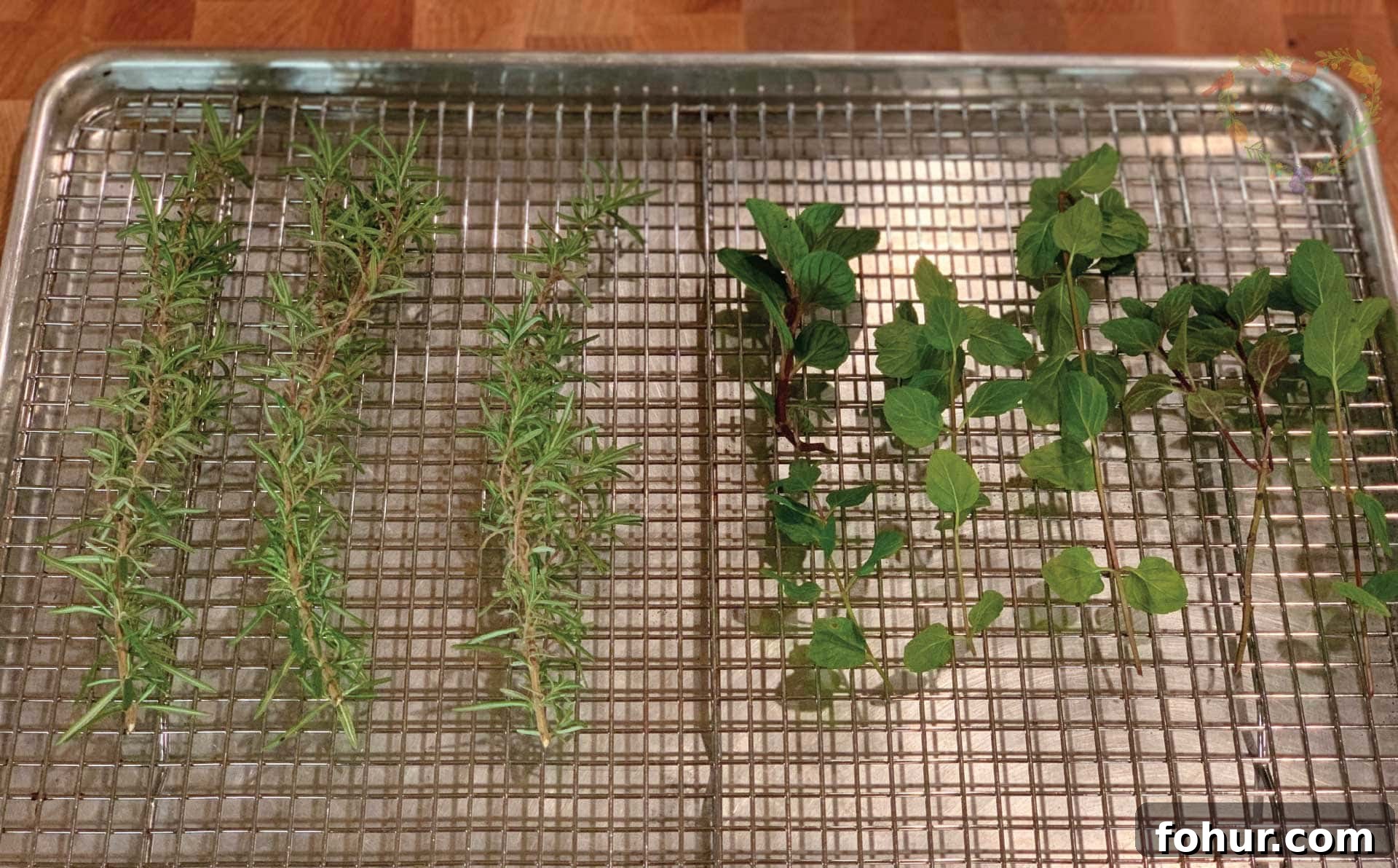
This post continues the Dehydrating 101 series with one of my favorite subjects: how to dry and preserve herbs. Whether you use an electric dehydrator, your oven, or air-dry them in a warm kitchen, the following guidance will help you get consistent, flavorful results.
Affiliates note: As an Amazon Associate I may earn from qualifying purchases. Some product links on this page are affiliate links. If you click through and make a purchase, I receive a small commission at no extra cost to you.
Table of Contents
- Choosing and Preparing Your Herbs
- Methods for Drying Herbs
- Special Tips for Success
- The Modern Pioneer Pantry
- Start Your Traditional Foods Journey
- The Modern Pioneer Cookbook
- Download Your Free 36-Page Pantry List
- Join the Traditional Foods Kitchen Academy
- Kitchen Academy Videos
- Shop for My Favorite Items
Choosing and Preparing Your Herbs
From my central Texas garden I like to dry herbs such as flat-leaf parsley, chives, peppermint, oregano, lavender, and rosemary. Pick herbs early in the morning after the dew dries for the best flavor and highest essential oil content.
- Tip #1: Gently rinse herbs in cool water to remove dust or insects, then pat them dry with a clean towel or spin them in a salad spinner. Excess moisture prolongs drying time and can cause mildew.
- Tip #2: Discard any browned or damaged leaves and remove woody stems when you want loose, crushed herbs. For whole-leaf storage, leave sprigs intact and remove larger stems after drying.
Methods for Drying Herbs
Choose the drying method that suits your herbs, equipment, and time. Each technique preserves flavor differently, so experiment to find what works best for you.
- Air Drying: Ideal for delicate herbs like parsley, mint, and oregano. Spread leaves in a single layer on parchment-lined baking sheets, or bundle stems and hang them upside down in small bunches in a warm, airy spot away from direct sunlight. Air drying is low-cost and gentle but can take a day or two depending on humidity.
- Oven Drying: Use a low oven setting (roughly 150–200°F / 66–93°C). Place herbs on a baking sheet in a single layer and leave the oven door cracked a few inches to allow moisture to escape. Check hourly; many tender herbs finish within a few hours. This method speeds drying but requires careful monitoring to avoid browning or loss of aroma.
- Dehydrator Drying: A food dehydrator offers precise, even drying. Set the temperature between 90°F and 110°F (32–43°C) depending on the herb’s toughness. Tender herbs like chives and parsley typically finish in around four hours; woody herbs such as rosemary or thyme can take much longer—sometimes 12–18 hours. Rotate trays for even airflow if needed.
Special Tips for Success
Drying herbs is both practical and rewarding. Properly dried herbs concentrate flavor, extend shelf life, and make it easy to add homegrown taste to recipes year-round.
- Store fully cooled herbs in airtight containers kept in a cool, dark place. Glass jars with tight lids work well.
- Label jars with the herb name and drying date. Most dried herbs retain good flavor for about 6–12 months.
- To test doneness, rub a leaf between your fingers—if it crumbles easily and is dry to the touch, it’s ready.
- For ground herbs, use a spice grinder or mortar and pestle. Grind only what you’ll use soon to preserve essential oils.
Drying connects us to long-standing food-preservation traditions. Each jar preserves not only flavor but also the care of harvest and season.
Order YOUR COPY Now!
The Modern Pioneer Pantry
Simple ingredients and traditional techniques come together in over 100 recipes focused on preserving food and making the most of pantry staples. If you enjoy drying, canning, fermenting, and other preservation methods, this book offers practical recipes and pantry-building guidance.
If you enjoy preserving foods, consider my cookbook The Modern Pioneer Pantry for more techniques and recipes that complement drying and dehydrating.
Start Your Traditional Foods Journey
My recipes and videos are meant to make traditional cooking approachable. I also have another title, The Modern Pioneer Cookbook, which focuses on from-scratch recipes for a seasonal, traditional kitchen. Together these resources can help you build a dependable, nourishing pantry.
Order YOUR COPY Now!
The Modern Pioneer Cookbook
Filled with seasonal, from-scratch recipes and traditional techniques, this book includes many simple, nourishing dishes you can make with pantry staples and preserved ingredients.
Download Your Free 36-Page Pantry List
For a comprehensive checklist of traditional pantry items and preservation resources, download the free 36-page Traditional Foods Pantry List. It includes recipe links, helpful articles, and ideas to help you stock and maintain a useful pantry.
- FREE 36 Page Traditional Foods Pantry List – Printable Pantry Staples List
Join the Traditional Foods Kitchen Academy
If you want more instructional videos and community support, consider joining the Traditional Foods Kitchen Academy. Members get access to exclusive video content, bonus materials, and a community of fellow home cooks focused on traditional food skills.
Kitchen Academy Videos
See all →
Baking Questions Answered with Ted and Mary!
Join us for a practical Q&A filled with kitchen tips, helpful techniques, and answers to common baking questions.
Baking with Whole Grains: The Maslin Method
Explore whole grain baking with fresh-milled flour, grain mills, and heritage wheats.
A Sweet Season of Celebration with The Maslin Method
Celebrate the close of a book tour and the launch of a baking school focused on traditional techniques.
Shop for My Favorite Items
Favorite Dehydrating Supplies
- Excalibur 9-Tray Food Dehydrator
- Excalibur Silicone Sheets
- FoodSaver
- FoodSaver Vacuum Lids
- Silica Gel Packs
- Baking Sheets
- Parchment Paper
- Spice Grinder
- Regular Mouth Half Pint Canning Jars and Lids
- Wide Mouth Pint Canning Jars and Lids
- Wide Mouth Quart Size Jars and Lids
Amazon Shop and Shopping Guide
- Visit Mary’s Nest Amazon Shop
- Get a 30-day Audible trial with a free audiobook
- Visit my Shopping Guide page
Find discounts and supplier recommendations for stocking your traditional foods pantry and equipping a practical kitchen.
Recommended Reading
- The Modern Pioneer Cookbook
- The Modern Pioneer Pantry
- Nourishing Traditions
- The Ultimate Dehydrator Cookbook
- The Dehydrator Bible
- Complete Dehydrator Cookbook