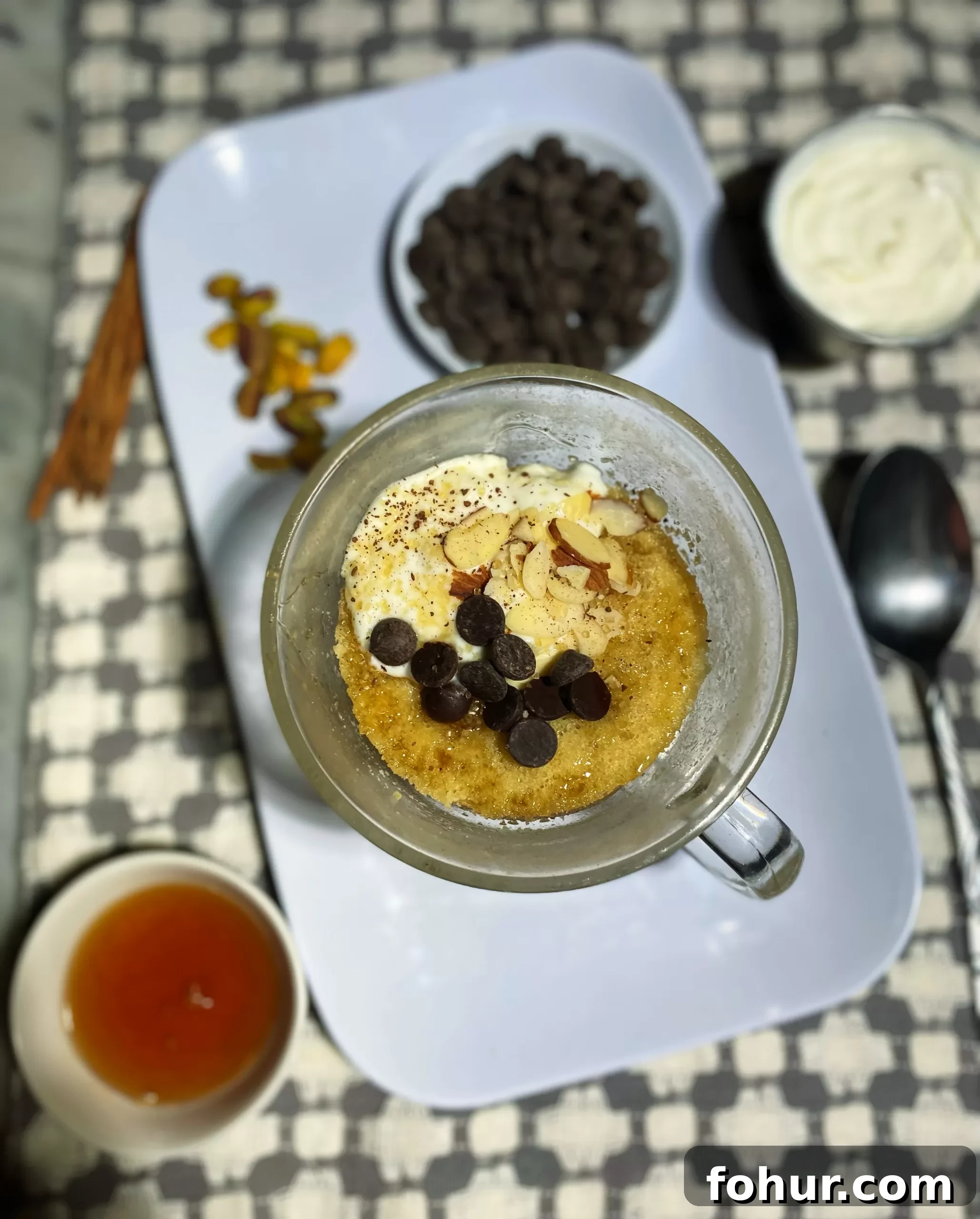
Delightfully fluffy, nutty, and perfectly spongy, this almond flour mug cake comes together in under two minutes and uses only one mug—so cleanup is minimal. It’s ideal for a quick snack or single-serving dessert and works especially well for anyone following a gluten-free, low-carb, or keto-friendly diet. For a special presentation, try baking it in a mason jar.
This Almond Flour Mug Cake Is…
- Gluten-free
- Grain-free
- Low-carb
- High-protein
- Keto-friendly
- Comforting and simple to make
This mug cake is a great foundation recipe you can adapt with different extracts, sweeteners, and toppings to suit your taste.
A Few Standout Ingredients to Make the Best Almond Flour Mug Cake
Almond flour: A finely ground almond flour provides a tender texture and a mild, nutty flavor. It’s naturally gluten-free and adds protein and healthy fats to the cake.
Almond extract: A small amount of almond extract boosts the nutty aroma and gives the cake a pronounced almond taste. If you prefer, you can swap it for vanilla or another extract for a different flavor profile.
Butter: Melted butter both prevents sticking and contributes to a rich, cake-like mouthfeel. To make the recipe dairy-free, substitute melted coconut oil or olive oil.
Milk: A tablespoon of milk loosens the batter and adds moisture. Use plant-based milk or even water if you want a dairy-free version; canned coconut milk will give extra richness.
Egg: The egg provides structure and lift. The yolk adds flavor and richness while the white helps the cake rise with the baking powder.
To make this recipe dairy-free:
- Replace milk with coconut milk or another plant-based milk.
- Use coconut oil or olive oil instead of butter.
To make this recipe vegan:
Follow the dairy-free swaps above, and replace the egg with a vegan binder such as a flax egg or chia egg (1 tablespoon ground flaxseed or chia seeds mixed with 3 tablespoons water, set for a few minutes). You can also use a commercial egg replacer. Substitute honey with maple syrup or another vegan sweetener.
How to Make Almond Flour Mug Cake
Below is a quick, step-by-step walkthrough. The full recipe and measurements are provided in the ingredients and instructions sections that follow.
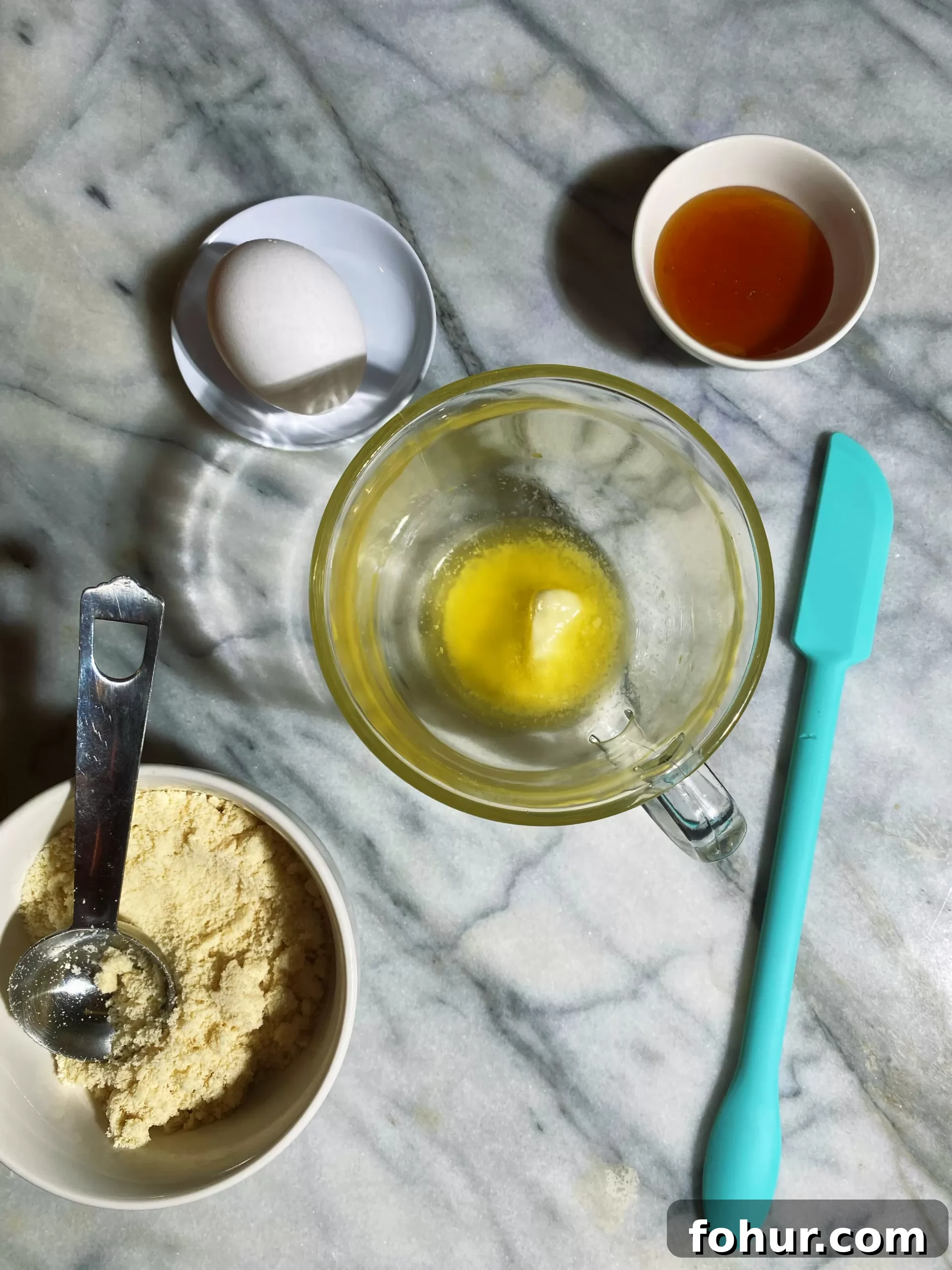
Step One: In a microwave-safe mug, melt the butter. Once melted, stir in the almond extract, milk, egg, honey, and a pinch of salt until combined.
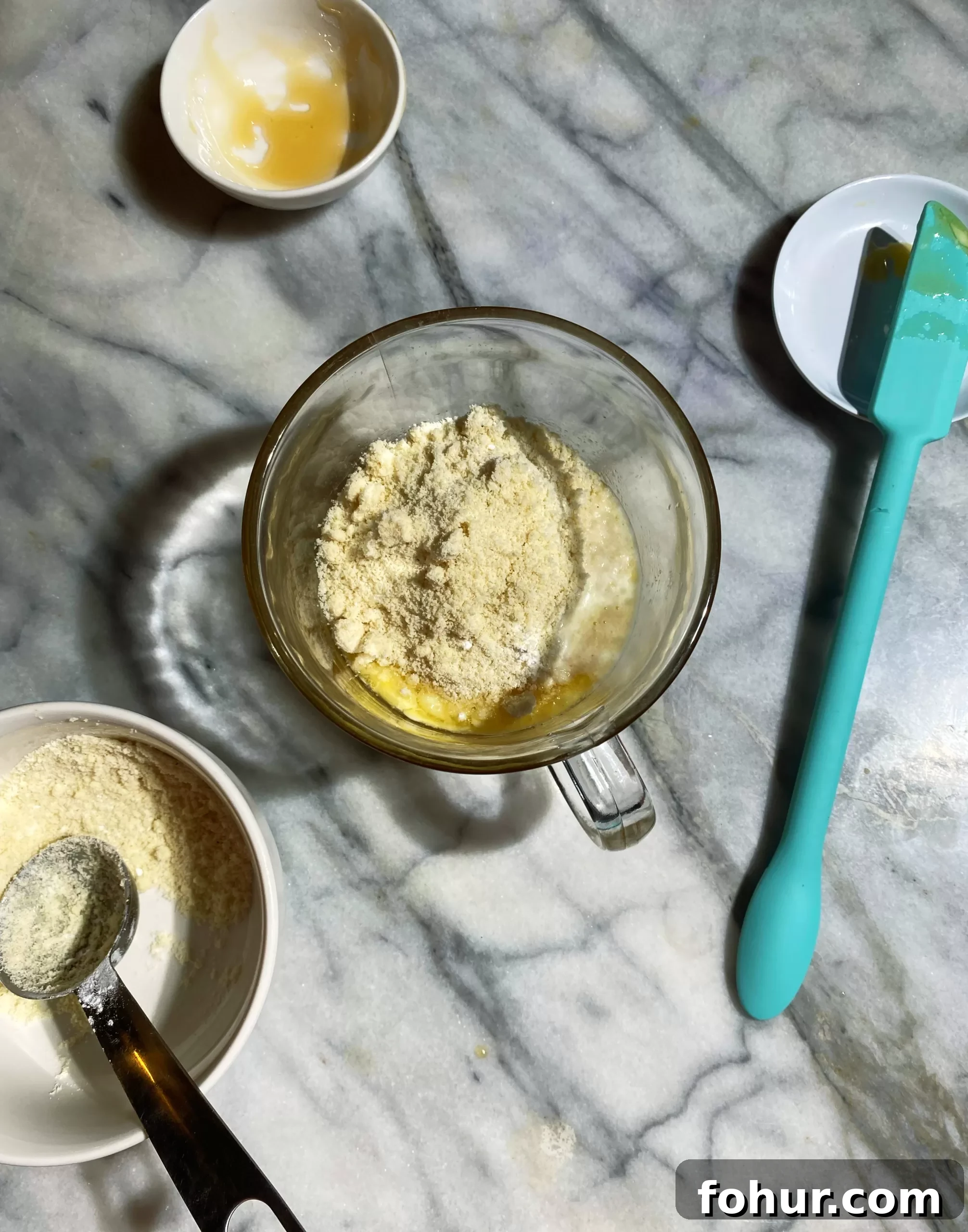
Step Two: Add the dry ingredients—baking powder and almond flour—into the mug and stir until the batter is smooth and even.
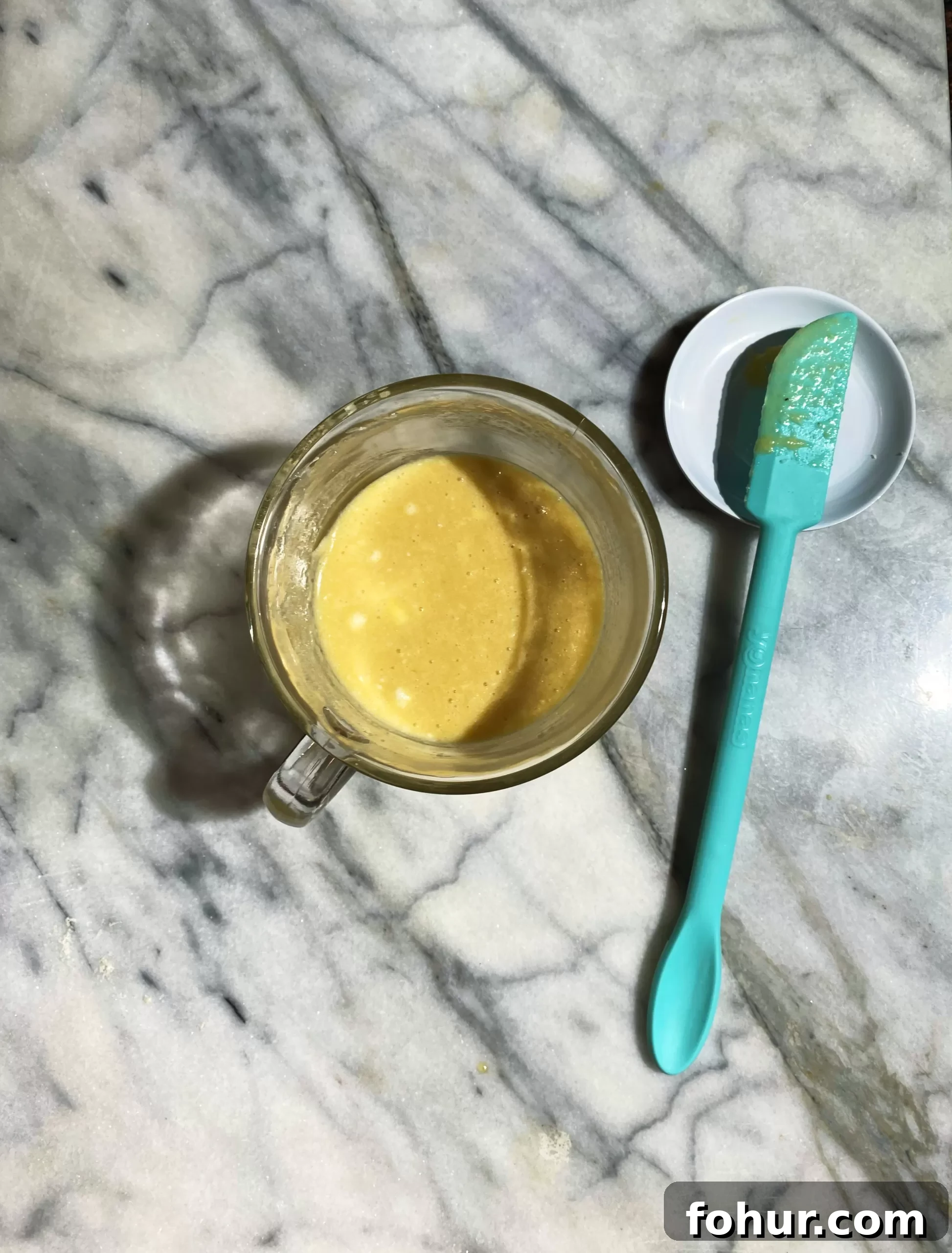
Step Three: Microwave on high for 1–2 minutes. Timing will vary by microwave; the cake is done when it has risen and a toothpick inserted in the center comes out clean.
Step Four: Let the cake cool for a few minutes before eating; it will set and be easier to enjoy once it isn’t piping hot.
Try Your Mug Cake with These Additions
One of the best parts of a mug cake is how easy it is to customize. Add about a tablespoon of mix-ins to the batter or pile toppings on after cooking. Ideas that work well:
Nuts: Toasted hazelnuts, pecans, walnuts, or sliced almonds make a great crunchy contrast. For best texture, sprinkle nuts on top rather than mixing them deep into the batter.
Powders: Cocoa powder, instant espresso, or matcha add color and flavor—one teaspoon folded into the batter is plenty.
Fruit: Fresh berries, sliced strawberries, or a few chunks of pineapple add brightness. Swirl in a little jam for extra sweetness and moisture.
Dollops: Top with Greek yogurt, coconut cream, or whipped cream cheese for creamy contrast. A spoonful of chilled topping alongside the warm cake is especially nice.
Glaze: Mix a tablespoon of powdered sugar with a little milk or milk alternative to make a simple glaze for drizzling. It acts as an edible “glue” for nuts and toppings.
Tips for Success
Keep the base recipe simple the first few times so you can dial in cooking time for your microwave. Once you have the timing right, you can experiment with extracts, sweeteners, and mix-ins.
For the Best Texture
Watch the cake closely while it cooks. Microwaves vary widely, so start with one minute and add 15–30 second bursts if needed. The cake is done when it stops rising and holds its top for 20–30 seconds; it will deflate slightly as it cools.
How Will You Know When Your Cake Is Done?
Insert a toothpick into the center. If it comes out clean or with just a few crumbs, the cake is done. If it’s wet, microwave in short increments until the center sets. Short intervals reduce the risk of drying out the cake.
FAQs
Yes. Eggs act as both binder and leavening in this recipe, so substitutions like a flax or chia “egg” will work but can yield a slightly denser, shorter cake.
Overcooking removes moisture and causes the cake to dry and harden. Cook in shorter bursts and stop as soon as the cake has set to avoid this issue.
Because almond flour is gluten-free, overmixing won’t make the cake tough in the way wheat flour would. Stir until ingredients are well combined for an even texture and reliable rise.
- Author: Marissa Bolden
- Prep Time: 2 minutes
- Cook Time: 2 minutes
- Total Time: 4 minutes
- Yield: 1 mug cake
- Category: Dessert
- Method: Microwave
- Cuisine: American
Ingredients
- 4 tablespoons almond flour
- 2 tablespoons honey (or preferred sweetener)
- 1 teaspoon baking powder
- 1/4 teaspoon salt
- 1 egg
- 1 tablespoon milk (dairy or plant-based)
- 1 tablespoon butter, melted (or coconut/olive oil for dairy-free)
- 1/2 teaspoon almond extract
Instructions
- In a microwave-safe mug, melt the butter. Stir in the almond extract, milk, egg, honey, and salt until smooth.
- Add the baking powder and almond flour to the wet ingredients and mix until just combined and lump-free.
- Microwave on high for 1–2 minutes, checking at one minute. The cake is done when a toothpick comes out clean.
- Allow the cake to cool for a few minutes before topping and serving.
Nutrition Facts
- Serving Size: 1
- Calories: 452
- Sugar: 15 g
- Sodium: 176 mg
- Fat: 32 g
- Saturated Fat: 14 g
- Unsaturated Fat: 16 g
- Carbohydrates: 22 g
- Fiber: 6.2 g
- Protein: 18.2 g
- Cholesterol: 190 mg