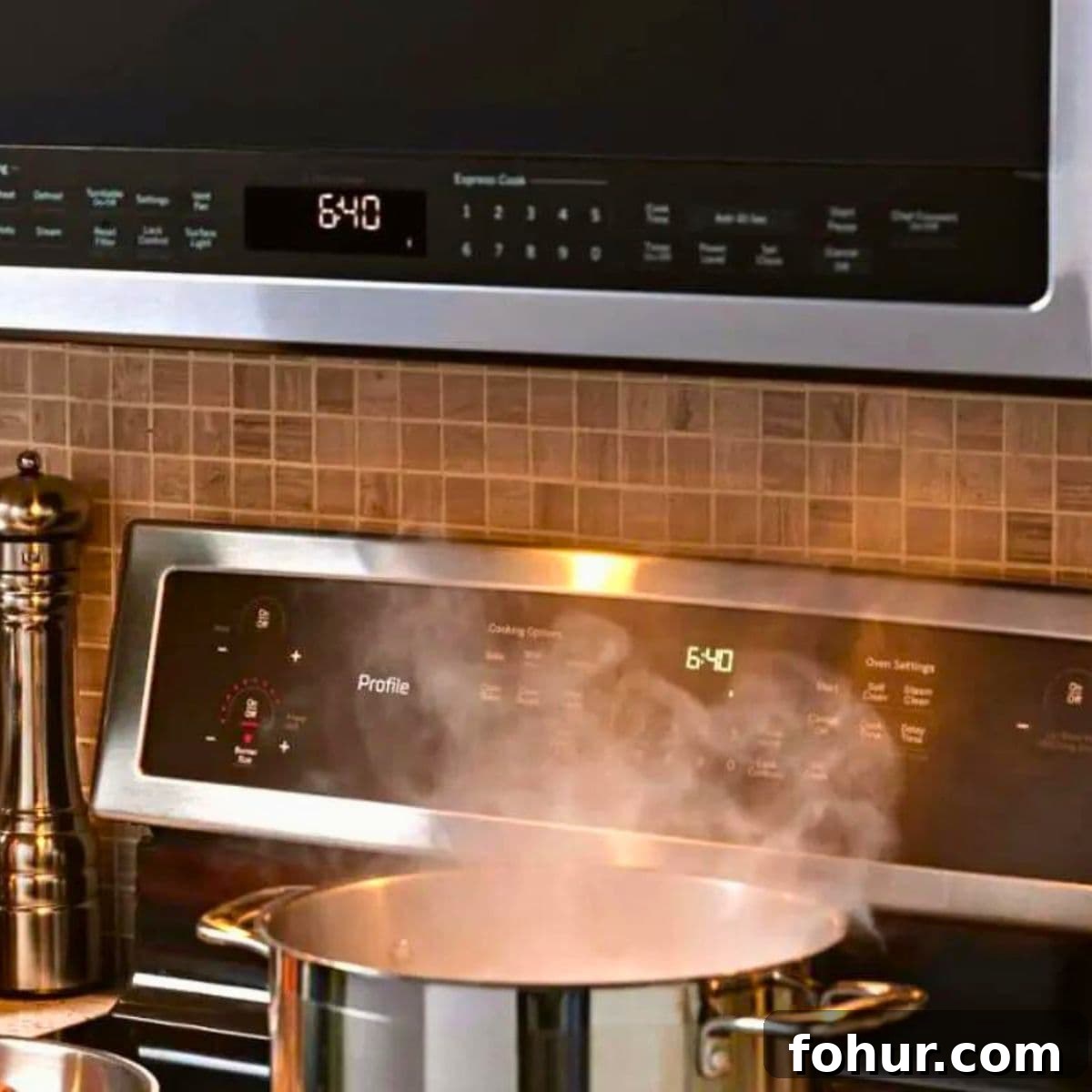
If you’re shopping for a new over-the-range microwave, you may have run across the term “convertible vent” and wondered what it means. In simple terms, a convertible vent on a microwave means the exhaust fan can be configured to either vent air outside through ductwork (ducted) or recirculate filtered air back into the kitchen (non-ducted). This flexibility makes convertible models suitable for many kitchens and different installation scenarios.
Below is a concise guide to help you understand the differences between vent types, why you might choose a convertible vent, and how to tell what kind of venting your microwave uses.
What Are the Different Types of Microwave Vents?
The three main microwave vent options are:
- Ducted (vented) – Air is drawn through the microwave fan and expelled outside the home via ductwork. This is typically the most effective option for removing heat, smoke, and cooking odors.
- Non-ducted (recirculating) – Air passes through a grease and charcoal filter and is returned to the kitchen. Recirculating systems are useful when external ductwork isn’t available, but they are less effective at removing smoke and large cooking odors.
- Convertible – A convertible vent can be reconfigured to work either as ducted or non-ducted. This makes the microwave adaptable to different kitchen layouts and a good choice if you aren’t sure which venting option is available now or in the future.
Your choice of vent depends on whether ductwork exists above or behind your range. Homes with a dedicated vented range hood usually already have ducts in place, while many apartments and simpler kitchens do not. Choosing a convertible model offers future flexibility—if you move or retrofit your kitchen, the same unit may still work.
Convertible vs. Recirculating Vent: What’s the Difference?
A convertible vent includes both ducted and recirculating options; it can be installed to exhaust outside or to recirculate filtered air internally. A purely recirculating vent only performs the internal filtration and return of air and cannot be converted to vent outside. In other words, all convertible vents can operate as recirculating vents, but not all recirculating vents are convertible.
Does an Over-the-Range Microwave Need to Be Vented Outside?
No. An over-the-range (OTR) microwave does not strictly have to vent outside. Recirculating systems let you use a microwave hood where installing ductwork is impractical or too costly. However, recirculating vents rely on filters, so you must maintain and replace those filters regularly to keep the system effective. Filters that are clogged or overdue for replacement reduce airflow and filtration performance.
Maintenance tip
Find your microwave model’s instructions for cleaning and replacing filters. Proper filter maintenance ensures the recirculating option remains effective at reducing grease and mild odors.
Keep in mind a recirculating system won’t clear heavy smoke or strong cooking fumes as well as an external-venting system. For heavy stovetop cooking, a dedicated external hood will generally perform better.
What Does a Convertible Vent Hood Mean?
A convertible vent hood works the same way as a convertible microwave vent but without the built-in microwave. Hood vents install over a stovetop and can be configured to either duct outside or recirculate through filters. They are focused exclusively on ventilation and typically offer stronger airflow and larger filtration options than the venting function built into an over-the-range microwave.
Is a Hood Vent Better Than a Microwave Vent?
For pure ventilation performance—removing smoke, steam, and odors—a dedicated range hood is usually better than a microwave vent because hood systems are designed specifically for air movement and filtration. If you need both cooking capability and some ventilation from a single appliance, an over-the-range microwave with a convertible vent can be a practical compromise.
How Can You Tell If a Microwave Is Recirculating?
To determine whether your microwave is recirculating, turn on the fan and place your hand beneath the unit. If you feel air moving downward or out of vents on the front or bottom of the microwave, it is recirculating filtered air back into the room. If you don’t feel air exiting below and instead notice airflow moving upward into the upper cabinet or grille, the unit is likely venting through ductwork to the outside or configured for ducted exhaust.
Our Top Pick
GE 30″ 1.6 cu. ft. Over the Range Microwave with Convertible Venting
In Conclusion
Now you know what a convertible vent on a microwave is and how it compares to ducted and recirculating options. A convertible vent provides installation flexibility and can adapt to either external ducting or internal recirculation, making it a reliable choice for many kitchens. Always consider your cooking habits, available ductwork, and how comfortable you are with routine filter maintenance when choosing between ducted, recirculating, or convertible vent systems.
If ventilation performance is a top priority, a dedicated hood vent is typically the better solution. If convenience and space-saving are more important—and you want the option to switch later—a convertible over-the-range microwave may be the best fit for your home.
More Microwave Guides
How To Get Burnt Popcorn Smell Out Of Microwave
7 Ideas for What to Do with an Old Microwave

How Much Does a Microwave Weigh? The Heavy Info