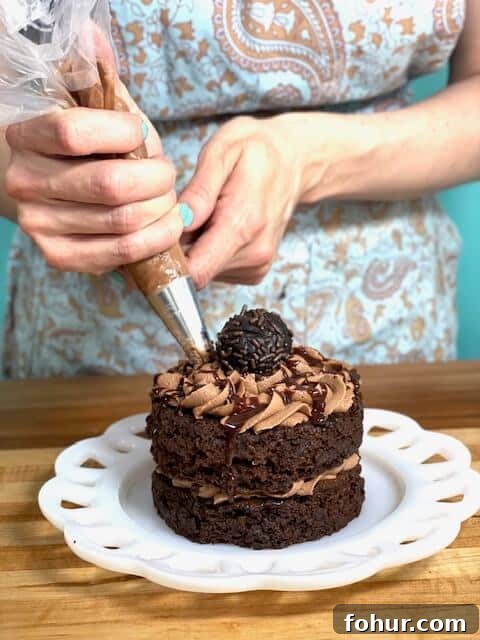
Whether you’re feeding a crowd or simply want an extra treat for the family, my bakery cake recipes from Amycakes Bakery are now available in two batch sizes. Choose the standard batch or a double batch and use the chart below to pick the best pan for your cake.
Double-Batches of Amycakes Bakes Recipes
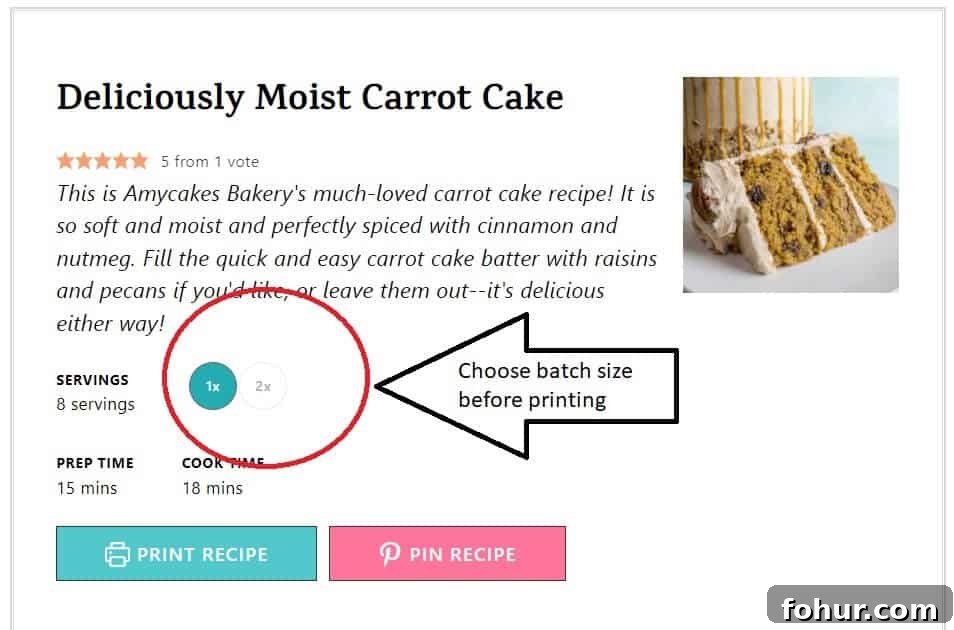
All of my extra-moist cake recipes let you bake either a standard batch (1x) or a double batch (2x). Choosing 2x will automatically double both the servings and the ingredient quantities so you don’t have to do the math yourself.
How to use the 2x option:
1) Select 2x beside “Servings” or under “Ingredients.” The recipe card will update and show doubled ingredient amounts and servings.
2) Measurements are shown in both cups and grams on the same line. If you own a kitchen scale, use grams for the best accuracy.
3) Print the doubled recipe using the print icon in the recipe header or at the bottom of the recipe.
4) Read the “Measurements” section below so you’ll know how to handle any uncommon quantities that may appear when a recipe is doubled.
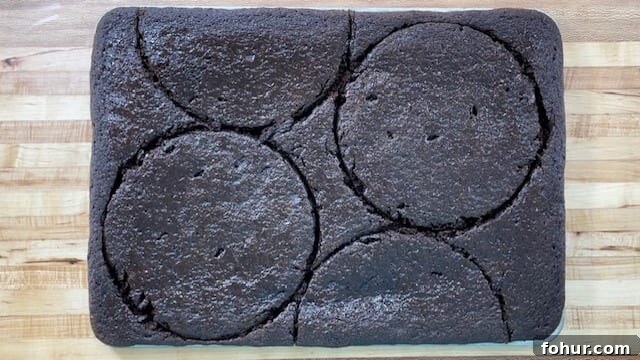
Watch how quick it is to make a 1x batch and turn it into small cakelets using my Ultra-Moist Double Chocolate Cake recipe. For neat rounds, cut at room temperature, then chill the sheet pan in the freezer for a few minutes so the cakelets release easily. Finish decorating and serve at room temperature.
What’s with the ½ tablespoon and other measurements?
When you switch to a 2x batch, the recipe software doubles quantities without converting them into simpler fractions. That sometimes produces measurements you might not use often, such as ½ tablespoon or fractional cups like 1/8, 3/8, or 7/8 cup. If you measure by weight with a kitchen scale, these fractional cup amounts won’t matter.
Quick conversions to keep on hand:
- ½ tablespoon = 1½ teaspoons. If you don’t have a ½ tablespoon spoon, use 1½ teaspoons.
- 1/8 cup = 2 tablespoons. Use two tablespoons in place of an 1/8-cup measure.
- 3/8 cup = 1/4 cup + 2 tablespoons.
- 7/8 cup = 3/4 cup + 2 tablespoons (or measure 1 cup and remove 2 tablespoons).
Cake Pan Options
My preferred method is to bake in sheet pans and cut rounds with cake rings. For 1x batches I use a 1/4 sheet pan; for 2x batches I use a 1/2 sheet pan. Baking in sheet pans helps cakes bake evenly without domed centers or overly browned edges.
With cake rings you can cut any layered size you want—8″, 6″, or multiple small cakelets—after the cake is baked. If you don’t have sheet pans or cake rings, you can still bake these batters in regular round pans or traditional sheet-cake pans. You may need to adjust baking times; the chart below shows common pan options and expected yields to guide you.
Troubleshooting Overflowing Sheet Pans
Troubleshooting Overflowing Sheet Pans

All of my cake recipes are a snug fit in the 1" tall sheet pans I recommend. A few readers have reported slight overflow during baking. The most common causes are:

1) Oven temperature is too low. A cooler oven can let the batter rise faster than it sets, causing overflow. Check your oven accuracy with an oven thermometer.

2) Uneven, warped, or shallow pans. Small differences in pan height or a pan that doesn't allow the batter to spread evenly can lead to overflow.

3) Measuring variations when using measuring cups instead of a kitchen scale. Small over-measures add up quickly.

If overflow happens regularly, try using a deeper sheet-cake pan: a 9x13 for 1x batches or a 12x18 for 2x batches. These are typically 2" deep and give more headroom while still allowing you to cut rounds with cake rings. If you piece a bottom layer, you can fill gaps with cake scraps as needed.
Cake Pan Chart
A companion guide for selecting pans to use with Amycakes Bakes cake recipes.
|
Recipe Calls for: |
Pan Size Options |
Baking Time |
Yields |
|
2x batch (14 slices) |
½ sheet pan (13″x18″x1″) (recommended) |
As listed in recipe |
One of the following using cake rings:
|
|
2x batch (14 slices) |
12×18 sheet‑cake pan |
May need a few more minutes |
Same yields as ½ sheet pan |
|
2x batch (14 slices) |
Three 9″ round pans |
May need a few more minutes |
One 3‑layer 9″ cake |
|
2x batch (14 slices) |
Four 8″ round pans |
May need a few less minutes |
One 4‑layer 8″ cake |
|
1x batch (8 slices) |
¼ sheet pan (9.5″x13″x1″) (recommended) |
As listed in recipe |
One of the following using cake rings:
|
|
1x batch (8 slices) |
9×13 sheet‑cake pan |
May need a few more minutes |
Same yields as ¼ sheet pan |
|
1x batch (8 slices) |
Four 6″ round pans |
May need a few less minutes |
One 4‑layer 6″ cake |
|
1x batch (8 slices) |
Two 8″ round pans |
May need a few less minutes |
One shallow 2‑layer 8″ cake |
Have questions or suggestions? Leave a comment below—I’m happy to help with any pan, measurement, or baking questions. 🙂
Thanks for reading. ❤️