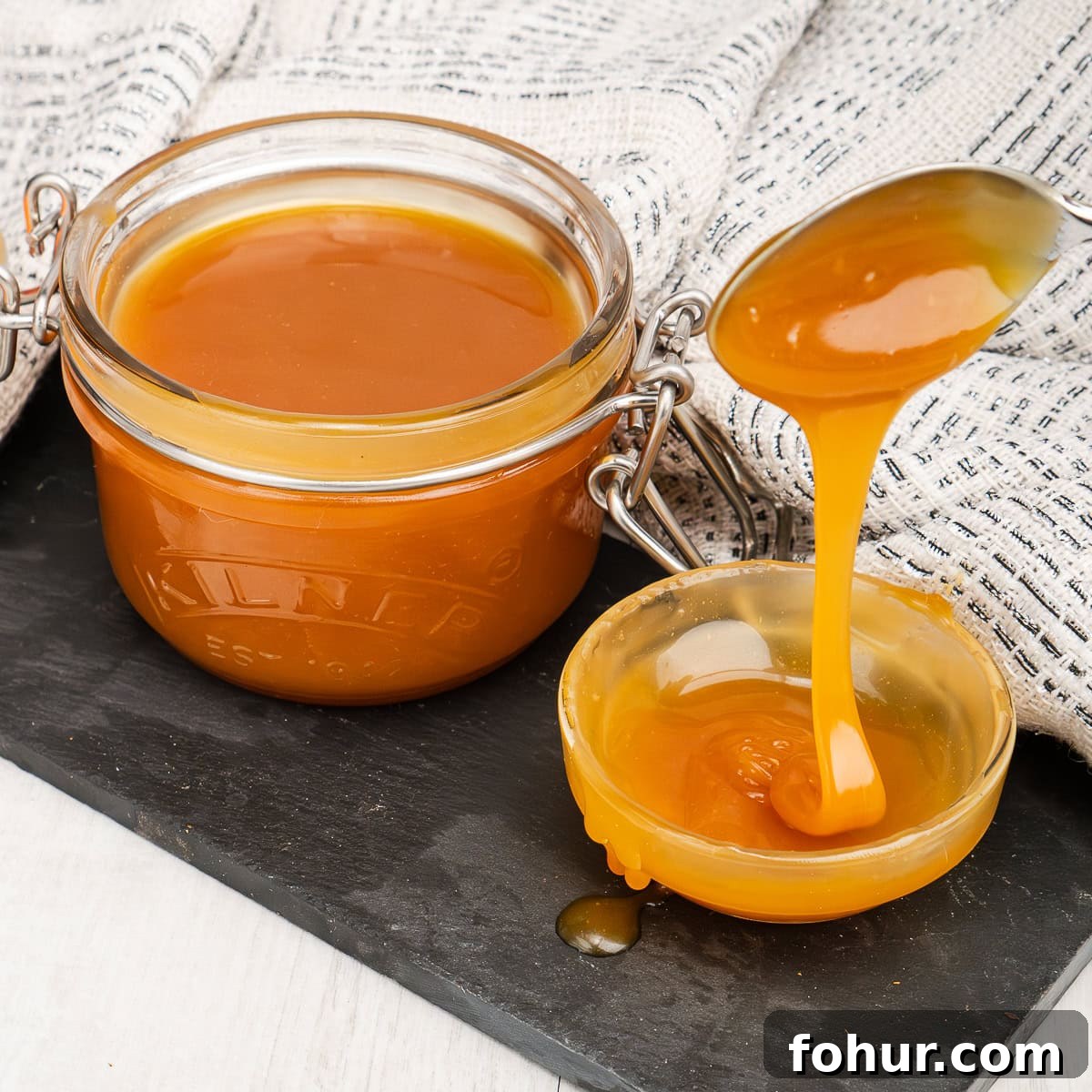
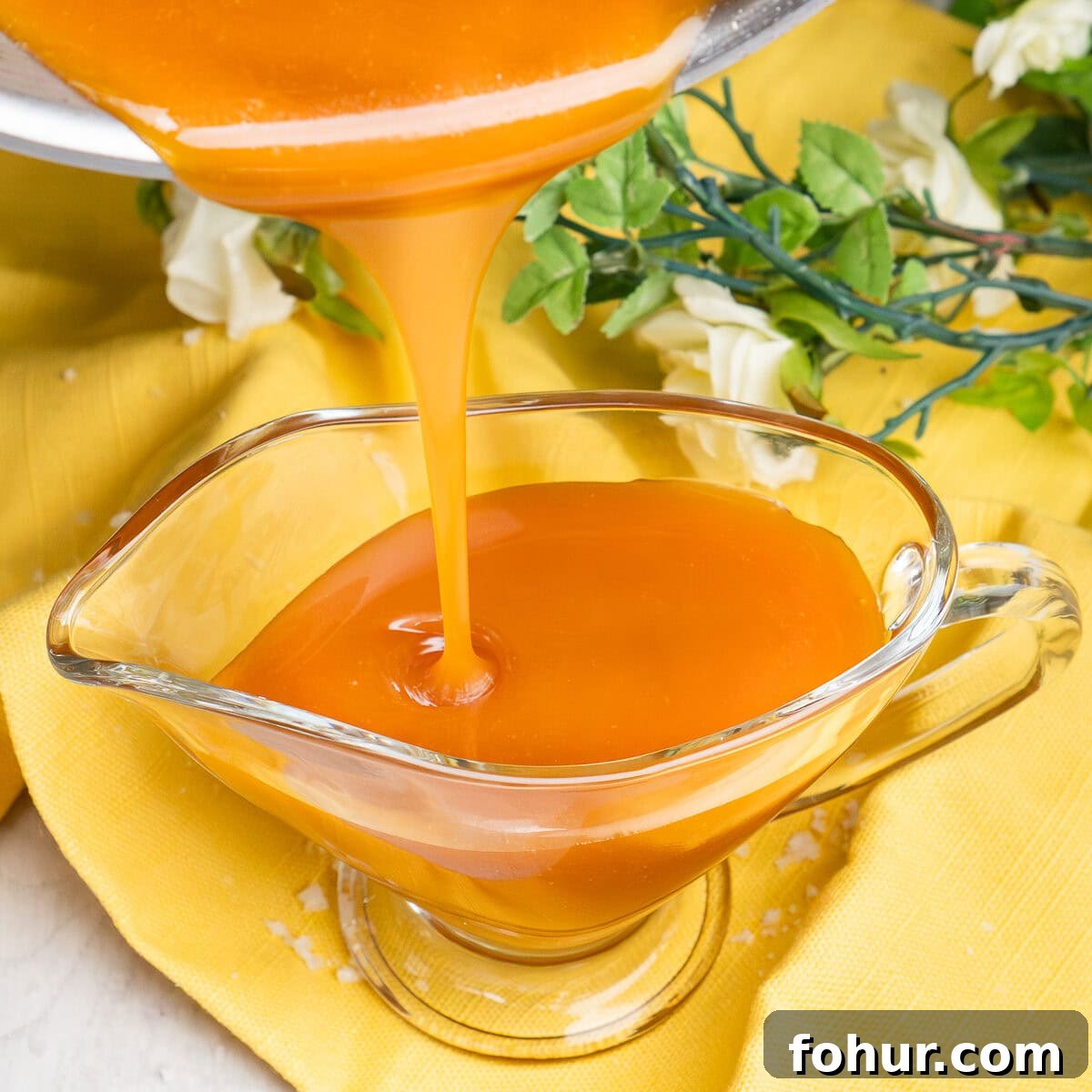
Come dive into the sweet-and-salty world of homemade salted caramel with this clear, step-by-step recipe for a silky, pourable sauce.
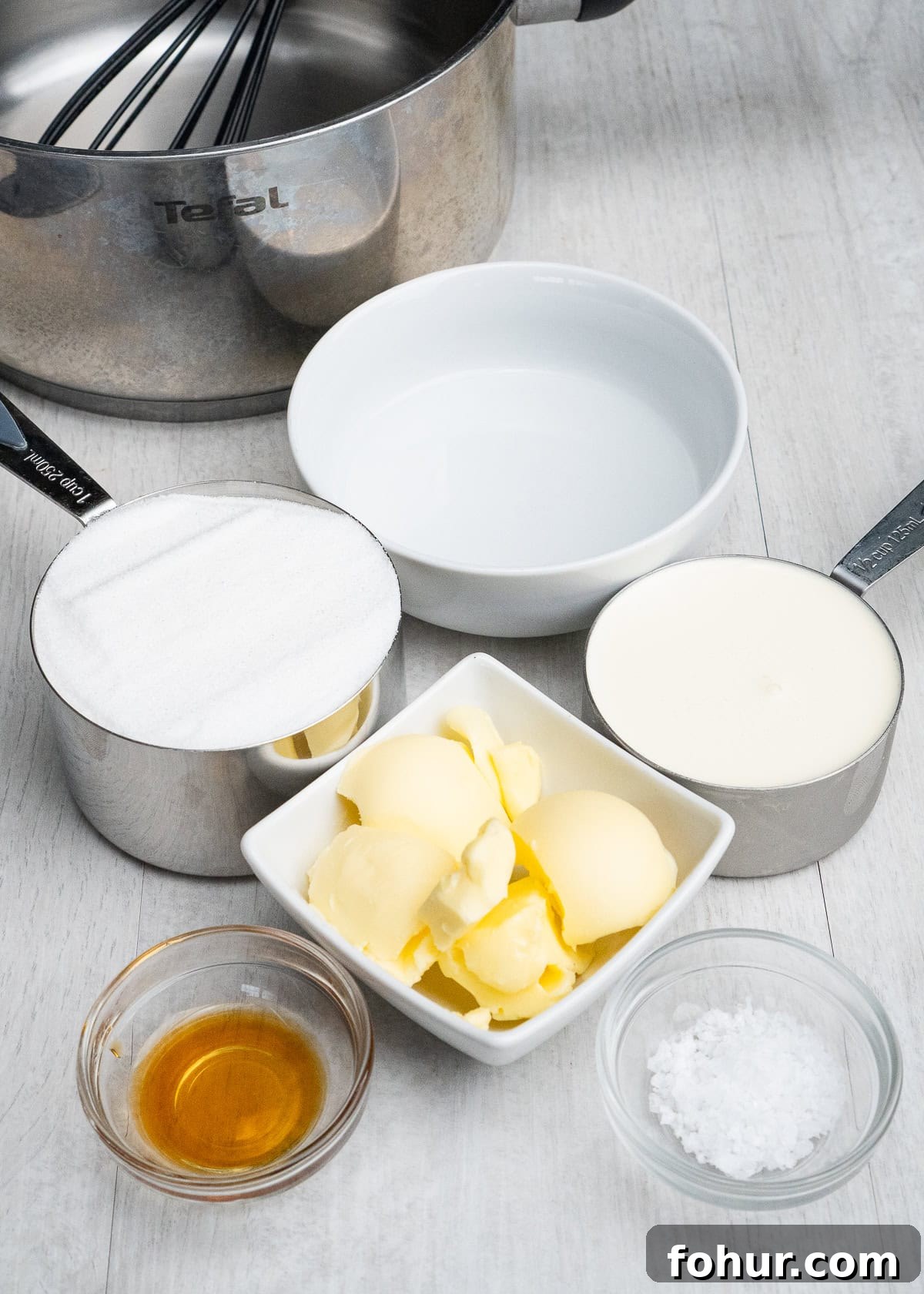
This salted caramel uses just a few pantry staples: caster sugar, water, unsalted butter, double cream and a pinch of salt. A splash of vanilla extract is optional but adds a warm, aromatic note. Each ingredient contributes to the sauce’s smooth texture and balanced flavour.
Think of it like a luxurious, pourable version of a classic caramel candy — rich, buttery and perfectly balanced with salt.
Salted Caramel Sauce — Recipe Overview
Yield: about 300 ml. Prep time: 8 minutes. Cook time: 8 minutes. Total time: 16 minutes.
Author: Luke and Kay — Flawless Food.
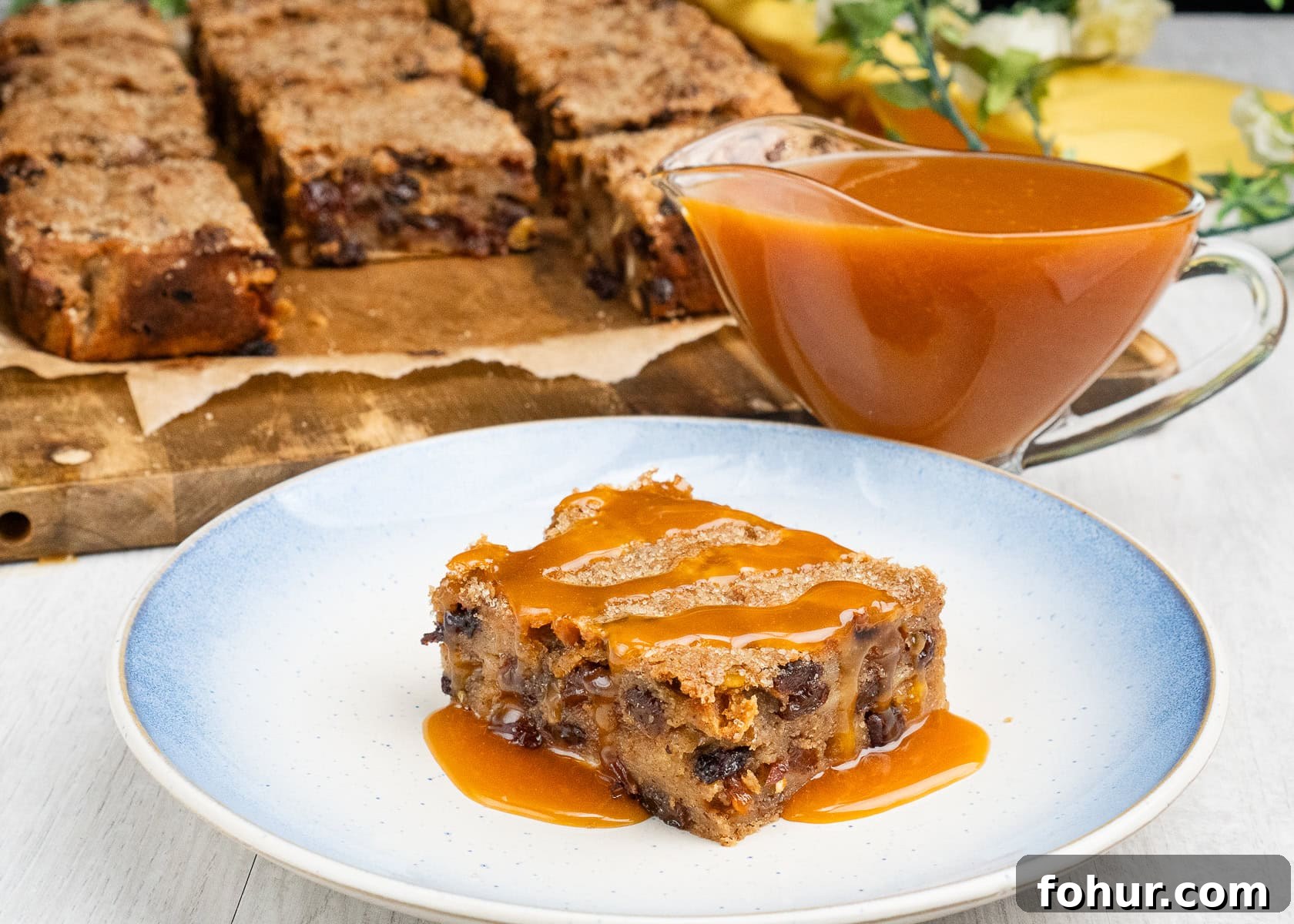
This recipe makes a versatile sauce ideal for drizzling over ice cream, stirring into coffees or milkshakes, using as a dip for fruit, or finishing off cakes, puddings and brownies.
Ingredients
Gather the following ingredients to make about 300 ml of sauce:
- 200 grams caster sugar (substitute: granulated sugar if needed)
- 3 tbsp room-temperature water
- 45 grams unsalted butter
- 120 ml double cream (use heavy cream in the US)
- ¼ tsp salt, plus more to taste
- ¼ tsp vanilla extract (optional)
Sugar
Use caster sugar for the cleanest, fastest melt; granulated sugar is an acceptable substitute as long as you allow it to fully dissolve. Brown sugar will produce a darker, toffee-like flavour because of its molasses content, so it will change the character of the sauce.
Water
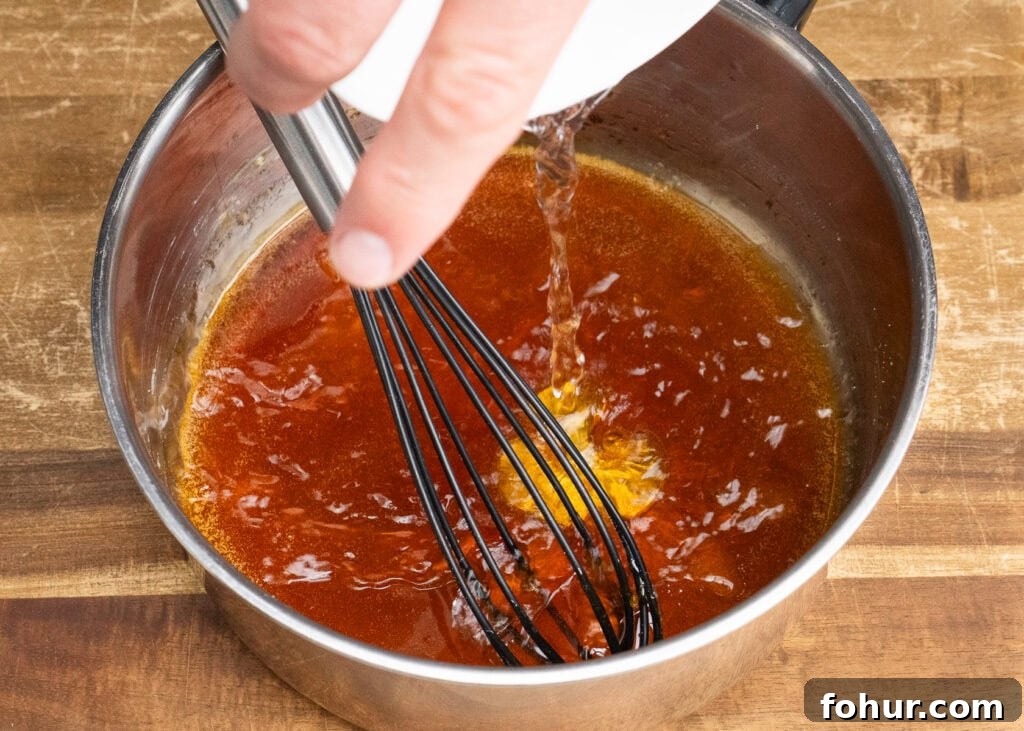
Adding a small amount of room-temperature water once the sugar has caramelised quickly stops the cooking process and helps prevent burning. Add it carefully—the hot caramel will bubble and splatter.
Butter
Unsalted butter gives you control over seasoning; add salt separately to balance sweetness precisely.
Cream
Double cream (about 48% fat) yields a rich, velvety sauce that won’t split when heated. If you only have single cream or milk, the texture and stability will be different—heavy cream is the best substitute in the US.
Salt & Vanilla
Salt brightens and balances the caramel’s sweetness; flaky sea salt or kosher salt are good choices. Vanilla extract is optional but adds depth and a warming aroma.
Equipment
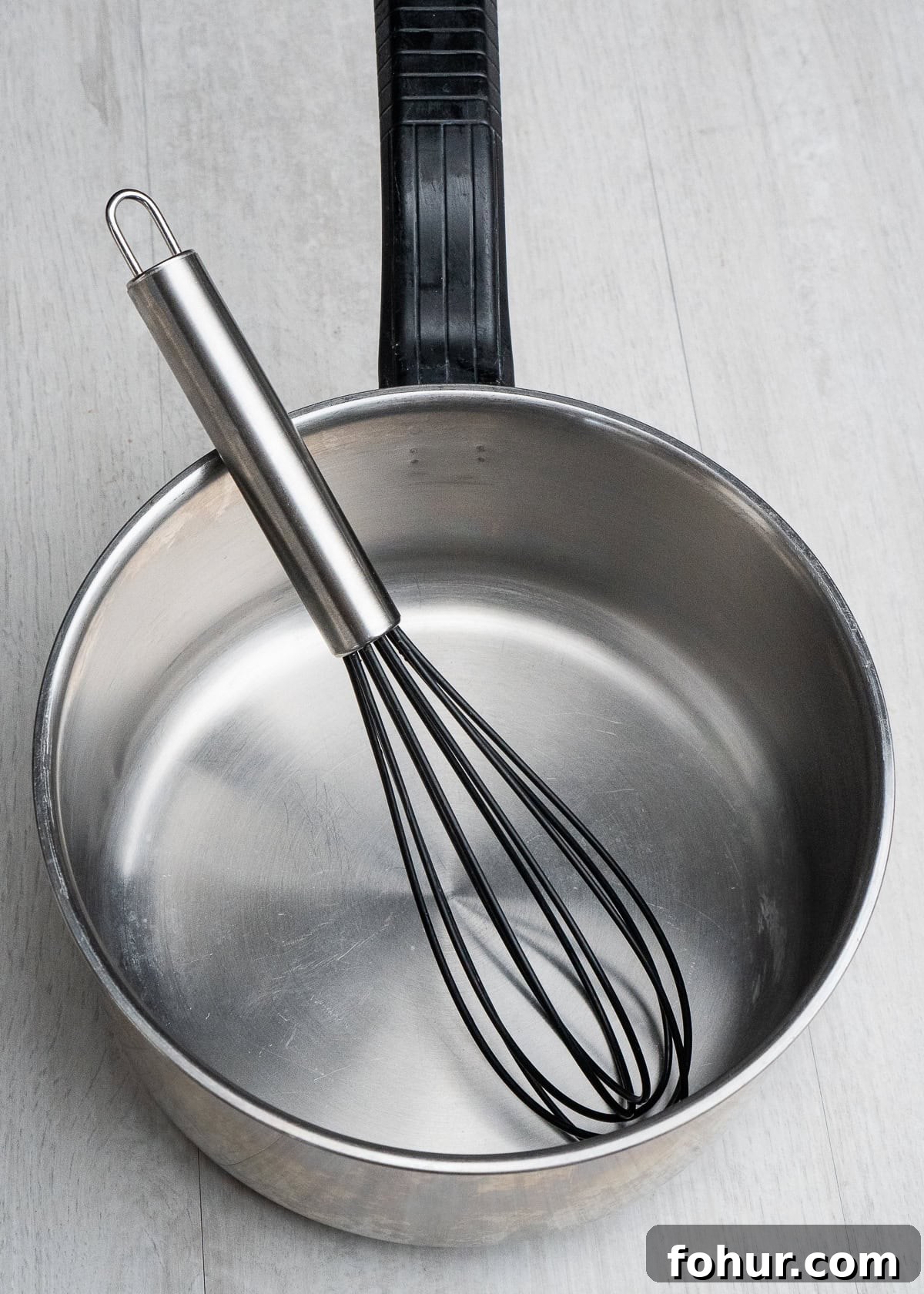
- Heavy-based saucepan (essential for even heat and to avoid hot spots)
- Whisk (helps break up lumps and produce a smooth sauce)
- Heat-resistant spatula or long-handled spoon
- Measuring scales/cups and a glass jar or small jug for storing
Instructions
-
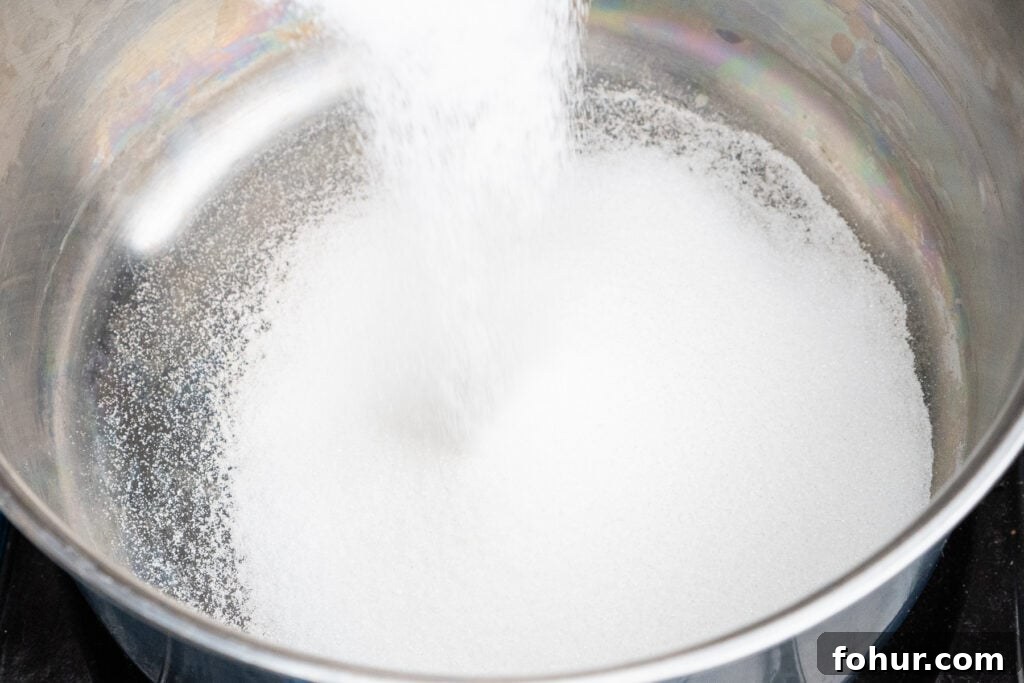
Caramelise the sugar: Place 200 g caster sugar in a heavy-bottomed saucepan and shake to level the sugar. Heat over medium and let the sugar cook undisturbed for about 5 minutes. Do not stir during this initial stage.

-
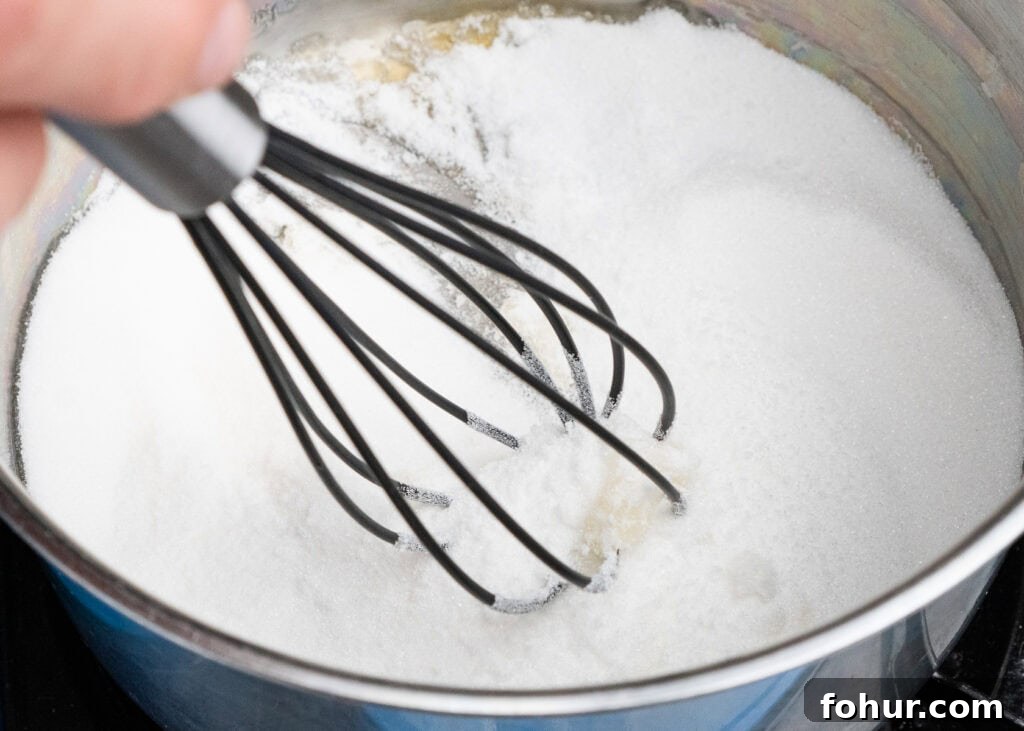
When the outer edges begin to melt and turn a light golden colour, gently start stirring with a whisk or spoon to encourage even melting. If the sugar clumps, keep it moving in the pan until fully melted (around 3 minutes).
-
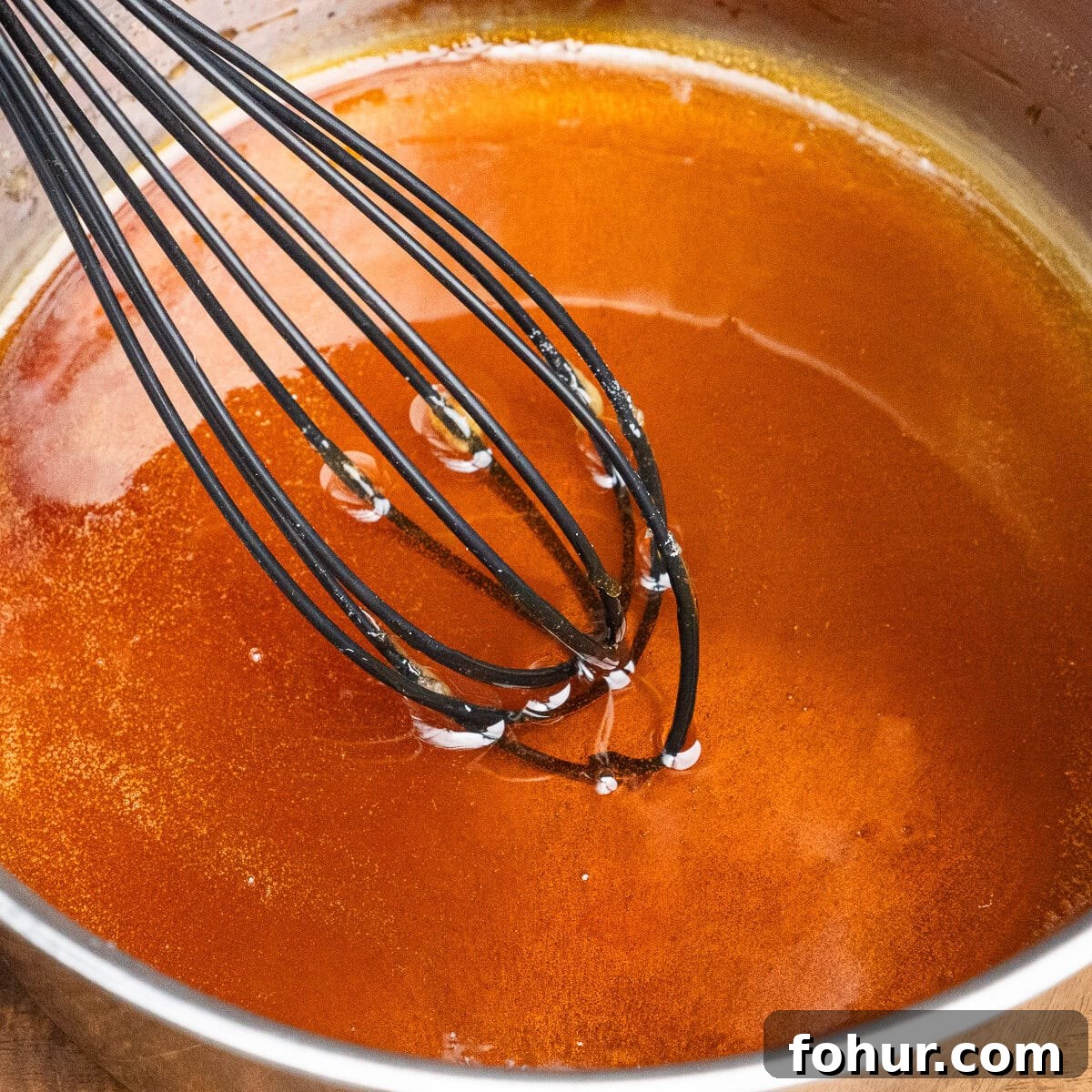
As soon as the sugar reaches a pale amber colour, remove the pan from the heat. Be careful—caramel is extremely hot.
-
Cool and stabilise: From a safe distance and slowly, add 3 tablespoons of room-temperature water. The mixture will bubble vigorously—use a long-handled spoon and keep a safe gap.
-
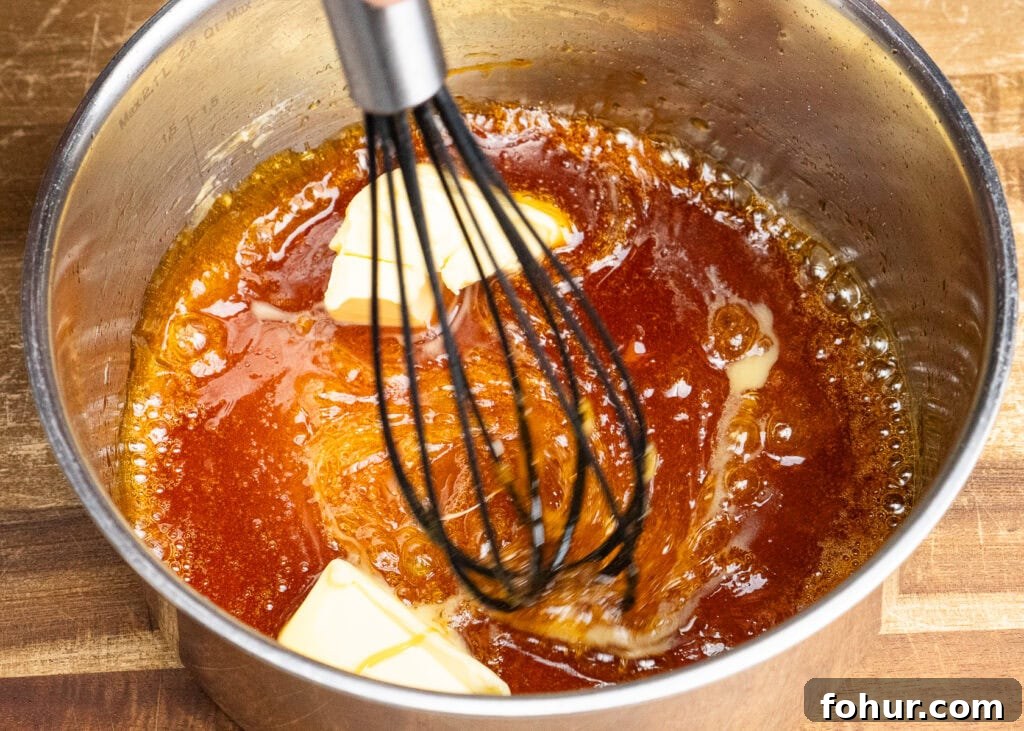
Whisk the water in to stop the caramelisation. Add 45 g unsalted butter and stir until melted.
-
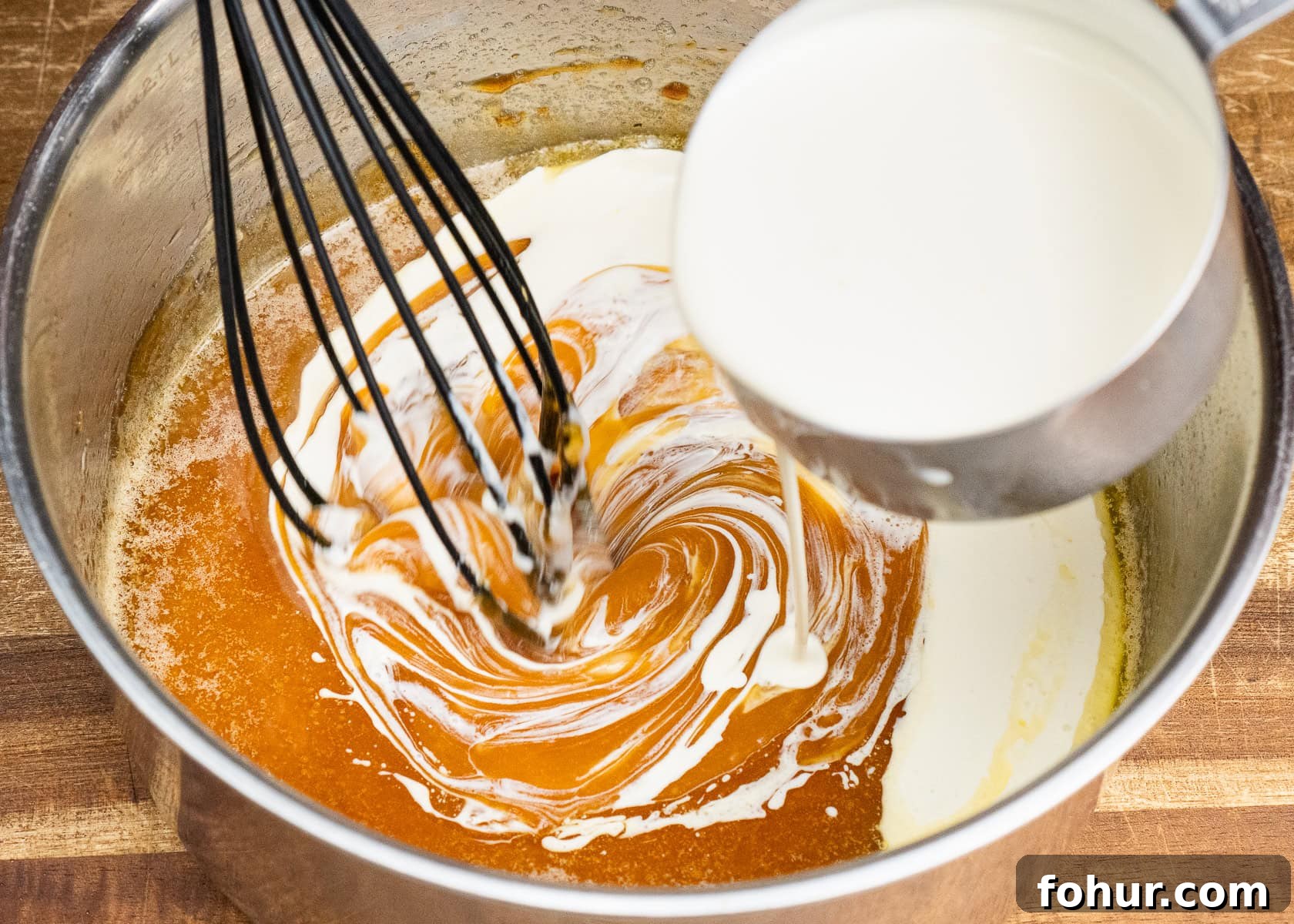
Slowly pour in 120 ml double cream while stirring constantly. The sauce will loosen initially; it thickens as it cools.
-
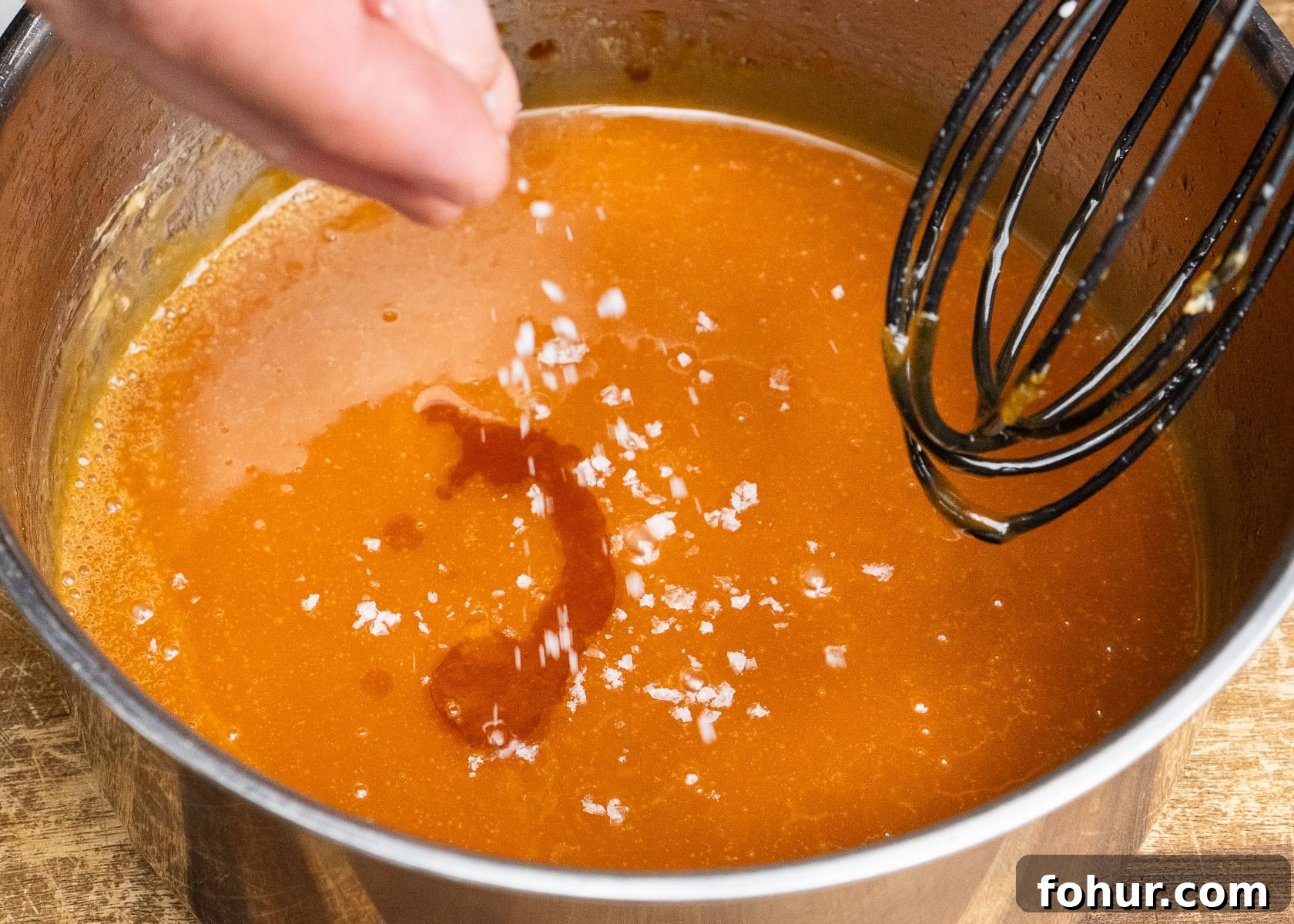
Season with ¼ tsp salt and ¼ tsp vanilla extract (optional). Taste and adjust salt or vanilla to your preference.
-
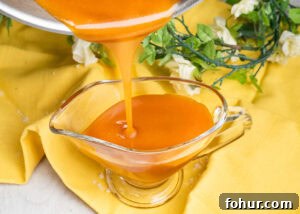
Transfer the finished sauce to a small jug or jar. Serve warm or at room temperature; it will thicken as it cools.
Serving Suggestions
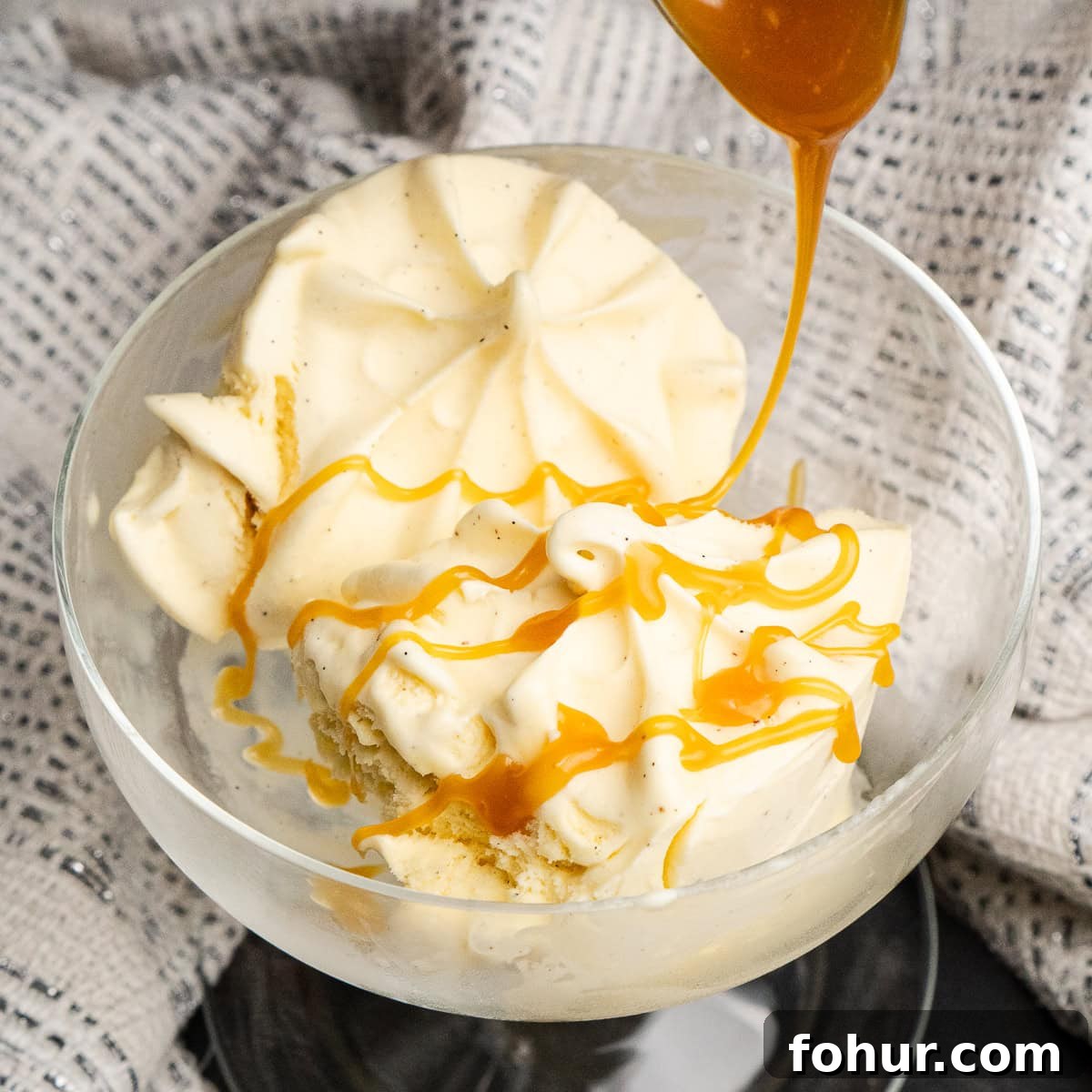
Drizzle over vanilla ice cream, drizzle on bread pudding or brownies, spoon on cakes or use as a dip for fruit and caramel apples. It also works beautifully stirred into milkshakes, frappes or lattes, or folded into buttercream for a salted caramel frosting.
Storage Advice
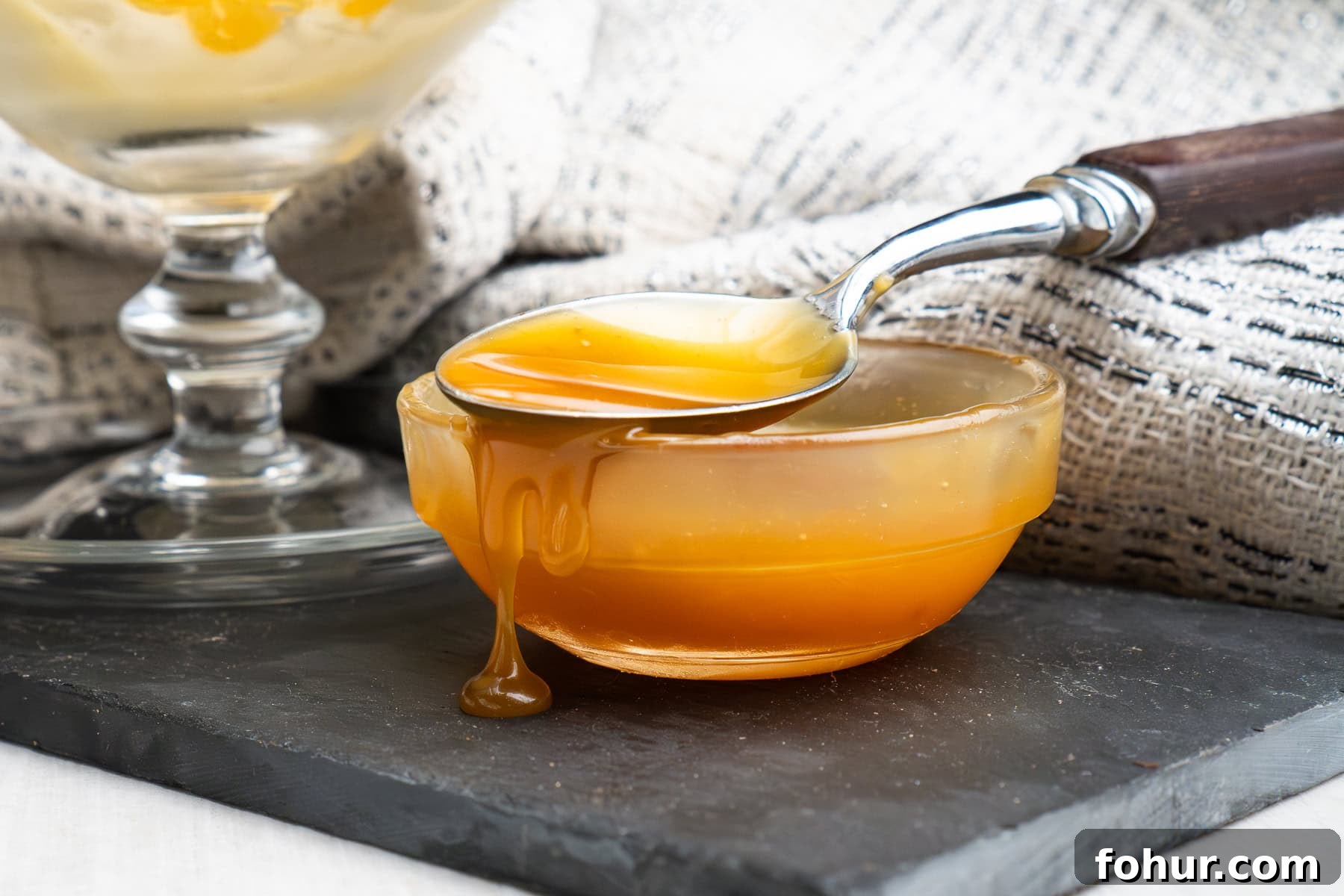
Once cooled completely, store the sauce in an airtight glass jar in the refrigerator for up to two weeks. Use a clean spoon each time to avoid contamination. Warm gently in short bursts in the microwave or in a saucepan, stirring frequently, until it reaches desired consistency.
Notes
- Do not taste the caramel while the sugar is molten—it can cause severe burns.
- If the sauce seems thin when hot, it will thicken as it cools.
- Adjust salt to taste; flaky sea salt added at the end gives a pleasant texture contrast.
If you try this recipe, we’d love to see how you use it to finish your desserts—share your creations on social accounts and tag your photos accordingly.